This Sugar-Free Chocolate Pie Steals the Whole Dessert Table
Few desserts earn their spot at a holiday table the way chocolate pie does. It shows up at Thanksgiving, birthdays, and the one potluck everyone still talks about because of who brought the pie. Losing that dessert to a diet change never sits well, no matter how good the reason behind the change might be.
Sugar-free chocolate pie exists precisely for that reason. Households across the US and Canada search it out looking for the same silky filling and deep cocoa flavor, minus the sugar that once came standard with every bite.
This piece breaks down the different styles this pie takes, what actually goes into each one, and the handful of details that decide whether a slice holds together or turns into a soupy mess on the plate.
Anyone rounding out a broader dessert table should also glance at our guide to best sugar-free desserts for more low-sugar options worth trying.
The Questions Bakers Bring to This Recipe
Search behavior around this dessert circles a fairly consistent set of concerns.
-
Sugar-free chocolate pie recipe
-
Keto chocolate pie without eggs
-
Sugar-free chocolate cream pie for diabetics
-
French silk pie sugar free
-
How to thicken sugar-free chocolate pie
-
Best sweetener for chocolate pie filling
Underneath nearly every one of these searches sits the same worry. People want a pie that actually holds its shape once it's sliced, not a filling that stays loose no matter how long it sits in the fridge.
Four Styles Worth Knowing About
Chocolate pie isn't a single recipe. A handful of distinct styles show up under this name, each built a little differently.
Chocolate Cream Pie
Built on a stovetop custard, usually thickened with eggs or a starch substitute like xanthan gum. This version leans creamy rather than dense.
French Silk Pie
A no-bake filling made by beating melted chocolate into whipped butter and eggs, giving it a lighter, almost mousse-like texture once it chills.
Chocolate Pecan Pie
A baked version that swaps the classic corn syrup base for a sugar-free syrup alternative, keeping the nutty crunch layered over a firmer filling.
Avocado-Based Chocolate Pie
A newer, dairy-free option that leans on ripe avocado for body instead of eggs or cream, blended smooth with cocoa and a sweetener.
What Sweetens the Filling
A small handful of ingredients carry most of the sweetness across these pies.
-
Erythritol shows up as a common base, though it can crystallize if the filling cools too fast.
-
Allulose has grown more popular since it dissolves smoothly and behaves closely to sugar once cooked.
-
Monk fruit extract often gets blended with erythritol to soften any lingering aftertaste.
-
Liquid stevia works in small amounts, since a little covers a surprising amount of ground in a rich chocolate base.
Recipes that combine two of these sweeteners tend to come out smoother than ones relying on a single ingredient, which often leaves a more noticeable aftertaste behind.

Does This Pie Fit a Keto Plan?
Most versions do without much trouble. A slice built on a nut-based crust with an erythritol or allulose filling usually lands between 4 and 7 grams of net carbs, depending on the exact crust and filling combination.
The crust carries a lot of weight in that number. A traditional graham crust pushes carbs up quickly, while an almond flour or coconut flour base keeps the whole slice comfortably within most keto limits.
Who This Pie Tends to Serve
People Managing Diabetes
A filling built around low-glycemic sweeteners avoids the sharp blood sugar rise a traditional chocolate pie causes, while still delivering the same rich bite people expect.
Keto and Low-Carb Eaters
Low net carbs make this an easier holiday dessert to keep in the rotation without skipping dessert entirely during the season.
Hosts Feeding a Mixed Table
One sugar-free chocolate pie can serve a table with different dietary needs, rather than requiring two separate desserts side by side.
Anyone Avoiding Dairy or Eggs
The avocado-based style opens this dessert to more households, since it skips both ingredients without sacrificing the rich texture the pie is known for.
Putting a Filling Together
Most versions of this pie don't demand advanced baking skill. A general approach for the chocolate cream style looks like this.
-
Warm milk or cream gently in a saucepan, keeping it well short of a boil.
-
Whisk in cocoa powder and your sweetener until it dissolves completely.
-
Temper a small amount of the warm mixture into beaten eggs, stirring the whole time.
-
Return everything to the pan and cook gently until the filling thickens.
-
Pour it into a pre-baked or chilled crust.
-
Chill for several hours, ideally overnight, before slicing.
The chilling stage matters more here than any single ingredient choice. Rushing it is the fastest way to end up with a slice that won't hold together.
Where a Batch Tends to Fall Apart
A short list of habits separates a pie that slices cleanly from one that slumps on the plate.
-
Cutting in too soon. A filling that hasn't fully set slides apart the moment a knife touches it.
-
Cooking the eggs too fast. Adding hot liquid too quickly can scramble them instead of building a smooth filling.
-
Leaning on one sweetener too heavily. A single ingredient used alone often leaves a noticeable aftertaste behind.
-
Skipping the crust's pre-bake. A soggy bottom crust ranks among the most common complaints tied to this dessert.
-
Storing it uncovered. The filling can dry out or crack across the top if left exposed in the fridge.
Picking the Right Chocolate
Since chocolate carries most of the flavor here, the type used changes the final result more than nearly any other ingredient.
-
Reach for unsweetened baking chocolate or sugar-free dark chocolate in the 60 to 70 percent cocoa range.
-
Read the ingredient label rather than trusting a front-of-package claim, since sweetener blends vary widely between brands.
-
Skip chips meant to hold their shape during baking, since they melt less smoothly into a filling.
-
Taste the chocolate on its own first, since any aftertaste it carries shows up directly in the finished pie.
For more on sourcing chocolate that performs well in desserts like this, our piece on sugar-free chocolate that nobody will guess is sugar-free covers a few worth trying.

Choosing a Crust That Holds
The crust decides a lot about how the finished pie comes together, and about how many carbs land in each slice.
-
Almond Flour Crust. The most common pick, holding together well with butter and a bit of sweetener.
-
Coconut Flour Crust. Works best blended with another flour, since coconut flour alone dries out and turns dense.
-
Gluten-Free Graham Crust. A close match to the classic texture, built from gluten-free crackers instead of wheat ones.
-
No Crust at All. Some bakers skip it entirely, serving the filling in small individual cups instead.
A Dessert Tied to Family Tradition
Chocolate pie has held a steady spot on American and Canadian dessert tables for generations. It shows up at the same holidays year after year, often built from a recipe handed down rather than looked up online. That kind of history is part of why losing access to it feels heavier than giving up an average dessert.
A diagnosis or a new way of eating shouldn't mean sitting out the dessert table entirely. Sugar-free chocolate pie exists to close exactly that gap, letting the same pie stay on the same table while changing only what genuinely needed to change underneath the surface.
This also explains a pattern worth noticing in how people search for this recipe. Plenty of searches aren't really about nutrition numbers at all. They're about keeping a family tradition alive, which is why the taste and texture matter just as much as the carb count.
A Few Ways to Shift the Flavor
A classic filling already satisfies on its own, but small additions can change the character of this pie without touching the base method.
-
Peppermint extract turns a slice into something festive, perfect for the holidays.
-
Espresso powder, stirred into the filling, deepens the chocolate flavor without tasting distinctly like coffee.
-
Orange zest, freshly grated, pairs naturally with a dark chocolate base.
-
Sea salt, sprinkled on right before serving, makes the chocolate flavor stand out more sharply.
-
Toasted nuts layered on top add crunch alongside the smooth filling underneath.
None of these changes touch the core recipe. They simply build a new note onto a filling that already carries plenty of flavor.
Finishing a Slice
A plain slice already stands on its own, but a few small touches round it out.
-
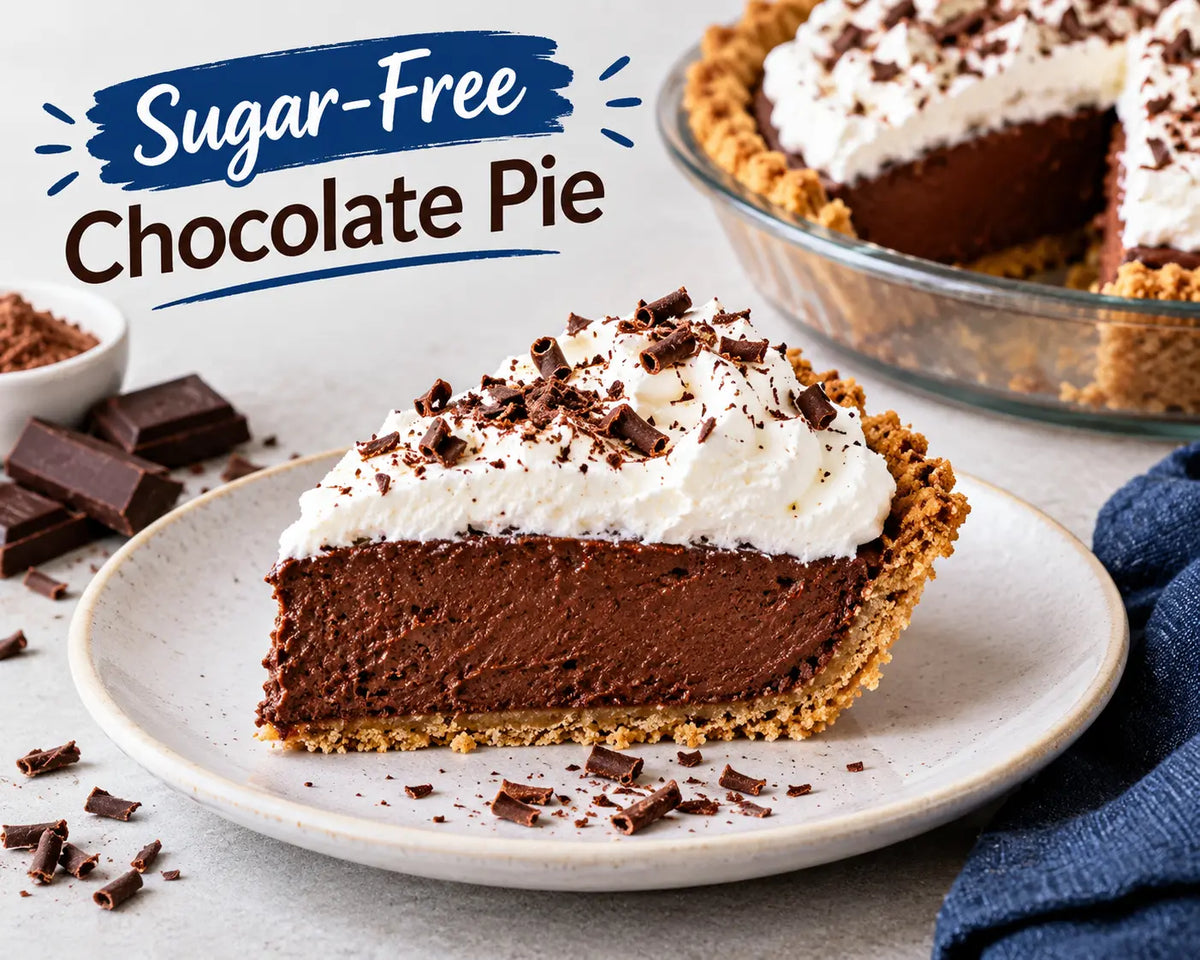
A dollop of freshly whipped cream on each piece
-
A dusting of cocoa powder across the top right before serving
-
Fresh raspberries or strawberries for a tart contrast against the richness
-
A drizzle of warm sugar-free chocolate ganache
-
Shaved dark chocolate curls for a more polished, bakery-style finish
Keeping It Fresh
A little attention after baking keeps both texture and flavor intact.
-
Keep the pie covered once it's fully set in the fridge.
-
Aim to finish it within four to five days.
-
Avoid leaving slices out at room temperature for more than an hour.
-
Wrap individual slices well and freeze if you want to save some for later.
Where This Pie Shows Up Across the US and Canada
Sugar-free chocolate pie has moved well beyond a strictly holiday dessert.
-
Thanksgiving and Christmas dinners, where one pie needs to satisfy the whole table
-
Diabetic-friendly birthdays, taking the place of a traditional layer cake
-
Potlucks and office parties, where dietary needs shift from guest to guest
-
Ordinary weeknight desserts for anyone simply cutting back on sugar year round
Ingredient availability looks fairly similar in both countries, though Canadian shoppers may find a narrower selection of specialty sugar-free chocolate locally, with online ordering usually closing that gap.
Buying Instead of Baking
Managing a stovetop custard and a delicate crust isn't for everyone. Buying a ready-made pie is a reasonable choice, and a few details are worth checking first.
-
A short, clear ingredient list rather than a long string of stabilizers
-
A named sweetener on the label, instead of a vague sugar-free claim on the front
-
Cold or insulated shipping, since a chocolate filling doesn't handle heat well in transit
-
A bakery built around sugar-free desserts specifically, since that usually means more testing behind the recipe
Andy Anand's approach to sugar-free desserts follows that same idea, with treats made in small batches around diabetic-friendly sweeteners.
Bringing This Pie to Someone Else's Table
A chocolate pie headed elsewhere needs a bit of extra planning, especially one built on a delicate no-bake filling.
-
Keep it chilled in transit, using a cooler bag for any drive longer than 20 minutes.
-
Hold off on toppings like whipped cream or chocolate shavings until right before serving.
-
Bring the pan it was made in, rather than moving individual slices, to keep the filling from shifting.
-
Let the host know which sweetener was used, especially if other guests are managing diabetes or a specific diet.
A little planning here goes a long way toward making sure the pie arrives looking as good as it tasted when it left the fridge.
Frequently Asked Questions
Is sugar-free chocolate pie keto friendly?
Most versions are, especially with an almond flour crust and a filling built from erythritol or allulose, which typically falls between 4 and 7 grams of net carbs per slice.
Why did my chocolate pie filling not set?
This usually happens when the filling wasn't cooked long enough to thicken, or when it didn't get enough time to chill. Several hours, or overnight, is often what it actually needs.
Can people with diabetes eat sugar-free chocolate pie?
Most people managing diabetes can enjoy a slice in moderation, since it causes a much smaller blood sugar rise than a traditional chocolate pie.
What is the best sweetener for a chocolate pie filling?
Allulose and erythritol are the most common choices, often blended together to soften any aftertaste while keeping the filling smooth.
Can I make chocolate pie without eggs?
Yes. An avocado-based or coconut cream filling skips eggs entirely while still building a rich, dense texture.
What is the difference between a chocolate cream pie and a French silk pie?
A chocolate cream pie cooks on the stovetop until it thickens, while a French silk pie is a no-bake filling made by whipping melted chocolate into butter and eggs, giving it a lighter, mousse-like texture.
How long does sugar-free chocolate pie last in the fridge?
About four to five days when kept covered. The texture holds up best within the first two or three days.
Can I freeze sugar-free chocolate pie?
Yes, individual slices freeze well when wrapped tightly. Thawing them slowly in the fridge helps keep the texture smooth.
Why does my crust turn soggy under the filling?
This usually happens when the crust wasn't pre-baked before the filling went in. A short bake, around 8 to 10 minutes, helps it hold up better.
Can I buy sugar-free chocolate pie instead of making one?
Yes, several bakeries offer a ready-made version. Checking the ingredient label and how the pie ships is worth doing before ordering.
Is sugar-free chocolate pie safe for someone with celiac disease?
It depends on the crust. An almond flour or coconut flour crust is naturally gluten free, though checking for cross-contamination and a clear gluten-free label is still worth doing.
Can kids eat sugar-free chocolate pie?
Yes, in normal portions. If the crust uses nut flour, checking for nut allergies is worth doing before serving it to a group of children.
Getting a sugar-free chocolate pie right comes down to a handful of small decisions handled carefully. The right sweetener, a crust that can hold its own, and enough patience through the chilling stage are really all it takes.
For more ideas on rounding out a sugar-free dessert table, the best sugar-free desserts guide and our closer look at sugar-free chocolate that nobody will guess is sugar-free are both worth reading next.