Sugar-Free Peppermints Keep the Classic Mint Flavor Alive
Sugar-Free Peppermints Keep the Classic Mint Flavor Alive
Peppermints have a way of showing up everywhere. A bowl by the cash register. A dish on grandma's coffee table. A stocking stuffer every December without fail. Few candies carry that same sense of familiarity across so many corners of daily life in the US and Canada.
That familiarity is part of why sugar-free peppermints have carved out such a steady following. People managing diabetes want the same cool, sharp flavor without the blood sugar hit. Keto followers want a low-carb way to freshen their breath after a meal. Parents want a treat they can hand over without adding much sugar to the day. This candy checks a lot of boxes at once, which explains why it keeps showing up in search results year round.
This guide walks through what makes a sugar-free peppermint work, the different styles worth knowing about, and the small details that separate a mint worth buying again from one that ends up forgotten in a jar.
For a wider look at low-sugar treats, our guide to best sugar-free desserts covers plenty of ground beyond mints.
The Questions People Bring to This Candy
A quick scan of search activity around sugar-free peppermints turns up a fairly steady set of concerns.
-
Are sugar-free peppermints good for diabetics
-
Best sugar-free starlight mints
-
Do sugar-free mints upset your stomach
-
Sugar-free peppermint patties recipe
-
Sugar-free candy canes for Christmas
Nearly every one of these questions circles back to the same underlying concern. People want a mint that tastes like the real thing, won't spike their blood sugar, and won't leave them regretting a second piece an hour later.
What a Classic Peppermint Is Actually Made Of
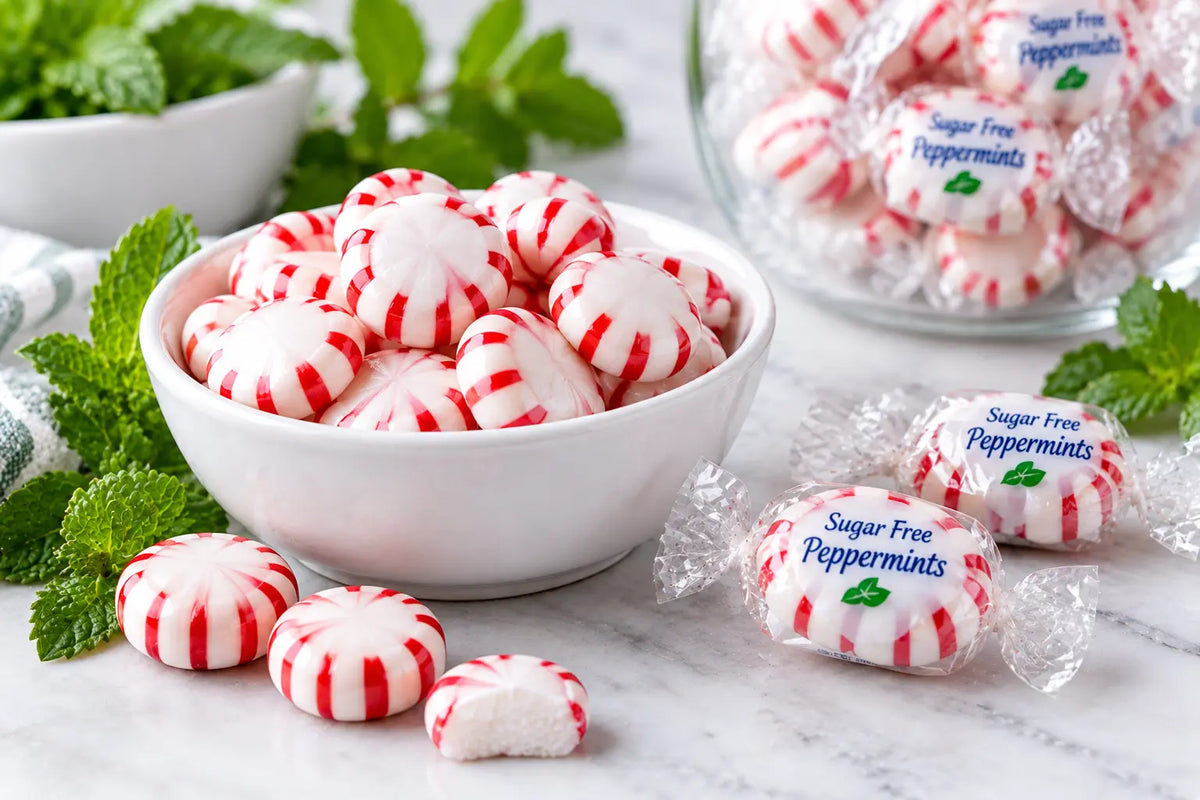
Before looking at the sugar-free version, it helps to understand what a traditional peppermint relies on. A standard starlight mint is essentially cooked sugar syrup, flavored with peppermint oil, and cooled into a hard, glassy shape. The red and white swirl is more about tradition than flavor, but the structure underneath is pure sugar.
Removing that sugar means replacing both the sweetness and the structure it provides. That's a bigger job than it sounds like, since sugar syrup behaves in a very specific way once it's heated and cooled. A sugar-free version needs an ingredient that can mimic that same glassy, hard texture once it sets.
What Sweetens a Sugar-Free Peppermint
A small group of ingredients shows up again and again across this category.
-
Isomalt is one of the most common choices for hard candy specifically, since it behaves very closely to sugar when heated and cooled, giving that same glassy snap.
-
Erythritol appears often too, though it can crystallize differently than sugar, which is why it's sometimes blended with another sweetener.
-
Sucralose frequently gets added in small amounts, since a little boosts sweetness without changing the candy's structure.
-
Maltitol, an older standby, still shows up in some older formulas, though it carries a higher risk of digestive discomfort in large amounts.
Peppermint oil itself doesn't change between the sugar and sugar-free versions. The flavor comes from the same source either way, which is part of why a well-made sugar-free mint can taste nearly identical to the original.
Are Sugar-Free Peppermints Keto Friendly?
Most are, and by a wide margin. A single peppermint typically carries somewhere between 0 and 2 grams of net carbs, depending on the exact sweetener blend used. Since a serving size is usually just one or two pieces, this candy barely registers against a daily keto carb limit.
This low impact is part of why sugar-free peppermints have become such a popular pocket candy for anyone tracking carbs closely. A handful can travel in a bag or car console without much worry about derailing a strict eating plan.
Who Reaches for This Candy Most
People Managing Diabetes
A mint built on low-glycemic sweeteners avoids the blood sugar spike a regular starlight mint would cause, making it one of the easier candies to keep on hand without much second-guessing.
Keto and Low-Carb Eaters
The tiny serving size and minimal carb count make this an easy candy to fit into even the strictest daily plan.
Anyone Who Wants Fresh Breath Without Added Sugar
A peppermint's classic role as an after-dinner mint doesn't disappear once sugar is removed. If anything, a sugar-free version avoids feeding the bacteria in the mouth that a sugary mint would otherwise leave behind.
Holiday Shoppers
Sugar-free candy canes and starlight mints have become a common stocking stuffer for anyone managing diabetes during a season built almost entirely around sugar.
Parents Watching a Child's Sugar Intake
A small peppermint lasts a while and feels like a real treat without adding much sugar to a child's day.
The Digestive Question Worth Addressing
Anyone who has looked into sugar-free candy before has likely run into a warning about digestive discomfort, and it's worth covering honestly here too.
Sugar alcohols like maltitol and, to a lesser degree, erythritol aren't fully absorbed by the body. Eaten in large amounts, the unabsorbed portion can draw water into the intestines and ferment, leading to bloating, gas, or a laxative effect. The FDA requires a printed warning on products containing a meaningful amount of certain sugar alcohols for exactly this reason.
Peppermints are a bit different from other sugar-free candy in one important way. Because a serving size is so small, usually just one or two pieces, most people never come close to the amount needed to trigger a digestive reaction. This is one of the few sugar-free candies where overdoing it takes real effort.
That said, a few habits still help:
-
Stick to a reasonable number per day rather than working through a whole bag in one sitting.
-
Favor isomalt or erythritol based mints if your stomach tends to be sensitive.
-
Introduce a new sugar-free candy gradually with kids rather than handing over a handful at once.
Peppermint Patties Deserve Their Own Mention
Not every sugar-free peppermint comes as a hard candy. Peppermint patties, the soft, minty filling wrapped in a layer of dark chocolate, have their own dedicated following in the sugar-free space.
This style relies on many of the same sweeteners as sugar-free chocolate does, usually erythritol or allulose blended with a bit of stevia. The dark chocolate coating benefits from the same natural advantage regular dark chocolate has, since cocoa doesn't depend heavily on sugar to carry its flavor in the first place.
Homemade versions have become popular too, since the filling is fairly simple to make at home with powdered erythritol, peppermint extract, and a bit of coconut oil, dipped in melted sugar-free chocolate and chilled until firm.

Choosing a Bag Worth Buying Again
A handful of details tend to separate a genuinely good bag of sugar-free peppermints from a disappointing one.
-
A short, recognizable ingredient list, ideally just an isomalt or erythritol base, natural peppermint oil, and little else.
-
Individually wrapped pieces, which matter more for peppermints than most candy, since they travel in pockets, bags, and desk drawers.
-
A clear sweetener listed on the label, rather than a vague sugar-free claim printed across the front.
-
Reviews that specifically mention flavor strength, since some sugar-free mints come out weaker in peppermint flavor than the original.
Andy Anand's approach to sugar-free candy reflects that same attention to detail, built around natural sweeteners rather than a single artificial shortcut. For a closer look at the wider sugar-free candy lineup, our guide to sugar-free candy covers more options worth trying alongside peppermints.
Beyond Peppermint: Related Mint Flavors Worth Knowing
Peppermint gets most of the attention, but a few related flavors show up in the same aisle and are worth understanding.
-
Spearmint carries a milder, slightly sweeter flavor than peppermint, often favored in gum and softer mints rather than hard candy.
-
Wintergreen has a distinct, almost root beer-like note that sets it apart from true mint flavors, despite often being grouped with them.
-
Cinnamon, while not a mint at all, frequently shows up in the same starlight candy shape and format, appealing to a similar crowd looking for a small, sharp-flavored hard candy.
Understanding these distinctions helps when shopping online, since search results for "sugar-free mints" often blend all of these flavors together under one umbrella.
Isomalt and Erythritol Side by Side
Since these two sweeteners dominate the sugar-free hard candy space, understanding how they differ helps explain why some brands taste better than others.
Isomalt holds up exceptionally well to heat, which makes it a favorite for candy makers working with molds or decorative shapes. It has a milder sweetness than sugar, so it's often paired with a touch of sucralose or stevia to round out the final flavor. Its texture, once cooled, comes closest to matching a traditional hard candy's glassy snap.
Erythritol brings a cleaner, closer-to-sugar sweetness on its own, though it can crystallize in a way that leaves a slightly grainy texture if not handled carefully during cooking. It's also the gentler of the two on digestion, since more of it gets absorbed by the body before reaching the large intestine.
Neither sweetener is strictly better. The right choice often depends on whether flavor accuracy or digestive comfort matters more to the person eating it.
Gifting Sugar-Free Peppermints
Peppermints travel well as a gift, which is part of why they show up so often in holiday care packages and thank-you gifts.
-
Choose individually wrapped pieces for any gift, since loose hard candy can stick together in transit.
-
Pair mints with other sugar-free treats, like chocolate or caramels, for a fuller gift box rather than mints alone.
-
Include a short note about the sweetener used, especially for a recipient managing diabetes closely.
-
Consider a reusable tin or jar rather than the original bag, which adds a small touch of thoughtfulness to an otherwise simple gift.
A small bag of sugar-free peppermints costs little but tends to be remembered, especially by someone who rarely gets a candy option that actually fits their diet.
Reading a Sugar-Free Peppermint Label
A little label knowledge goes a long way with this candy.
-
Check which sugar alcohol sits at the top of the ingredient list, since that's the one doing most of the work in the recipe.
-
Look at the serving size, since it's usually listed as one or two pieces rather than a handful.
-
Confirm whether the mint is naturally or artificially flavored, since natural peppermint oil tends to deliver a cleaner, sharper taste.
-
Check for a gluten-free or allergen statement, especially if buying for a classroom or shared office space.
Sugar-Free Peppermints Around the Holidays
Peppermint has an outsized presence during the winter holidays, and sugar-free versions have followed right along with that tradition.
Sugar-free candy canes now sit alongside the regular version in most major grocery stores by late November. Sugar-free peppermint bark, mixing chocolate and crushed peppermint pieces, has become a popular gift item for anyone managing diabetes during a season otherwise built around sugary treats. Even peppermint-flavored sugar-free hot cocoa mixes have started showing up as the category has grown.
This seasonal spike in demand is part of why so many search terms around this candy pick up sharply every November and December, even though peppermint itself is a year round flavor for plenty of people.
Peppermint's Role Beyond Just Candy
Peppermint shows up in more places than the candy aisle, and sugar-free versions have followed that lead too.
-
Sugar-free peppermint tea pairs naturally with a mint candy for anyone managing a cold or an upset stomach, since peppermint has a long history as a digestive aid.
-
Sugar-free peppermint mouthwash and gum lean on the same fresh-breath appeal that makes peppermint candy popular after a meal.
-
Peppermint essential oil, unrelated to candy directly, shares the same source flavor and shows up in aromatherapy circles for its cooling, refreshing scent.
None of these are candy exactly, but they explain why peppermint as a flavor has such staying power across so many different products, sugar-free or not.
Storing Sugar-Free Peppermints
Good storage keeps both texture and flavor intact for longer.
-
Keep mints in a cool, dry spot away from direct sunlight, since heat can cause hard candy to soften or stick together.
-
Store individually wrapped pieces in an airtight container if the original bag has been opened.
-
Avoid the fridge, since condensation can make hard candy sticky once it's removed.
-
Check the expiration date on natural, unpreserved versions, since some sugar-free hard candy has a shorter shelf life than the traditional version.
Making Sugar-Free Peppermints at Home
For anyone who enjoys a bit of kitchen project, homemade sugar-free peppermints are simpler than they might sound.
-
Combine isomalt or a sugar-free hard candy blend with a small amount of water in a saucepan.
-
Heat gently, without stirring too much, until the mixture reaches the hard crack stage on a candy thermometer.
-
Remove from heat and stir in peppermint oil, along with a few drops of food coloring if a classic red and white swirl is the goal.
-
Pour the mixture onto a lined baking sheet or into candy molds.
-
Let it cool completely before breaking or cutting into pieces.
-
Wrap individually once fully hardened, since exposed hard candy can turn sticky quickly.
This process demands more precision than most sugar-free desserts, mainly because hitting the right temperature matters a lot for getting that classic glassy snap.
Where This Candy Shows Up Across the US and Canada
Sugar-free peppermints have moved well beyond a candy dish on someone's coffee table.
-
Restaurant host stands and reception desks, often available alongside the regular version
-
Office desks and car consoles, since a small mint travels easily
-
Holiday stockings and gift boxes, especially for anyone managing diabetes during the season
-
Diabetic care packages, paired with other sugar-free candy for a fuller gift
Ingredient availability looks broadly similar in both countries, though a few specialty US brands ship into Canada rather than sitting on Canadian store shelves directly.
Frequently Asked Questions
Are sugar-free peppermints good for diabetics?
Generally yes, since they cause a much smaller blood sugar rise than a regular peppermint. Checking the sweetener and serving size on the label is still worth doing.
What is the best sweetener for sugar-free peppermints?
Isomalt is the most common choice for hard candy specifically, since it mimics sugar's texture well when heated and cooled into that classic glassy shape.
Do sugar-free peppermints upset your stomach?
They can, but usually only in large amounts. Since a serving size is typically just one or two pieces, most people never eat enough to trigger digestive discomfort.
Are sugar-free peppermints keto friendly?
Yes, in most cases. A single mint usually carries between 0 and 2 grams of net carbs, making it an easy fit for even a strict keto plan.
Can I make sugar-free peppermints at home?
Yes, though the process requires a candy thermometer and some precision, since hitting the right temperature matters for getting the classic hard, glassy texture.
What are sugar-free peppermint patties made of?
Most use erythritol or allulose in the mint filling, coated in sugar-free dark chocolate. Homemade versions often use powdered erythritol, peppermint extract, and coconut oil.
Are sugar-free candy canes available for the holidays?
Yes, most major grocery chains stock sugar-free candy canes alongside the traditional version, particularly from November through December.
How long do sugar-free peppermints last?
Stored in a cool, dry place, they typically stay fresh for several months. Checking the package date is worth doing for natural, unpreserved versions specifically.
Can kids eat sugar-free peppermints? In moderate amounts, yes. Their small serving size makes them one of the easier sugar-free candies for kids, though introducing any new sugar-free treat gradually is still a good habit.
Is isomalt safe to eat regularly?
Isomalt is generally considered safe in normal candy amounts, though like other sugar alcohols, very large quantities can cause mild digestive discomfort in sensitive individuals.
Do sugar-free peppermints freshen breath as well as regular mints?
Yes, and in some ways better, since they don't leave sugar residue behind that can feed bacteria in the mouth the way a regular mint would.
Where can I buy good sugar-free peppermints in the US and Canada?
Most major grocery and pharmacy chains carry a version, though brands and bakeries that focus specifically on sugar-free candy tend to offer more consistent flavor and quality.
What is the difference between isomalt and erythritol mints?
Isomalt gives a closer match to a traditional hard candy's glassy texture and holds up better to heat, while erythritol tends to be gentler on digestion but can crystallize slightly differently during cooking.
Are sugar-free peppermints safe for pregnant women?
Most sugar-free peppermints made with isomalt, erythritol, or sucralose are considered safe in normal amounts during pregnancy, though checking with a doctor about any specific sweetener is always a reasonable step.