Dark Sugar-Free Chocolate Still Delivers Bold, Real Flavor
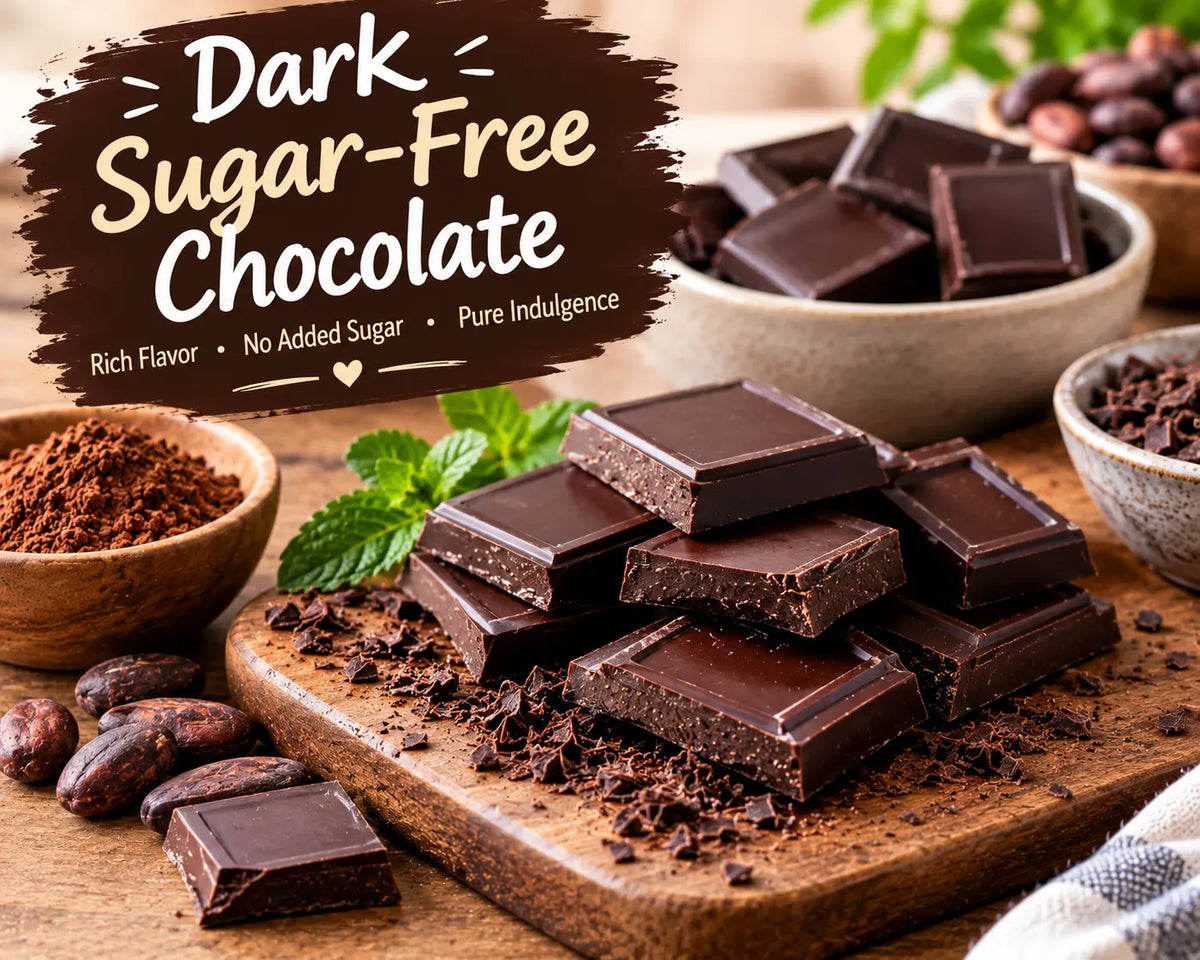
Dark chocolate has always sat apart from the rest of the candy aisle. Less sweet, more intense, and built around the cocoa bean itself rather than sugar doing most of the work. That head start is exactly why dark chocolate translates into a sugar-free bar better than almost any other chocolate style.
Shoppers across the US and Canada search out dark sugar-free chocolate for a mix of reasons. Some are managing diabetes and need a treat that won't spike their blood sugar. Some follow keto and want something rich enough to actually satisfy a craving. Others simply prefer the deeper, less sweet flavor dark chocolate offers, sugar or no sugar.
This piece walks through what separates a well-made dark sugar-free chocolate bar from a disappointing one, what the sweetener choice actually changes, and how this category compares to milk chocolate once sugar leaves the picture. Anyone building out a wider low-sugar dessert list should also check our guide to the best sugar-free desserts.
The Questions Shoppers Bring to This Category
A quick scan of search activity around dark sugar-free chocolate turns up a fairly consistent set of concerns:
-
Is dark chocolate without sugar actually good for diabetics
-
Best sugar-free dark chocolate brands
-
Does sugar-free dark chocolate taste bitter
-
Sugar-free dark chocolate net carbs
-
Highest cocoa percentage sugar-free chocolate
-
Sugar-free dark chocolate for baking
Nearly every one of these questions circles back to trust. Buyers want to know the bar will actually taste good, won't wreck their blood sugar, and will hold up whether eaten straight from the wrapper or melted into a recipe.
Why Dark Chocolate Adapts So Easily
Milk chocolate depends heavily on sugar and milk solids to soften its flavor. Take the sugar away and there's often a noticeable gap left behind. Dark chocolate starts from a very different place. Cocoa itself carries a strong, complex flavor on its own, which means less sugar is doing the heavy lifting in the first place.
This gives dark chocolate a real head start once a sweetener swap comes into play. A well-balanced sugar substitute only needs to round off the natural bitterness of the cocoa, not manufacture an entire flavor profile from nothing. That's a much smaller job, and it shows how convincing most dark sugar-free bars taste compared to their milk chocolate counterparts.
What Replaces the Sugar
A small set of ingredients shows up again and again on these labels.
-
Erythritol is the most common base, offering a clean sweetness with very little effect on blood sugar.
-
Monk fruit extract often gets blended in to round out erythritol's slight cooling aftertaste.
-
Stevia appears in smaller amounts, since a little covers a lot of ground.
-
Inulin, a prebiotic fiber, sometimes replaces part of the sweetener entirely, adding body without much sweetness of its own.
Brands that blend two or three of these together tend to land closer to the real thing than ones relying on a single sweetener. A single ingredient alone often leaves either an aftertaste or a texture that doesn't quite match traditional chocolate.
Reading the Cocoa Percentage
The cocoa percentage printed on a dark chocolate bar tells you roughly how much of the bar is actual cocoa solids and cocoa butter versus everything else, sweetener included.
-
60 to 70 percent tends to be the easiest entry point, balancing richness with a familiar sweetness level.
-
75 to 85 percent leans more intense and slightly more bitter, appealing to people who already prefer strong dark chocolate.
-
90 percent and above is a serious commitment, often used more in baking than eaten straight from the wrapper.
A higher percentage usually means a lower amount of sweetener overall, which can matter for anyone tracking carbs closely.
Fitting Dark Sugar-Free Chocolate Into a Keto Plan
Most dark sugar-free chocolate fits comfortably into a keto diet. A standard serving, usually one or two squares, often runs between 1 and 3 grams of net carbs, depending on the cocoa percentage and sweetener blend used.
Higher cocoa percentages tend to run lower in carbs, simply because less room is left for anything else in the bar. Checking the label rather than assuming based on the front-of-package claim remains the safest approach, since brands calculate net carbs a little differently from one another.
Who Actually Reaches for This Chocolate
People Managing Diabetes
Dark chocolate built on low-glycemic sweeteners can help avoid the sharp blood sugar rise associated with regular candy bars while still delivering a satisfying, rich bite.
Keto and Low-Carb Followers
The intensity of dark chocolate means a small amount can go a long way, which can make it easier to fit into a strict daily carb target.
Home Bakers
Sugar-free dark chocolate melts and bakes much like regular dark chocolate, making it a common swap in sugar-free versions of brownies, cakes, and truffles.
People Who Simply Prefer Less Sweetness
Not every buyer has a medical reason. Some people simply find milk chocolate too sweet and prefer the deeper flavor of dark chocolate, regardless of its sugar content.

Does It Actually Taste Bitter
This is one of the more common worries tied to this category, and the honest answer depends heavily on the cocoa percentage and the sweetener blend rather than the sugar-free label itself.
A well-made 60 to 70 percent bar, sweetened with a thoughtful blend rather than a single ingredient, rarely comes across as noticeably bitter. The bitterness people associate with sugar-free dark chocolate usually shows up in higher cocoa percentages or in bars that lean on a single sweetener without balancing it against the cocoa's natural intensity.
Where Bars Tend to Disappoint
A few recurring issues separate a bar people finish from one that ends up half-eaten in a drawer.
-
A single sweetener used alone, which often leaves either a cooling aftertaste or an overly bitter finish.
-
Cheap cocoa sourcing, since low-quality cocoa can taste flat no matter what sweetener is used.
-
Poor tempering, which leaves the bar with a dull, streaky surface instead of a clean snap.
-
Storage in a warm spot, since chocolate that melts and resets can lose its texture and develop a chalky bloom on the surface.
Choosing a Bar Worth Buying Again
A handful of details tend to separate a genuinely good bar from a mediocre one.
-
A short ingredient list, ideally cocoa, cocoa butter, a named sweetener, and little else.
-
A cocoa percentage clearly printed on the label, rather than a vague "dark chocolate" claim.
-
Reviews that specifically mention texture and aftertaste, since those are the two spots where this category tends to fall short.
-
A maker that specializes in sugar-free chocolate specifically, since that usually points to more testing behind the recipe.
Andy Anand's own sugar-free dark chocolate almond bark reflects that kind of focus, built around cocoa sourced for flavor first, with almonds adding crunch and a bit of protein alongside the chocolate itself.
For a closer look at chocolate options across the wider sugar-free lineup, our piece on sugar-free chocolate that nobody will guess is sugar-free covers more ground.
The Health Angle Behind Dark Chocolate
Dark chocolate carries a reputation that goes beyond taste. Cocoa itself contains flavanols, plant compounds linked to some heart health benefits when consumed as part of a balanced diet. Higher cocoa percentages generally mean more of these compounds per bite.
This reputation partly explains why dark chocolate gets recommended more often than milk chocolate for people managing diabetes or watching their overall health. Removing the added sugar on top of an already less sweet base only strengthens that case, since the calories and carbs drop further without losing the cocoa content responsible for most of the potential benefit.
None of this makes dark sugar-free chocolate a health food outright. It remains a treat, best enjoyed in reasonable portions rather than by the bar.
Baking With Sugar-Free Dark Chocolate
Dark sugar-free chocolate holds up well in the kitchen, which is part of why so many home bakers reach for it specifically.
-
It melts smoothly for dipping strawberries or drizzling over other desserts.
-
It works well chopped into sugar-free cookie dough, holding its shape similarly to regular chocolate chips.
-
It blends into ganache for truffles or cake fillings without much adjustment to a standard recipe.
-
Higher cocoa percentages hold their structure better in baked goods that need the chocolate to set firmly.
Storing Dark Sugar-Free Chocolate
A little care in storage keeps both texture and flavor intact.
-
Keep bars in a cool, dry spot, ideally below 70 degrees.
-
Avoid the fridge unless the climate runs consistently warm, since condensation can dull the surface.
-
Store away from strong-smelling foods, since chocolate absorbs odors easily.
-
Use an airtight container or the original wrapper once opened to protect against moisture.
Milk Chocolate vs Dark Chocolate Once Sugar Leaves the Picture
Once sugar is removed from both, the gap between milk and dark chocolate widens rather than shrinks. Milk chocolate relies more heavily on sugar to balance its dairy content, so a sugar-free version often needs a heavier hand with sweeteners to feel complete. Dark chocolate needs far less help, since its natural cocoa intensity was never depending on sugar to carry the flavor in the first place.
This is a big part of why dark sugar-free chocolate has become the more trusted starting point for anyone new to this category. It tends to disappoint less often than a sugar-free milk chocolate bar attempting to recreate a sweetness profile that was always sugar-dependent to begin with.
Where This Chocolate Shows Up Across the US and Canada
Dark sugar-free chocolate has moved well beyond a specialty health food shelf.
-
Office desks and travel bags, since a small square satisfies without much guilt
-
Diabetic-friendly gift boxes, often paired with nuts or dried fruit
-
Baking supplies for anyone making sugar-free desserts at home
-
Everyday snacking for people simply trying to cut back on sugar year round
Ingredient sourcing looks broadly similar in both countries, though Canadian shoppers may find fewer specialty sugar-free brands stocked locally, with online ordering usually closing that gap.
Pairing Dark Sugar-Free Chocolate With Other Flavors
Dark chocolate's intensity makes it a strong match for a range of pairings, whether snacking straight from the bar or building it into a bigger dessert.
-
Sea salt sharpens the cocoa flavor and cuts through any lingering bitterness.
-
Roasted almonds or hazelnuts add crunch and a bit of natural fat that rounds out the bite.
-
Fresh berries bring acidity that balances dark chocolate's richness well.
-
A hint of orange zest pairs naturally with high cocoa percentages, a combination used in chocolate for generations.
-
Espresso or strong coffee intensifies the cocoa flavor rather than competing with it.
None of these pairings require a specific recipe. A square of dark sugar-free chocolate alongside any of these on its own already makes for a satisfying small dessert.
Frequently Asked Questions
Is dark sugar-free chocolate good for diabetics?
Generally yes, since it causes a much smaller blood sugar rise than regular chocolate. Checking the sweetener and net carbs on the label is still worth doing.
Does sugar-free dark chocolate taste bitter?
Not usually, provided the cocoa percentage sits in a moderate range and the sweetener blend is well balanced. Very high cocoa percentages tend to taste more bitter regardless of sugar content.
How many carbs are in sugar-free dark chocolate?
A typical serving falls between 1 and 3 grams of net carbs, depending on the cocoa percentage and sweetener used.
What is the best sweetener for dark chocolate?
Erythritol blended with monk fruit or stevia is a common combination, since it balances sweetness without leaving a strong aftertaste on its own.
Can sugar-free dark chocolate be used for baking?
Yes, it melts and bakes much like regular dark chocolate, making it a common swap in sugar-free cookies, cakes, and truffles.
Is a higher cocoa percentage always better?
Not necessarily. Higher percentages mean less sweetener and a more intense flavor, but they can also taste more bitter, so personal preference matters more than the number alone.
How should sugar-free dark chocolate be stored?
A cool, dry spot away from direct sunlight works best. The fridge is usually unnecessary unless the room runs consistently warm.
Does dark chocolate have health benefits once the sugar is removed?
Cocoa itself contains flavanols linked to some heart health benefits, and removing added sugar can improve the overall nutritional profile. However, it is still best enjoyed as a treat rather than a healthy food.
Why does some sugar-free dark chocolate have a white coating?
This is usually chocolate bloom, caused by temperature changes during storage. It is harmless but can affect the texture and appearance.
Can kids eat dark sugar-free chocolate?
In small amounts, yes, though the stronger cocoa flavor tends to appeal more to adults than to younger children who are used to sweeter chocolate.
Is dark sugar-free chocolate keto friendly?
Most versions can fit into a keto diet, especially those with 70 percent cocoa or higher, which often have a lower net carb count per serving. Always check the nutrition label because carb counts vary by brand.
Where can I buy good dark sugar-free chocolate in the US and Canada?
Major grocery chains carry a growing selection. Bakeries and brands that specialize in sugar-free chocolate may also offer more options for different flavors and dietary needs.
Dark chocolate never needed sugar to make its case in the first place, which is exactly why the sugar-free version holds up so well. A thoughtful sweetener blend, good cocoa sourcing, and a cocoa percentage that matches personal taste are really all it takes to land on a bar worth keeping around.
Once those three things line up, sugar becomes the one ingredient nobody actually misses.
For more ways to round out a sugar-free treat rotation, the best sugar-free desserts guide and our closer look at sugar-free chocolate that nobody will guess is sugar-free are both worth reading next.