Sugar-Free Peppermint Candy Covers More Ground Than You'd Think
Say the words "peppermint candy" and most people picture one thing: a small round mint with a red and white swirl. That's only part of the picture. Peppermint shows up as bark layered with chocolate, as a soft patty coated in dark chocolate, as a candy cane hooked over a stocking, and as a chewy taffy rolled up at a county fair. Each of these has its own sugar-free version, and each one solves the flavor problem a little differently.
Shoppers across the US and Canada go looking for sugar-free peppermint candy for a mix of reasons. Some are managing diabetes and want a holiday treat that won't wreck their blood sugar. Some follow keto and want something minty after dinner without spending their daily carbs on it. Others are simply shopping for a gift and want something that feels festive without handing over a sugar bomb.
This guide walks through the different forms this candy takes, what typically replaces the sugar in each one, and how to tell a well-made version from one that falls flat.
Along the way, it also covers the history behind why peppermint became so tightly linked to the holiday season in the first place, and where each format tends to shine best.
For a wider look at low-sugar treats, our guide to best sugar-free desserts covers plenty of ground beyond peppermint.
What Shows Up in Search Results
A scan of search activity tied to this candy turns up a fairly wide range of interests, wider than a single mint recipe would suggest.
-
Sugar-free peppermint bark recipe
-
Best sugar-free peppermint candy for diabetics
-
Sugar-free candy canes for Christmas
-
Sugar-free peppermint patties
-
Is peppermint candy keto friendly
-
Sugar-free hard peppermint candy brands
The range of these searches says something important about this category. People aren't just hunting for one product. They're comparing formats, deciding whether a hard mint, a piece of bark, or a chocolate-covered patty fits what they actually want.
The Many Shapes Peppermint Candy Takes
Hard Peppermint Mints
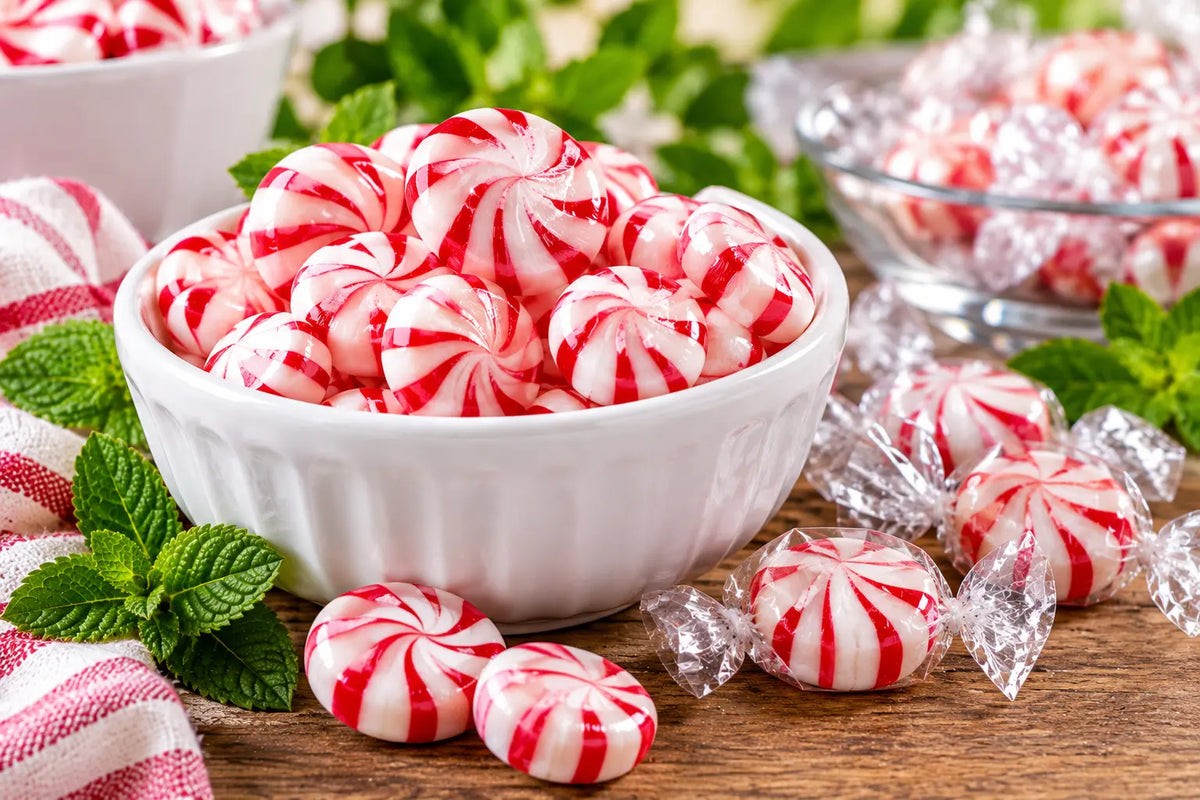
The classic starlight shape, made from a cooked sugar substitute syrup and flavored with peppermint oil, cooled into a hard, glassy piece.
Peppermint Bark
Layers of dark and white chocolate studded with crushed peppermint candy on top, usually broken into irregular pieces rather than cut cleanly.
Peppermint Patties
A soft, minty filling coated in a shell of dark chocolate, closer to a candy than a mint in how it's eaten.
Candy Canes
The hooked, striped stick version most associated with Christmas stockings, essentially a shaped version of the same hard candy base as a starlight mint.
Peppermint Taffy
A chewier style, less common than the others but still found in specialty shops, built on a different sweetener base to achieve that stretchy texture.
Each of these formats presents its own challenge once sugar comes out of the recipe, since the role sugar plays changes depending on whether the candy needs to be hard, chewy, or simply sweet enough to balance chocolate.
What Actually Replaces the Sugar
A handful of ingredients carry the weight across nearly every version of this candy.
- Isomalt dominates the hard candy space, since it behaves closely to sugar syrup once heated and cooled, giving mints and candy canes their signature glassy snap.
- Erythritol shows up often in bark and patty fillings, where a granulated texture matters less than in a poured hard candy.
- Allulose has gained ground in chewier styles like taffy, since it holds moisture and stretches better than most other substitutes.
- Sucralose frequently gets blended in small amounts across formats, boosting sweetness without changing texture.
Sugar-free chocolate used in bark and patties relies on its own separate set of sweeteners, usually erythritol or monk fruit, layered on top of whatever the peppermint filling or topping uses.
A Quick Comparison Across Formats
|
Format |
Main Sweetener |
Texture |
Best For |
|
Hard mints |
Isomalt |
Glassy, hard |
Pocket candy, after dinner |
|
Peppermint bark |
Erythritol + chocolate sweetener |
Crisp, layered |
Holiday gifting |
|
Peppermint patties |
Erythritol or allulose |
Soft center, firm shell |
Chocolate lovers |
|
Candy canes |
Isomalt |
Glassy, hard |
Stocking stuffers |
|
Peppermint taffy |
Allulose |
Chewy, stretchy |
Novelty, specialty shops |
This table is a starting point rather than a strict rule, since brands often blend more than one sweetener to fine-tune flavor and texture.
Is This Candy Keto Friendly?
Most formats fit comfortably into a keto plan, though the exact numbers shift depending on the format. A single hard mint usually carries 0 to 2 grams of net carbs. A piece of peppermint bark runs a bit higher, typically 2 to 4 grams per piece, since it includes chocolate alongside the peppermint. A peppermint patty tends to land in a similar range to bark, given its chocolate shell.
Portion size matters more with bark and patties than with hard mints, simply because it's easier to eat several pieces of bark without noticing compared to a single small mint.
Who Reaches for This Candy Most
People Managing Diabetes
Low-glycemic sweeteners across every format keep this candy from spiking blood sugar the way the traditional sugary versions would.
Keto and Low-Carb Eaters
The minimal carb load of most peppermint candy makes it one of the easier treats to fit into a daily plan without much math involved.
Holiday Shoppers and Gift Givers
Sugar-free peppermint bark and candy canes have become a standard stocking stuffer or gift box addition for anyone managing diabetes during a season built heavily around sugar.
Home Bakers
Peppermint bark in particular has become a popular DIY project, since it requires no baking and comes together with just melted chocolate and crushed candy.
Parents Managing a Child's Sugar Intake
A small mint or a couple pieces of bark feel like a real treat without adding much to a child's daily sugar total.
Making Peppermint Bark at Home
Of all the formats covered here, peppermint bark is the easiest to make without special equipment or a candy thermometer.
-
Melt the sugar-free dark chocolate and spread it into an even layer on a parchment-lined pan, then chill until set.
-
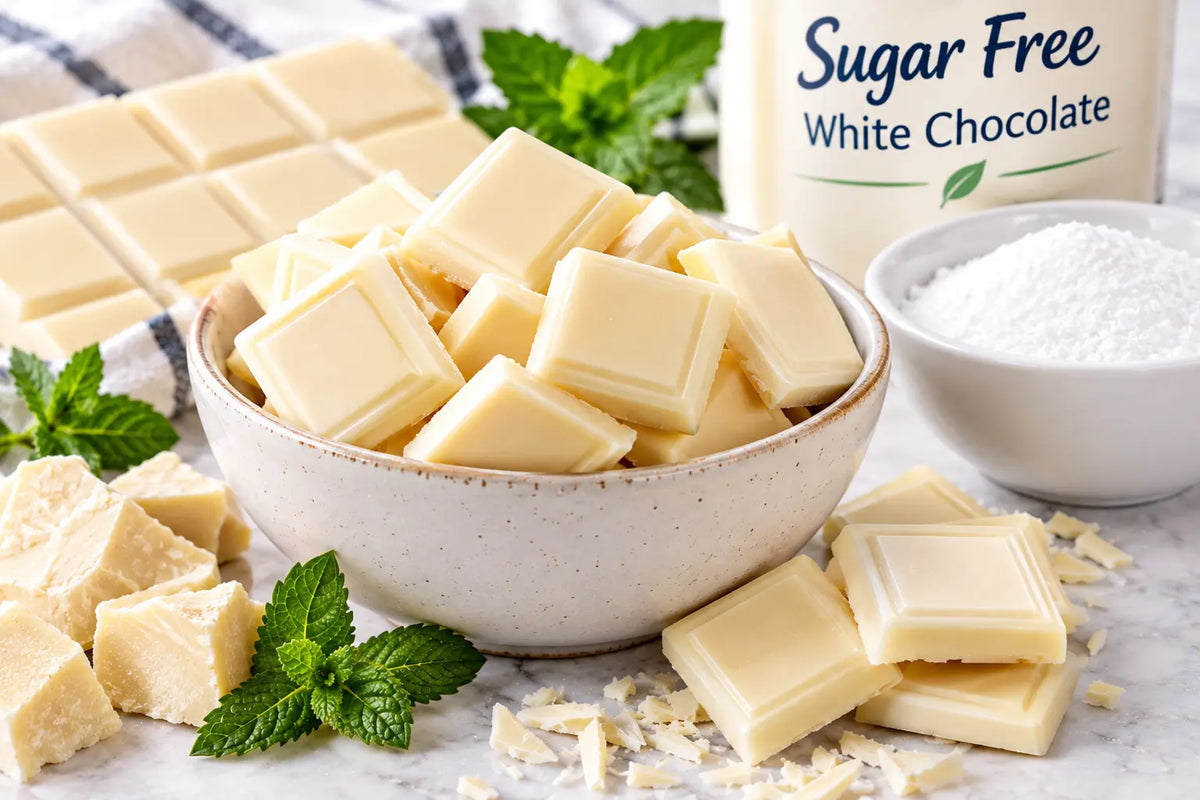
Melt the sugar-free white chocolate separately, stir in a small amount of peppermint extract, and pour it over the chilled dark layer.
-
Sprinkle crushed sugar-free peppermint candy across the top while the white layer is still soft.
-
Chill again until fully firm, then break into irregular pieces.
A little goes a long way with peppermint extract specifically, since it's far more concentrated than peppermint oil found in hard candy.

Where Homemade Bark Tends to Go Wrong
A few recurring mistakes show up often with this particular treat.
-
Too much extract. Overdoing peppermint extract can leave a soapy, medicinal taste rather than a pleasant mint flavor.
-
Chocolate that seizes. Any water contact while melting chocolate can turn it grainy and unusable.
-
Skipping the chill between layers. Pouring white chocolate over a dark layer that hasn't set yet causes the two to blend into a muddy mess instead of staying distinct.
-
Crushing candy too finely. Very fine peppermint dust melts into the chocolate rather than staying crunchy on top.
Reading a Peppermint Candy Label
A little label knowledge helps across every format covered here.
-
Check which sweetener sits at the top of the ingredient list, since that tells you which one is doing most of the work.
-
Look at the serving size carefully for bark and patties specifically, since these formats are easier to overeat than a single hard mint.
-
Confirm whether the peppermint flavor comes from natural oil or an artificial flavoring, since natural tends to taste cleaner and sharper.
-
Check for a gluten-free statement if buying for a shared office or classroom setting.
Choosing a Brand Worth Buying Again
A handful of details separate a genuinely good sugar-free peppermint product from a forgettable one.
-
A short, recognizable ingredient list across every format
-
Individually wrapped pieces for hard mints and candy canes specifically, since loose hard candy sticks together over time
-
A named sweetener printed clearly on the label rather than a vague sugar-free claim
-
Reviews that mention flavor strength and aftertaste, since these are the two spots where sugar-free peppermint candy tends to disappoint
Andy Anand's approach to sugar-free candy reflects that same attention to detail, built around natural sweeteners rather than a single artificial shortcut. For a closer look at the wider sugar-free candy lineup, our guide to sugar-free candy covers more options worth exploring alongside peppermint.
The Digestive Side Worth Knowing About
Anyone who has read about sugar-free candy before has likely come across a warning about digestive discomfort, and it applies here too, though unevenly across formats.
Sugar alcohols like maltitol and, in larger amounts, erythritol aren't fully absorbed by the body. The unabsorbed portion can draw water into the intestines and ferment, leading to bloating or a laxative effect in large quantities. Hard mints rarely cause this issue, simply because a serving size is so small. Bark and patties carry more risk, since it's easier to eat several pieces without thinking about it.
A few habits help regardless of format:
-
Stick to a reasonable serving rather than working through a full batch of bark in one sitting.
-
Favor isomalt or erythritol based candy if your stomach tends to be sensitive.
-
Introduce any new sugar-free treat to kids gradually rather than all at once.

Peppermint's Long History as a Holiday Flavor
Peppermint's tie to the winter holidays runs deeper than most people realize. The flavor gained popularity in Europe centuries before candy canes became associated with Christmas in the US, largely thanks to its cooling, refreshing quality standing in contrast to heavier winter meals. Candy canes themselves became a holiday staple in America by the early 20th century, once mass production made striped hard candy affordable and easy to distribute.
Peppermint bark has a shorter but equally strong history, closely tied to Williams-Sonoma popularizing the layered chocolate treat in the 1990s, which turned it into an instant holiday tradition for a lot of American households. That relatively recent history is part of why bark feels more like a modern classic compared to the much older candy cane.
Understanding this background helps explain why sugar-free versions of both have grown so quickly. The tradition itself never depended on sugar specifically. It depended on the flavor and the ritual of unwrapping something minty during the holidays, both of which survive completely intact once sugar leaves the recipe.
Peppermint Candy Beyond the Holidays
While peppermint candy leans heavily seasonal, plenty of formats stay relevant year round.
-
Hard mints work as an everyday breath freshener regardless of season.
-
Peppermint patties get eaten as a chocolate treat any time of year, not just in December.
-
Peppermint tea and peppermint-flavored gum extend the flavor into non-candy formats that people reach for outside the holidays entirely.
This year-round relevance is part of why search interest in sugar-free peppermint candy, while spiking around November and December, never fully disappears the rest of the year.
Pairing Peppermint Candy With Drinks and Desserts
Peppermint candy rarely stands alone at a holiday gathering. A few common pairings show up again and again.
-
Sugar-free hot cocoa with a crushed hard mint stirred in brings the classic candy cane cocoa flavor without the added sugar.
-
Coffee, especially a dark roast, pairs naturally with peppermint bark's combination of dark and white chocolate.
-
Sugar-free vanilla ice cream crumbled with crushed peppermint patties makes for an easy, no-bake dessert.
-
Sugar-free brownies or cookies, topped with crushed candy cane pieces, borrow the same flavor combination found in peppermint bark.
None of these pairings require a specific recipe. A handful of crushed peppermint candy sprinkled over an existing dessert is often enough to bring in that familiar holiday flavor.
Storing Different Formats
Storage needs shift depending on which type of peppermint candy is involved.
-
Hard mints and candy canes keep best in a cool, dry spot away from direct sunlight, since heat can cause them to soften or stick together.
-
Peppermint bark stores well in the fridge, especially in warmer climates, since the chocolate can soften at room temperature.
-
Peppermint patties hold up fine at room temperature for a few days but last longer refrigerated.
-
All formats benefit from an airtight container once the original packaging has been opened.
Where This Candy Shows Up Across the US and Canada
Sugar-free peppermint candy moves well beyond a candy dish once the holidays roll around.
-
Office parties and school events, where individually wrapped mints travel easily
-
Holiday gift boxes and stockings, especially bark and candy canes
-
Diabetic care packages, paired with other sugar-free treats for a fuller gift
-
Everyday pockets, purses, and car consoles, since a mint takes up almost no space
Ingredient availability looks broadly similar in both countries, though a few specialty US brands ship into Canada rather than sitting directly on Canadian store shelves.
Bringing This Candy as a Gift
Peppermint candy travels well as a gift, which explains its popularity in care packages and holiday exchanges.
-
Choose individually wrapped mints or candy canes for anything traveling by mail.
-
Pair bark or patties with a note about the sweetener used, especially for a recipient managing diabetes closely.
-
Store bark in a cooler bag if hand-delivering it during warm weather, since chocolate softens quickly.
-
Consider a mixed box across formats, hard mints alongside bark or patties, for a gift that feels more varied than a single type of candy.
Frequently Asked Questions
Is sugar-free peppermint candy good for diabetics?
Generally yes, across most formats. Hard mints, bark, and patties all rely on low-glycemic sweeteners that cause a much smaller blood sugar rise than their traditional sugar-based counterparts.
What is the best sweetener for sugar-free peppermint bark?
Erythritol is common in both the chocolate and any added sweetness, often paired with a bit of monk fruit or stevia to round out the flavor.
Are sugar-free candy canes available for the holidays?
Yes, most major grocery chains stock sugar-free candy canes alongside the traditional version, typically from November through December.
Does sugar-free peppermint candy upset your stomach?
It can in large amounts, particularly bark and patties, since it's easier to eat several pieces without noticing. Hard mints rarely cause issues, given their small serving size.
Is peppermint bark keto friendly?
Usually, yes. A typical piece carries between 2 and 4 grams of net carbs, making it an easy fit for most keto plans in moderate amounts.
Can I make sugar-free peppermint bark without a candy thermometer?
Yes, bark requires no thermometer at all, unlike hard mints or candy canes. It only needs melted chocolate, a bit of peppermint extract, and crushed candy on top.
What is the difference between peppermint extract and peppermint oil?
Extract is generally milder and used in baked goods and bark, while oil is more concentrated and commonly used in hard candy, since it holds up better to the higher heat involved in making mints.
Are sugar-free peppermint patties the same as regular ones?
They're built the same way, a soft mint filling coated in chocolate, but use sugar substitutes like erythritol or allulose in place of sugar in both the filling and the chocolate shell.
How should sugar-free peppermint bark be stored?
Keeping it in the fridge, especially in warmer weather, helps the chocolate hold its shape and prevents it from softening or blooming.
Can kids eat sugar-free peppermint candy?
In moderate amounts, yes. Hard mints are among the easiest sugar-free candies for kids given their small serving size, though introducing any new sugar-free treat gradually remains a good habit.
Where can I buy good sugar-free peppermint candy in the US and Canada?
Most major grocery and pharmacy chains carry hard mints and candy canes, while bark and patties are more often found through specialty bakeries and brands that focus specifically on sugar-free treats.
Is isomalt different from erythritol in taste?
Isomalt has a milder sweetness on its own and holds up better to heat, which is why it dominates hard candy, while erythritol tastes closer to sugar directly but performs better in softer fillings like bark or patties.
Peppermint candy earns its place across so many different formats because the flavor itself never depended on sugar to work in the first place. A well-made isomalt mint, a properly layered piece of bark, or a chocolate-coated patty each prove that point in their own way.
Whichever format ends up in the stocking or the candy dish this year, the flavor stays exactly as sharp and refreshing as it always has. For more ways to round out a sugar-free treat rotation, the best sugar-free desserts guide and our sugar-free candy roundup are both worth a look next.