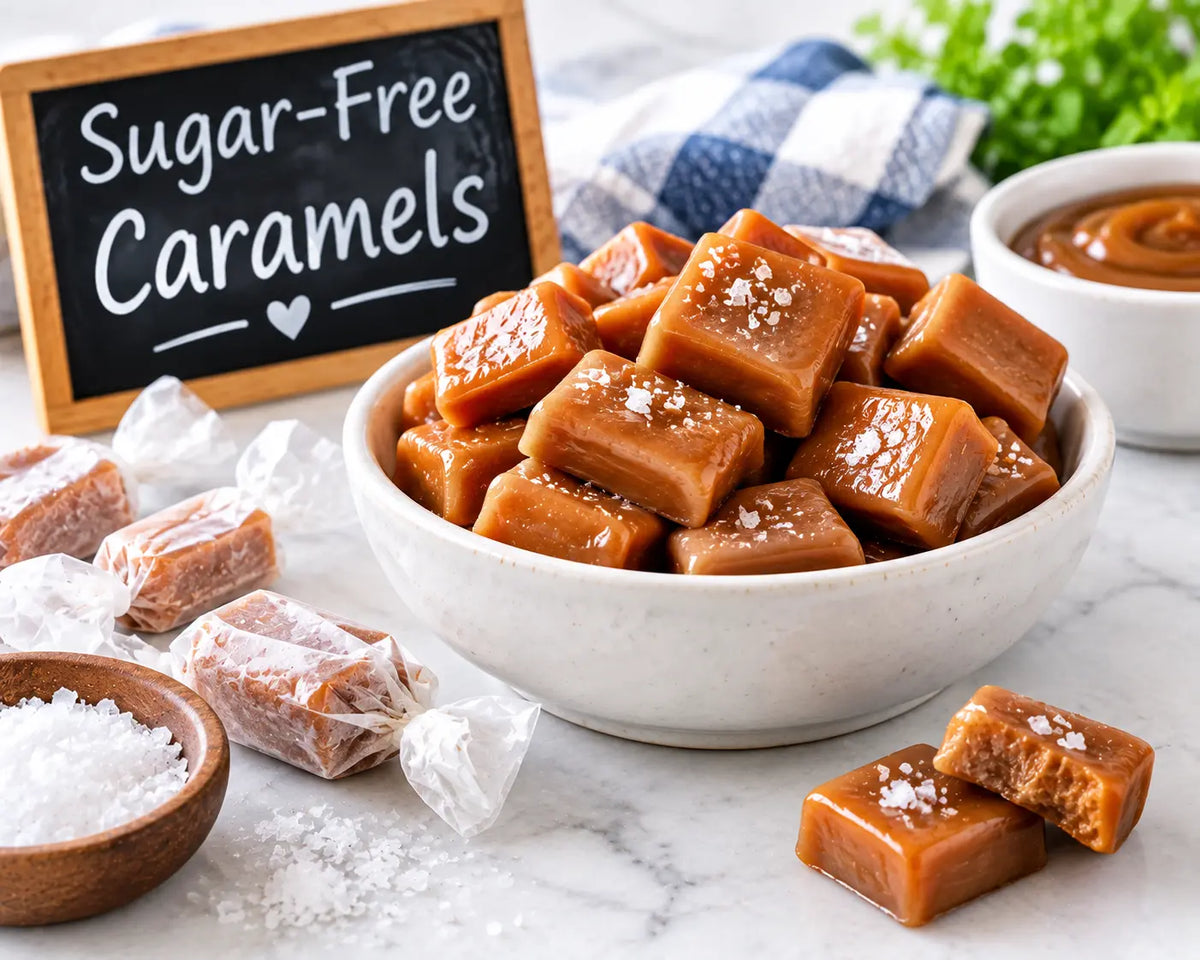
Sugar-Free Caramels Bring Back a Classic Without the Sugar
Caramel holds a strange kind of power over people. One bite brings back county fairs, holiday tins, and grandparents who always kept a jar within reach. That pull does not fade just because someone starts watching their sugar intake.
This is the exact gap sugar-free caramels fill. Shoppers across the US and Canada search for them for a mix of reasons. Some are managing diabetes. Some follow keto. Some just want the same chewy, buttery bite without the sugar crash an hour later.
This guide walks through what goes into a sugar-free caramel, why it can be tricky to get right, and what separates a good batch from a disappointing one. For a broader look at low-sugar treats, our guide to the best sugar-free desserts covers more ground beyond caramel alone.
What People Search Before Buying
Search behavior around this candy tends to cluster around a few clear needs. Common searches include:
-
Best sugar-free caramels
-
Sugar-free caramel for diabetics
-
Are sugar-free caramels keto friendly
-
Sugar-free caramel candy without maltitol
-
Homemade sugar-free caramel recipe
-
Sugar-free caramel sauce for desserts
Most of these searches point to the same underlying concern. Buyers want a caramel that actually tastes like caramel, not a stiff, waxy stand-in.
Why Caramel Is Hard to Make Without Sugar
Regular caramel gets both its flavor and its texture from melted sugar. Heating sugar slowly triggers a chemical reaction called caramelization, which builds that deep, toasted flavor and the chewy, stretchy bite people expect.
Sugar alternatives do not caramelize the same way. This is the main reason sugar-free caramel took longer to get right than many other sugar-free candies. A basic swap often leaves the flavor flat or the texture too firm.
Modern recipes solve this with a mix of tactics rather than a single fix. Slow cooking, added butterfat, and specific sweetener blends all work together to rebuild the texture that sugar alone used to provide.
What Sweetens a Sugar-Free Caramel
A handful of ingredients show up again and again in this candy.
-
Allulose: A newer sweetener that behaves closely to sugar when heated, which makes it a strong fit for caramel specifically.
-
Erythritol: Common in caramel, though it can crystallize if overheated, so recipes often blend it with something smoother.
-
Monk fruit extract: Frequently paired with allulose or erythritol to round out the sweetness.
-
Maltitol: An older standby that mimics sugar's texture well, though it carries a stronger risk of stomach upset in large amounts.
Many brands blend two or three of these together rather than relying on one. Blending tends to soften any single sweetener's downside, whether that is a cooling aftertaste or a crystallized texture.
Are Sugar-Free Caramels Keto Friendly?
Most versions fit into a keto plan without much trouble. A typical piece made with allulose or erythritol runs around 1 to 2 grams of net carbs. That makes caramel one of the more forgiving candies for anyone counting carbs closely.
Maltitol-based caramels sit a bit higher, since maltitol is only partially subtracted from net carb totals by most tracking methods. Reading the label rather than trusting a front-of-package keto claim is the safest approach here.
Who Reaches for This Candy Most
-
People managing diabetes: Low-glycemic sweeteners may help keep blood sugar steadier than traditional caramel. Portion size still matters, since some sweeteners contain partial calories.
-
Keto and low-carb eaters: A small, low-carb treat that still delivers a strong, familiar flavor rather than feeling like a compromise.
-
Anyone with a nostalgic sweet tooth: Not every buyer has a medical reason. Plenty of people simply grew up on caramel and want a version that fits their current diet.
-
Gift shoppers: A small bag or box of sugar-free caramels can work well as a gift for a friend or relative managing dietary restrictions, since it feels thoughtful without much cost.
Homemade vs Store-Bought
Both paths work, and the right one depends on time and patience.
|
Homemade Sugar-Free Caramel |
Store-Bought Sugar-Free Caramel |
|
|
Time needed |
30 to 45 minutes plus cooling |
Ready to eat immediately |
|
Ingredient control |
Full control |
Depends on the brand |
|
Consistency |
Can vary batch to batch |
Generally consistent |
|
Shelf life |
Shorter, needs refrigeration |
Often longer, check label |
|
Best for |
Hands-on cooks who enjoy the process |
Anyone short on time |
Neither option beats the other outright. A cook who enjoys candy-making often prefers the homemade route, while most everyday buyers lean toward a trusted store-bought bag.
A Simple Way to Approach Making It at Home
You do not need candy-making experience to try this. A general method looks like this.
-
Melt butter slowly in a heavy-bottomed pan over low heat.
-
Stir in your chosen sweetener until it dissolves fully.
-
Add heavy cream gradually, stirring constantly to avoid separation.
-
Keep the mixture at a gentle simmer, watching closely rather than walking away.
-
Test for doneness using a candy thermometer or the cold water drop method.
-
Pour the finished caramel into a lined pan and let it set.
-
Cut into pieces once fully cooled, then wrap individually if storing for later.
Patience matters more than skill here. Rushing the cooking stage is the most common reason a batch turns out grainy or too soft.
Common Mistakes Worth Avoiding
A handful of small missteps show up again and again with this candy.
-
Cooking on high heat: This can scorch the sugar substitute before it properly thickens, leaving a burnt taste.
-
Skipping the stirring: Caramel needs near-constant attention because it can separate or stick to the pan quickly.
-
Using the wrong sweetener alone: A single sweetener, especially erythritol on its own, can crystallize and create a gritty texture.
-
Cutting it too soon: Caramel needs time to firm up. Slicing it too early can leave you with a sticky, misshapen piece.
-
Storing it uncovered: Caramel can pick up moisture and odors quickly if left exposed in the fridge.
Reading a Sugar-Free Caramel Label
A little label know-how goes a long way with this candy.
-
Check the sweetener blend: A mix of two or three sweeteners can indicate a more carefully tested recipe than a single sweetener alone.
-
Look at the sugar alcohol content: This is especially important with maltitol-based caramels, since large amounts may cause digestive discomfort.
-
Confirm the net carb math: The term "net carbs" is not officially regulated, and brands may calculate it differently.
-
Check for dairy or nut warnings: Caramel recipes commonly include butter, cream, or nut-based add-ins, so check the label for potential allergens.
Choosing a Brand Worth Buying Again
A few details tend to separate a caramel worth repeating from one that ends up unfinished.
-
A short, familiar ingredient list: Look for a simple list rather than a long string of stabilizers.
-
A sweetener blend: A combination of sweeteners can provide a better balance of sweetness and texture than a single ingredient alone.
-
Clear texture descriptions in reviews: Caramel lives or dies on its chew and softness, so reviews can give you a better idea of what to expect.
-
A maker that focuses specifically on sugar-free candy: This can indicate more experience with developing and testing sugar-free recipes.
Andy Anand takes a similar approach to sugar-free treats, focusing on diabetic-friendly sweeteners and small-batch production. For more dessert ideas that pair well with caramel flavors, check out sugar-free cake for options worth trying alongside this candy.
Sugar-Free vs Regular Caramel: A Quick Look
Numbers make the difference easy to picture. Here is a rough comparison for one small piece.
|
Regular Caramel |
Sugar-Free Caramel |
|
|
Added sugar |
4 to 5 grams |
0 to 1 gram |
|
Net carbs |
5 to 7 grams |
1 to 2 grams |
|
Calories |
40 to 50 |
30 to 45 |
|
Blood sugar impact |
Moderate |
Low |
|
Texture |
Soft and chewy |
Soft, sometimes slightly firmer |
These figures shift a bit depending on the brand or the exact recipe. The overall pattern holds true across most versions on the market.
A Short Look at Why Caramel Feels So Nostalgic
Caramel has a long history tied to childhood memories in the US and Canada. Wrapped caramels tucked into holiday stockings, caramel apples at fall festivals, and caramel corn at movie theaters all built the same association over decades. Few candies carry that same weight of memory attached to their flavor.
That emotional pull explains part of why sugar-free caramel matters so much to the people searching for it. A diagnosis or a diet change should not mean losing access to a flavor tied to so many good memories. Sugar-free caramel exists to close exactly that gap, letting the memory stay intact while the ingredients change underneath it.
Flavor Variations Worth Trying
A plain sugar-free caramel is already a solid treat, but a few twists can make it feel new again.
-
Sea salt: A light sprinkle on top balances the sweetness and makes the buttery flavor stand out.
-
Vanilla bean: Real vanilla bean, rather than extract alone, adds small flecks and a deeper aroma.
-
Espresso: A touch of espresso powder deepens the flavor without making it taste distinctly like coffee.
-
Chocolate-dipped: A thin coating of sugar-free dark chocolate turns a simple caramel into a two-part treat.
-
Cinnamon spice: A pinch stirred into the mixture gives it a warmer, more autumn-leaning flavor.
None of these require changing the base method. They simply build on a caramel that already carries plenty of flavor on its own.
Where This Candy Shows Up Across the US and Canada
Sugar-free caramel has found its way into more settings than a candy dish.
-
Holiday gift tins, often mixed alongside other sugar-free candy
-
Office desks, since individually wrapped pieces travel well
-
Care packages for a family member managing diabetes
-
Dessert toppings, drizzled over sugar-free cheesecake or ice cream
Availability looks fairly similar in both countries, though Canadian shoppers may find a narrower shelf selection compared to larger US chains, with online ordering closing that gap more often than not.
Gifting Sugar-Free Caramel the Right Way
Caramel travels well as a gift, provided a few small details get handled right. A box that arrives melted or stuck together undoes even the best recipe.
-
Choose individually wrapped pieces: This is a better option if the gift needs to survive a bag, mailbox, or warm car.
-
Check the shipping season: Caramel is more heat-sensitive than hard candy and can soften significantly during summer transit.
-
Include a short note about the sweetener used: This lets the recipient know what sweetener is included rather than having to guess.
-
Pair it with a complementary treat: Sugar-free chocolate or a small cake can make the gift box feel more complete.
A little extra care at this stage is often the difference between a gift that impresses and one that arrives as a soft, disappointing lump.
People Also Ask
1. Are sugar-free caramels keto-friendly?
Most are, especially those made with allulose or erythritol, which typically land around 1 to 2 grams of net carbs per piece.
2. Why is my homemade sugar-free caramel grainy?
This usually happens when a single sweetener, often erythritol, crystallizes from overheating. Blending it with allulose or monk fruit helps prevent this.
3. Can people with diabetes eat sugar-free caramel?
Most people managing diabetes can enjoy a piece or two in moderation, since low-glycemic sweeteners cause a much smaller blood sugar rise than regular caramel.
4. What is the best sweetener for sugar-free caramel?
Allulose is often considered the closest match to sugar's behavior when heated, which is why many recipes lean on it either alone or blended with another sweetener.
5. Does sugar-free caramel taste different from regular caramel?
It can taste very close, especially with a well-balanced sweetener blend. Some versions carry a faint aftertaste, which tends to fade with a better recipe.
6. How should sugar-free caramel be stored?
Keeping it in an airtight container in the fridge helps maintain texture. Individually wrapping pieces prevents them from sticking together.
7. Can sugar-free caramel cause stomach upset?
In large amounts, sweeteners like maltitol or sorbitol can cause bloating or a laxative effect. Sticking to a reasonable serving usually avoids this.
8. Is sugar-free caramel sauce available for desserts?
Yes, several brands sell a pourable sugar-free caramel sauce, which works well over sugar-free cheesecake, ice cream, or cake.
9. Where can I buy good sugar-free caramels in the US and Canada?
Major grocery and specialty stores carry a range of options, though bakeries and brands that focus specifically on sugar-free candy tend to offer more consistent quality.
10. Can kids eat sugar-free caramel?
In small amounts, yes. Since children can be more sensitive to sugar alcohols, starting with a small portion is a smart first step.
11. Can sugar-free caramel be used in baking?
Yes. It works in cookies, bars, and cake fillings much the same way regular caramel does, though softer varieties may need a short chill before baking with them.
12. Is sugar-free caramel gluten-free?
Most recipes are naturally gluten-free, since the core ingredients are butter, cream, and a sweetener. Checking labels for any added flavoring or coating is still worth doing for anyone with celiac disease.