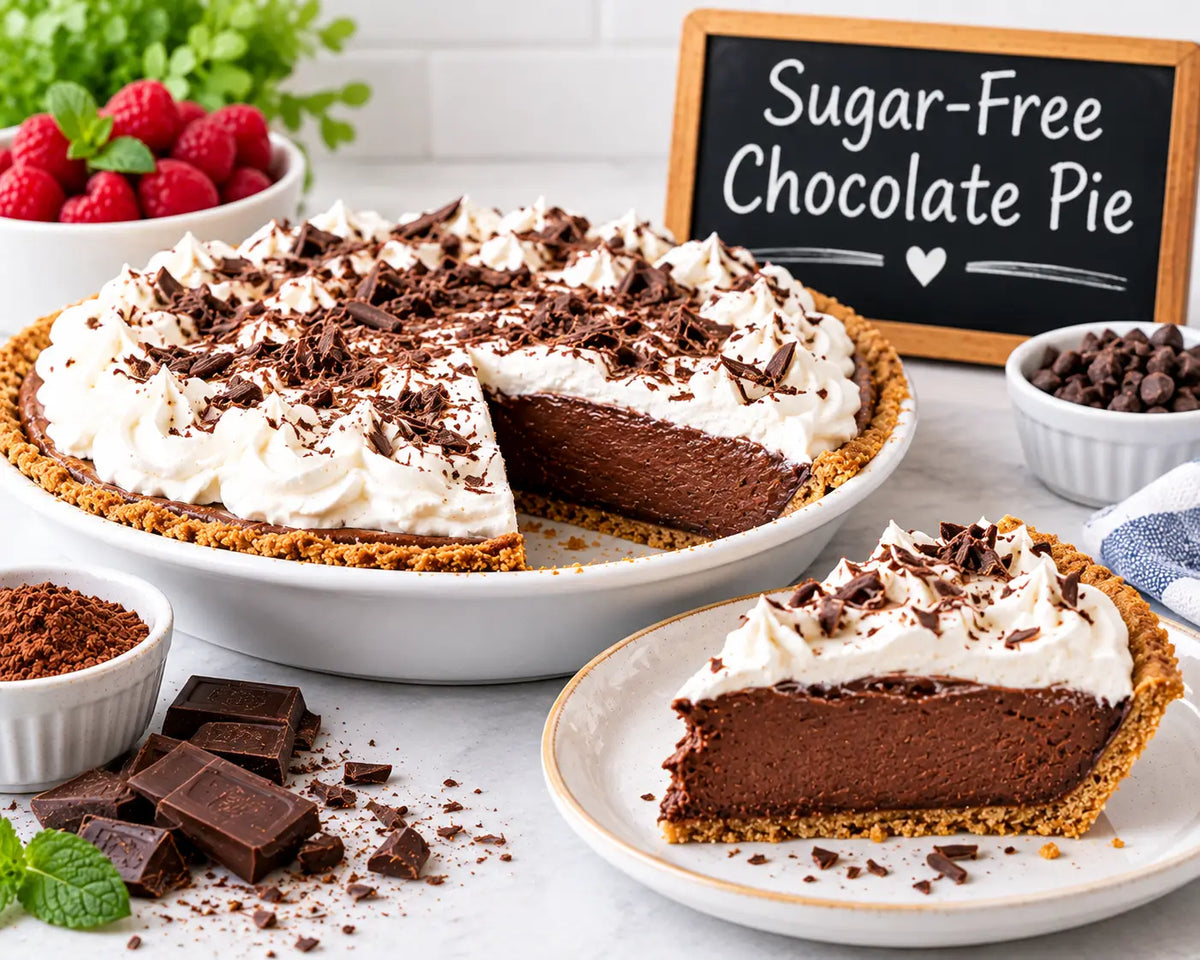
Sugar-Free Chocolate Pie Still Feels Like a Holiday Showstopper
Chocolate pie shows up at the exact moments that matter most. Thanksgiving tables. Birthday dinners. That one potluck where everyone remembers whoever brought dessert. Losing access to it over a diet change feels bigger than losing a snack.
That is why sugar-free chocolate pie has become such a steady search across the US and Canada. People want the same silky filling and rich flavor. They just want it without the sugar that used to come with every slice.
This guide walks through the different styles of sugar-free chocolate pie, what goes into each one, and the small details that decide whether a pie sets properly or turns into a soupy mess. For more low-sugar dessert ideas, our guide to the best sugar-free desserts covers plenty of ground beyond pie.
What People Search Before Baking
A look at common search terms shows a fairly clear pattern. People type in things like:
-
Sugar-free chocolate pie recipe
-
Keto chocolate pie without eggs
-
Sugar-free chocolate cream pie for diabetics
-
French silk pie sugar free
-
How to thicken sugar-free chocolate pie
-
Best sweetener for chocolate pie filling
Most of these searches share one goal. People want a pie that actually holds its shape once sliced, not a filling that stays runny no matter how long it chills.
The Main Styles of Sugar-Free Chocolate Pie
Not every chocolate pie is built the same way. A few styles show up again and again in this category.
Chocolate cream pie: Built on a cooked pudding-style filling, usually thickened with eggs or a starch substitute like xanthan gum. This style leans creamy rather than dense.
French silk pie: A no-bake filling made by beating melted chocolate into whipped butter and eggs. It has a lighter, almost mousse-like texture once chilled.
Chocolate pecan pie: A baked version that swaps the classic corn syrup base for a sugar-free syrup alternative, keeping the nutty crunch on top of a firmer filling.
Avocado-based chocolate pie: A newer, dairy-free option that uses ripe avocado for body instead of eggs or cream, blended smooth with cocoa and a sweetener.

What Sweetens the Filling
A handful of ingredients carry most of the sweetness in these pies.
-
Erythritol. A common base sweetener, though it can crystallize if the filling cools too fast.
-
Allulose. Increasingly popular since it dissolves smoothly and behaves closely to sugar in a cooked filling.
-
Monk fruit extract. Often blended with erythritol to soften any aftertaste.
-
Liquid stevia. Used in small amounts, since a little goes a long way in a rich chocolate base.
Many recipes combine two of these rather than relying on one alone. This tends to smooth out the aftertaste that a single sweetener can sometimes leave behind.
Is Sugar-Free Chocolate Pie Keto Friendly?
Most versions fit comfortably into a keto plan. A typical slice made with a nut-based crust and erythritol or allulose filling usually falls between 4 and 7 grams of net carbs, depending on the crust and the exact filling used.
The crust matters just as much as the filling here. A traditional graham crust pushes the carb count up quickly, while an almond flour or coconut flour crust keeps the whole slice within most keto limits.
Who Reaches for This Dessert Most
People managing diabetes: A pie built around low-glycemic sweeteners may help limit the blood sugar impact compared with a traditional chocolate pie, while still delivering that same rich bite.
Keto and low-carb eaters: Low net carbs can make this an easier holiday dessert to fit into a low-carb eating plan without skipping dessert entirely.
Hosts serving a mixed table: One sugar-free chocolate pie can serve a table where guests have different dietary needs, instead of making two separate desserts.
Anyone avoiding dairy or eggs: The avocado-based style opens this dessert up to more households, since it skips both ingredients without losing the rich texture.
A Simple Way to Approach the Filling
You do not need advanced baking skills for most versions of this pie. A general method for a chocolate cream style looks like this.
-
Warm milk or cream gently in a saucepan, without letting it boil.
-
Whisk in cocoa powder and your sweetener until fully dissolved.
-
Temper a small amount of the warm mixture into beaten eggs, stirring constantly.
-
Return everything to the pan and cook gently until it thickens.
-
Pour the filling into a pre-baked or chilled crust.
-
Refrigerate for several hours, ideally overnight, before slicing.
Patience during the chilling stage matters more than any single ingredient choice.
Common Mistakes Worth Avoiding
A handful of small missteps show up often with this dessert.
-
Rushing the chill time. A filling that has not fully set will slide apart the moment you cut into it.
-
Cooking the eggs too fast. Adding hot liquid to eggs too quickly can scramble them instead of creating a smooth filling.
-
Using too much of one sweetener. A heavy hand with a single sweetener often leaves a noticeable aftertaste.
-
Skipping the crust pre-bake. A soggy bottom crust is one of the most common complaints with this dessert.
-
Storing it uncovered. The filling can dry out or crack on top if left exposed in the fridge.
Choosing the Right Chocolate
Since chocolate carries most of the flavor here, the type you pick changes the final result more than almost any other ingredient.
-
Look for unsweetened baking chocolate or sugar-free dark chocolate in the 60 to 70 percent cocoa range.
-
Read the label rather than trusting a front-of-package claim, since sweetener blends vary between brands.
-
Skip chocolate chips meant to hold their shape in baking, since they melt less smoothly into a filling.
-
Taste the chocolate on its own first, since any aftertaste carries straight through into the finished pie.
For more on sourcing chocolate that works well in desserts like this, our piece on sugar-free chocolate that nobody will guess is sugar-free covers a few options worth trying.
Choosing the Right Crust
The crust decides a lot about how the finished pie holds together and how many carbs end up in each slice.
-
Almond flour crust. The most common choice, holding together well with butter and a bit of sweetener.
-
Coconut flour crust. Works well blended with another flour, since coconut flour alone can turn dry and dense.
-
Gluten-free graham crust. A close match to the classic texture, using gluten-free crackers in place of wheat ones.
-
Crustless. Some bakers skip the crust entirely and serve the filling in small cups instead.
Why This Pie Carries So Much Weight at the Table
Chocolate pie has held a steady spot on American and Canadian dessert tables for generations. It shows up at the same holidays year after year, often made from a recipe passed down rather than looked up. That kind of history is part of why losing access to it feels different from giving up an average dessert.
A diet change or a diagnosis should not mean sitting out the dessert table entirely. Sugar-free chocolate pie exists to close that exact gap. It lets the tradition stay intact, the same pie on the same table, while changing only what needed to change underneath the surface.
This also explains a pattern worth noticing in how people search for this recipe. Many are not just hunting for nutrition numbers. They are trying to keep a family tradition going, which is why getting the taste and texture right matters as much as getting the carb count low.
Flavor Variations Worth Trying
A classic chocolate filling is already satisfying, but a few small additions can shift the flavor without touching the base method.
-
Peppermint extract. A drop or two turns this into a festive, holiday-ready pie.
-
Espresso powder. Stirred into the filling, it deepens the chocolate flavor without tasting distinctly like coffee.
-
Orange zest. Freshly grated zest pairs naturally with a dark chocolate filling.
-
Sea salt. A light sprinkle on top right before serving makes the chocolate flavor stand out more.
-
Toasted nuts. A layer of chopped pecans or walnuts on top adds crunch alongside the smooth filling.
None of these changes require adjusting the core recipe. They simply layer a new note onto a filling that already carries bold flavor on its own.
Serving Ideas for a Sugar-Free Chocolate Pie
A plain slice already stands on its own, but a few finishing touches round it out nicely.
-
A dollop of freshly whipped cream on each slice
-
A dusting of cocoa powder across the top before serving
-
Fresh raspberries or strawberries for a tart contrast
-
A drizzle of warm sugar-free chocolate ganache
-
Shaved dark chocolate curls for a more finished, bakery-style look
Storing Sugar-Free Chocolate Pie
Good storage keeps the texture smooth and the flavor fresh.
-
Keep the pie covered in the fridge once fully set.
-
Plan to finish it within four to five days for the best taste.
-
Avoid leaving slices out at room temperature for more than an hour.
-
Freeze individual slices, wrapped well, if you want to save some for later.
Where This Dessert Shows Up Across the US and Canada
Sugar-free chocolate pie has found its way into more settings than just holiday tables.
-
Thanksgiving and Christmas dinners, where one pie needs to work for the whole table
-
Diabetic-friendly birthday celebrations, replacing a traditional layer cake
-
Potlucks and office parties, where dietary needs vary from guest to guest
-
Everyday desserts for anyone simply cutting back on sugar year round
Ingredient availability looks similar in both countries, though Canadian shoppers may find a smaller selection of specialty sugar-free chocolate on local shelves, with online ordering filling that gap more often.
Buying a Pie Instead of Baking One
Not everyone wants to manage a stovetop custard or a delicate crust. Buying a ready-made pie is a reasonable choice, and a few details are worth checking first.
-
A short, clear ingredient list rather than a long string of stabilizers
-
A named sweetener on the label, instead of a vague sugar-free claim on the front
-
Cold or insulated shipping, since a chocolate filling is sensitive to heat in transit
-
A bakery that specializes in sugar-free desserts, since that usually means more testing behind the recipe
Andy Anand's approach to sugar-free desserts follows that same idea, with treats made in small batches around diabetic-friendly sweeteners.
Bringing This Pie to a Holiday Gathering
A chocolate pie headed to someone else's table needs a bit of extra planning, especially one with a delicate no-bake filling.
-
Keep it chilled during transport, using a cooler bag if the drive runs longer than 20 minutes.
-
Wait to add toppings like whipped cream or chocolate shavings until right before serving, so they stay fresh.
-
Bring the pan it was made in, rather than transferring slices, to keep the filling from shifting on the drive.
-
Let the host know about the sweetener used, especially if other guests are managing diabetes or following a specific diet.
A little planning here goes a long way toward making sure the pie arrives looking as good as it tasted when it went into the fridge.
Frequently Asked Questions
Is sugar-free chocolate pie keto friendly?
Most versions are, especially when made with an almond flour crust and a filling sweetened with erythritol or allulose. Depending on the recipe, a slice typically contains about 4 to 7 grams of net carbs.
Why did my chocolate pie filling not set?
This usually happens when the filling was not cooked long enough to thicken or was not given enough time to chill. Refrigerating the pie for several hours, or overnight, often helps the filling set properly.
Can people with diabetes eat sugar-free chocolate pie?
Many people with diabetes can enjoy sugar-free chocolate pie in moderation. However, the actual effect on blood sugar depends on the ingredients, portion size, and individual needs. Checking the total carbohydrate content is important.
What is the best sweetener for a chocolate pie filling?
Allulose and erythritol are common choices for chocolate pie fillings. They can also be blended together to reduce aftertaste and create a smoother texture.
Can I make chocolate pie without eggs?
Yes. An avocado-based or coconut cream filling can be made without eggs while still creating a rich and dense texture.
What is the difference between a chocolate cream pie and a French silk pie?
A chocolate cream pie is usually cooked on the stovetop until the filling thickens. A French silk pie typically uses a lighter, mousse-like filling made with ingredients such as melted chocolate, butter, and eggs.
How long does sugar-free chocolate pie last in the fridge?
Sugar-free chocolate pie usually stays fresh for about four to five days when covered and refrigerated. The texture is often best within the first two or three days.
Can I freeze sugar-free chocolate pie?
Yes. Individual slices freeze well when wrapped tightly. Thawing them slowly in the refrigerator helps maintain a smooth texture.
Why does my crust turn soggy under the filling?
A soggy crust often happens when the crust is not pre-baked before adding the filling. A short bake of about 8 to 10 minutes can help the crust become firmer and better support the filling.
Can I buy sugar-free chocolate pie instead of making one?
Yes. Some bakeries offer ready-made sugar-free chocolate pies. Before ordering, check the ingredient label, nutrition information, and shipping instructions to make sure the pie meets your needs.
Is sugar-free chocolate pie safe for someone with celiac disease?
It depends on the ingredients and preparation. Almond flour and coconut flour crusts can be gluten-free, but it is still important to check the ingredient label and look for a clear gluten-free designation to reduce the risk of cross-contamination.
Can kids eat sugar-free chocolate pie?
Yes, children can enjoy sugar-free chocolate pie in normal portions. If the crust contains almond flour or another nut-based ingredient, check for nut allergies before serving it to a group of children.
A good sugar-free chocolate pie comes down to a handful of small decisions done carefully. The right sweetener, a crust that can hold its own, and enough patience during the chill time are really all it takes. For more ideas on rounding out a sugar-free dessert table, the best sugar-free desserts guide and our closer look at sugar-free chocolate that nobody will guess is sugar-free are both worth reading next.