Gluten-Free Cheesecake Crust That Holds Up and Tastes Good
Cheesecake gets most of the attention. The crust rarely does. But a bad crust can ruin a great cheesecake fast. It can turn soggy. It can crumble apart the second you cut a slice.
This problem gets bigger once flour is off the table. A regular graham cracker crust leans on wheat flour for structure. Take that away and the crust needs a new plan.
That is exactly what this guide covers. It looks at the best gluten-free crust options, how they compare, and the small steps that help keep a crust firm instead of falling apart. For more sugar-free and gluten-friendly dessert ideas, our guide to the best sugar-free desserts is also worth checking out.
What People Search Before Baking
A look at common search terms shows a clear pattern. People are not just looking for a recipe. What they really want is a base that stays in one piece under a heavy filling. Common searches include:
-
Best gluten free cheesecake crust
-
Gluten free graham cracker crust alternative
-
Almond flour crust for cheesecake
-
Why is my gluten free crust soggy
-
No bake gluten free cheesecake crust
-
Gluten free cheesecake crust without nuts
Most of these searches share one goal. People want a crust that holds together, tastes good, and does not fall apart under a heavy filling.
Why Regular Crust Relies on Gluten
A classic graham cracker crust uses wheat flour, sugar, and melted butter. Wheat flour has gluten. Gluten is a protein. It gives baked goods their structure and a bit of stretch.
Take gluten out and the crust loses some of that natural hold. This is why a gluten-free crust often needs a slightly different approach. Simply trading one flour for another rarely fixes the problem on its own. What actually helps is picking an ingredient built to bind and hold shape the way wheat once did.
The Best Gluten-Free Crust Options
There is no single best crust for every cheesecake. The right one depends on taste, texture, and any allergies in the house.
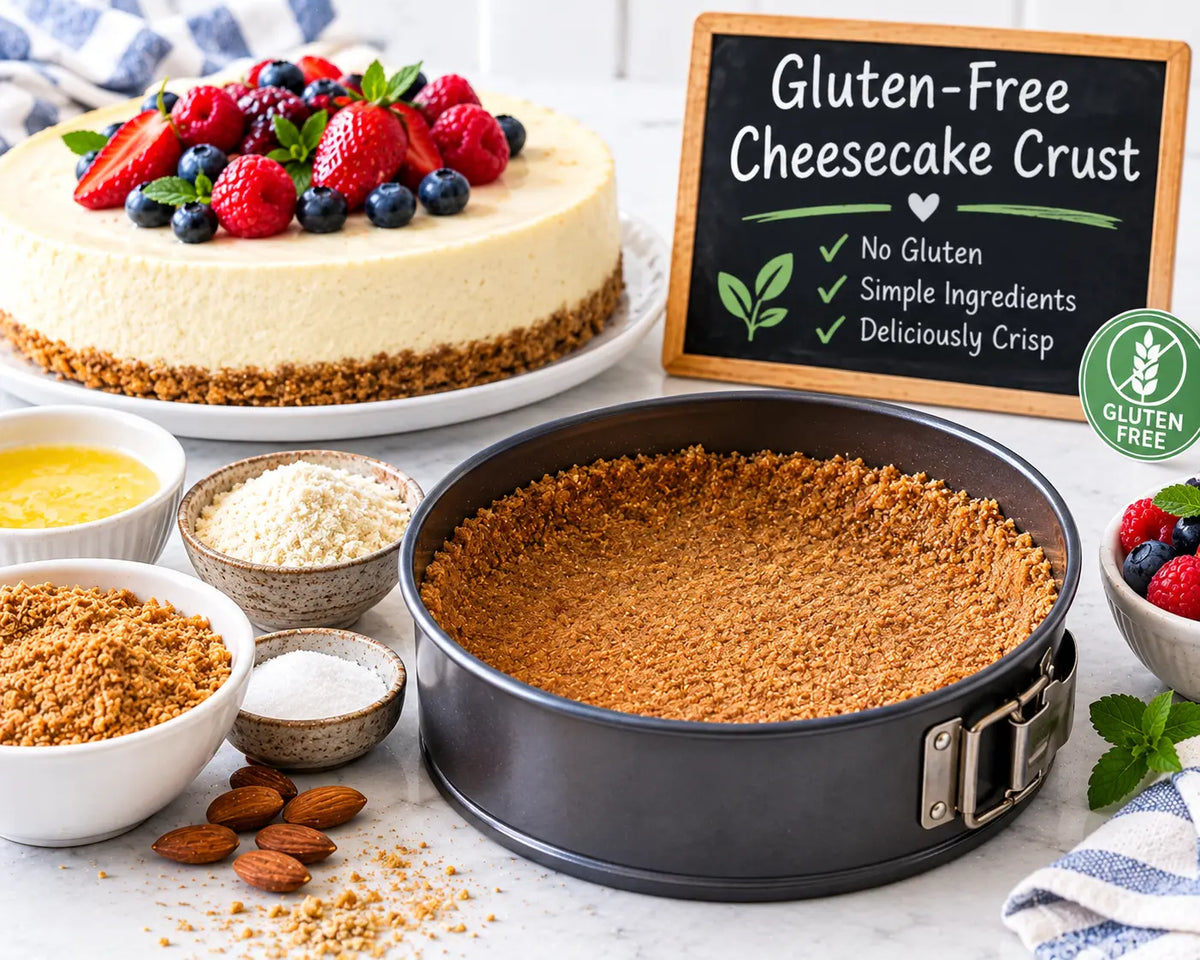
Almond Flour Crust
This is the most common choice. Almond flour is finely ground and holds together well with butter. It gives a slightly nutty flavor that pairs nicely with cheesecake.
Gluten-Free Graham Cracker Crust
Several brands now sell gluten-free graham crackers. Crushed with butter and a little sugar, they taste very close to a classic cheesecake crust.
Coconut Flour Crust
Coconut flour is dry and absorbent. It works best when blended with another flour, since coconut flour alone can turn dense and dry.
Pecan or Walnut Crust
Ground nuts create a rich, buttery crust with a deeper flavor. This option skips almond flour entirely, which makes it useful for anyone avoiding almonds specifically.
Rice Flour Crust
Rice flour has a light, neutral taste. It works well mixed with a bit of sugar and butter, making it a simple and versatile option for a gluten-free cheesecake crust.
|
Crust Type |
Nut-Free |
Texture |
Flavor |
|
Almond flour |
No |
Slightly soft |
Nutty |
|
Gluten-free graham crackers |
Yes |
Firm and crisp |
Classic and sweet |
|
Coconut flour |
Yes |
Dense |
Mild and dry |
|
Pecan or walnut |
No |
Rich and crumbly |
Deep and buttery |
|
Rice flour |
Yes |
Light |
Neutral |
This table is a starting point. The right pick often comes down to what your kitchen already has on hand.
Stopping a Soggy Bottom Before It Starts
A soggy crust is the most common complaint with gluten-free cheesecake. A few habits fix this almost every time.
-
Give the crust a short trip in the oven, roughly 8 to 10 minutes, before the filling ever touches it.
-
Let the crust cool fully before pouring in the cheesecake mixture.
-
Use enough melted butter to bind the crumbs, but not so much that it turns greasy.
-
Press the crust firmly and evenly into the pan, especially at the edges.
-
Avoid a water bath if your crust is already delicate, since steam can soften it further.
A Simple Method for Making the Crust
Nothing fancy sits behind this crust. A basic method looks like this:
-
Mix your dry crust ingredients together in a bowl.
-
Add melted butter and stir until the mixture looks like wet sand.
-
Push the mixture down into the pan with the back of a spoon, packing it tight and even.
-
Slide it into the oven at a moderate temperature and let it bake for roughly 8 to 10 minutes.
-
Let it cool completely before adding the cheesecake filling.
This part of the process rarely takes more than 15 minutes of hands-on time.
Common Mistakes That Ruin a Gluten-Free Crust
A few small errors show up again and again. Watch out for these:
-
Skipping the pre-bake. This step is what keeps the bottom from turning mushy once the filling goes in.
-
Using too little butter. Not enough butter means the crust falls apart the moment you slice it.
-
Packing the crust too loosely. A loose crust crumbles under the weight of the filling.
-
Using stale nut flour. Nut flours go rancid faster than wheat flour, which can leave a bitter aftertaste.
-
Cool it too fast. Pulling it straight from a hot oven into a cold fridge can shock the crust into cracking.
Is Gluten-Free Cheesecake Crust Safe for Celiac Disease?
Most of the ingredients used in these crusts, such as almond flour, rice flour, and pure butter, do not contain gluten on their own. The real risk usually comes from two places:
-
Cross-contamination: The same tools or surfaces may have recently been used with wheat flour.
-
Store-bought cookies or crackers: Some products are processed on shared equipment that also handles wheat products.
For anyone with celiac disease rather than a general gluten sensitivity, checking labels matters more than most people expect. A package labeled gluten-free should also have a clear gluten-free certification when possible, rather than relying only on the ingredient list.
Who Benefits Most From a Gluten-Free Crust
Anyone Managing Celiac Disease or a Wheat Sensitivity
A crust made without wheat can help avoid gluten exposure, as long as cross-contamination is also avoided during preparation.
Hosts Serving a Mixed Group
One gluten-free cheesecake can serve a whole table, instead of requiring two separate desserts for guests with different dietary needs.
People Who Prefer the Taste
Not everyone avoiding gluten has a medical reason. Some people simply prefer the nutty flavor of an almond or pecan crust over a traditional graham cracker base.
Anyone Avoiding Both Gluten and Sugar
Many gluten-free crusts pair easily with a sugar-free filling, since both swaps can work with a similar range of ingredients. Our guide to sugar-free cake covers more ways to p

Buying a Crust Instead of Making One
Not everyone wants to press crumbs into a pan from scratch. A store-bought option can work well, and a few things are worth checking first.
-
Look for a clear gluten-free certification on the package, not just an ingredient list that looks safe.
-
Check the expiration date, since nut-based crusts do not last as long as wheat-based ones.
-
Read reviews that mention texture, since some pre-made crusts turn out crumbly straight out of the box.
-
Buy from a bakery that specializes in gluten-free or allergy-friendly desserts, since that usually means more care went into the recipe.
Storing a Gluten-Free Cheesecake Crust
Good storage keeps the crust firm instead of soft. A few simple habits help.
-
Store the finished cheesecake in the fridge, covered, for up to five days.
-
Keep it away from very moist foods in the fridge, since crusts can absorb moisture over time.
-
Freeze extra slices individually if you want to save some for later.
-
Let frozen slices thaw in the fridge, not on the counter, to keep the crust from getting soggy.
Where This Crust Shows Up Across the US and Canada
Gluten-free cheesecake crust has become common in more places than just home kitchens. It shows up at:
-
Bakery display cases, often labeled clearly for allergy-conscious shoppers
-
Holiday dinners, where one dessert needs to work for the whole table
-
Restaurant menus, especially at places that already serve gluten-free options
-
Celebrations for someone managing celiac disease, since it removes the need for a separate dessert
Ingredient availability looks similar in both countries. Canadian shoppers may find a smaller selection of gluten-free graham crackers on local shelves, though almond flour and rice flour are widely available in both.
Gluten-Free Crust vs Regular Crust: A Quick Look
Numbers help make the difference clear. Here is a rough comparison for one slice of crust.
|
Regular Graham Crust |
Gluten-Free Almond Crust |
|
|
Contains gluten |
Yes |
No |
|
Carbs per slice |
12 to 15 grams |
4 to 6 grams |
|
Calories per slice |
90 to 110 |
100 to 120 |
|
Texture |
Firm and crisp |
Slightly softer |
|
Shelf life |
Longer |
Shorter |
These numbers shift a bit depending on the exact recipe. The pattern still holds across most versions.
Adding Flavor to a Gluten-Free Crust
A plain crust works fine on its own. A few small additions can make it feel more special.
-
Cinnamon. A small pinch adds warmth without changing the texture.
-
Cocoa powder. This turns a plain crust into a chocolate base, which pairs well with almost any filling.
-
Vanilla extract. A few drops mixed into the melted butter adds a subtle depth of flavor.
-
A pinch of salt. This helps balance the sweetness and makes the other flavors stand out.
-
Crushed sugar-free cookies. Mixing these into the base ingredient adds extra crunch.
None of these changes take more than a minute. They let the same basic crust work for many different cheesecake flavors.
Pairing a Gluten-Free Crust With a Sugar-Free Filling
A lot of people baking for dietary needs are managing more than one restriction at once. Someone might need a dessert that is both gluten-free and lower in sugar.
The good news is that most gluten-free crusts already pair well with sugar-free fillings. Almond flour and coconut flour both work fine alongside sweeteners like erythritol or monk fruit. The crust ingredients rarely need to change based on the filling's sweetener.
This makes gluten-free cheesecake one of the easier desserts to fully customize for a guest with multiple dietary needs. One crust recipe can often support several different filling variations without much extra work.
Choosing the Right Pan for a Gluten-Free Crust
The pan matters more than most people expect with a gluten-free crust, since these crusts tend to be more delicate than a wheat-based one.
-
A springform pan works best for most recipes, since it lets you release the sides without cutting into the crust.
-
A tart pan with a removable bottom works well for a thinner crust that needs less structural support.
-
Muffin tins are a good choice for mini cheesecakes, since smaller portions put less weight on each crust.
-
Parchment paper on the bottom makes removal easier, especially with a crust that has no gluten to help it hold together.
A well-chosen pan can prevent a lot of the cracking and crumbling that gluten-free crusts are known for.
Frequently Asked Questions
-
1. Is almond flour the best choice for a gluten-free cheesecake crust?
It is one of the most popular choices, since it holds together well and adds a mild, nutty flavor. It is not the only option, especially for anyone avoiding nuts.
2. Why does my gluten-free crust turn out soggy?
This usually happens when the crust is not pre-baked or is not cooled fully before the filling goes in. Pre-baking for 8 to 10 minutes fixes this in most cases.
3. Can I make a gluten-free cheesecake crust without nuts?
Yes. Rice flour, gluten-free graham crackers, and coconut flour all work well as nut-free options.
4. Is gluten-free cheesecake crust safe for celiac disease?
The core ingredients are naturally gluten-free, but checking for cross-contamination and proper labeling is still important, especially with store-bought cookies or crackers.
5. Can I skip the crust entirely?
Yes. A crustless cheesecake is a simple option that removes the gluten question completely while keeping the same creamy filling.
6. How long does a gluten-free cheesecake crust last?
Once baked and stored in the fridge with the filling, it stays fresh for about five days. The crust holds its texture well within that time.
7. What is the easiest gluten-free crust to make?
A gluten-free graham cracker crust is usually the easiest, since it just needs crushed crackers, butter, and a little sugar mixed together.
8. Can I buy a gluten-free cheesecake crust instead of making one?
Yes. Many bakeries offer ready-made gluten-free crusts or full cheesecakes. Checking for a clear gluten-free certification is worth doing before buying.
9. Does a gluten-free crust need a water bath?
Not always. Many gluten-free crusts are delicate, and the extra moisture from a water bath can soften them further. Baking without one often works better for these crusts.
10. Can kids eat gluten-free cheesecake crust?
Yes, in normal portions. If the crust uses nut flour, it is worth checking for any nut allergies first, since almond and pecan crusts are common choices.
A good gluten-free crust does not need to be complicated. Pick an ingredient that holds together well, pre-bake it, and let it cool fully before adding the filling. That is really all it takes to end up with a crust that tastes good and stays in one piece. A little patience during the cooling step often makes the biggest difference between a crust that slices cleanly and one that falls apart on the plate. For more ideas on building a full dessert table that works for gluten-free and lower-sugar guests, our guides to the best sugar-free desserts and sugar-free cake are worth a look next.