Artículo: What Makes Sugar-Free Carrot Cake Taste So Good?
What Makes Sugar-Free Carrot Cake Taste So Good?
Carrot cake has a strange reputation. Some people call it a vegetable dessert. Others say it is the most comforting cake on the table. Either way, it has earned a spot at birthdays, holiday dinners, and weekend brunches across the United States and Canada.
Trouble starts once you take sugar out of the recipe. Maybe diabetes is the reason. Maybe you are counting carbs. Maybe you simply do not want to crash an hour after dessert. Whatever brought you here, you still expect the cake to taste like an actual cake, not a watered-down version of one.
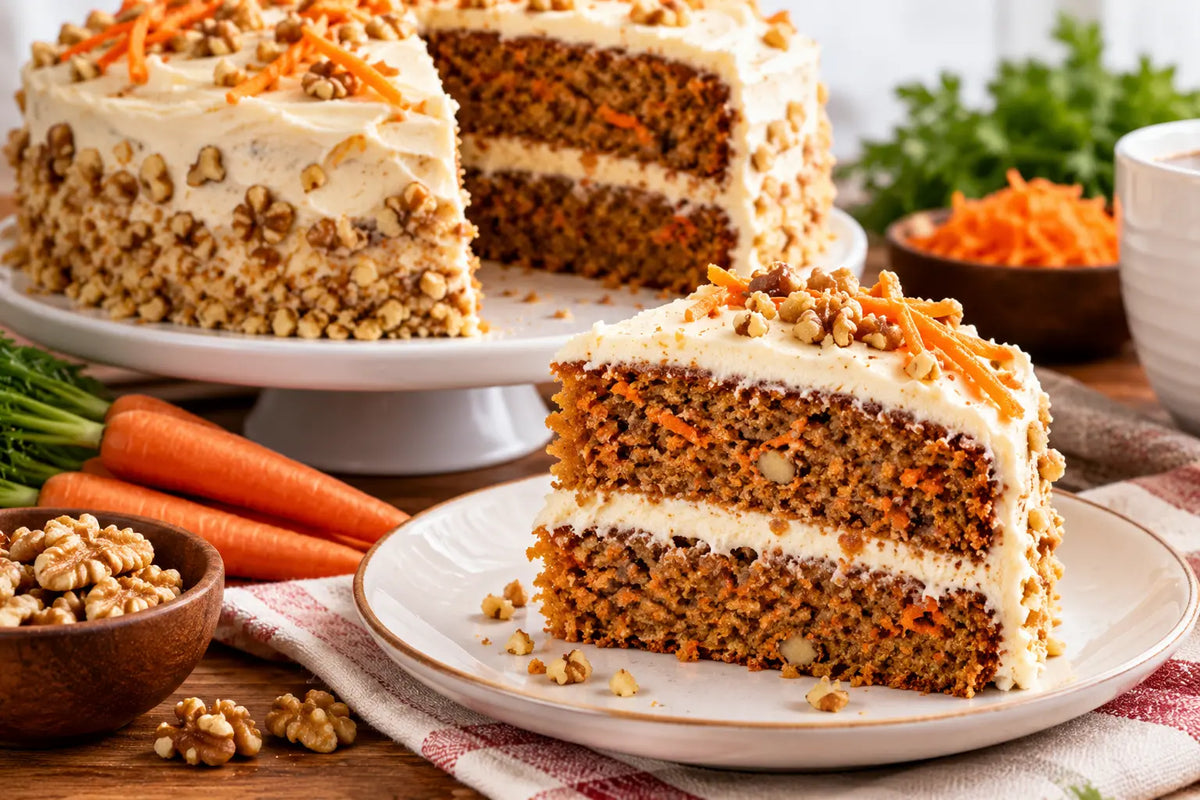
A properly built sugar-free carrot cake can give you exactly that. Soft layers, real warmth from the spices, genuine shredded carrots, and a frosting that still feels like a treat. Cutting sugar does not have to mean cutting flavor along with it.
This guide walks through what sugar-free carrot cake actually is, how it is made, what to look for before you buy one, and how to store it so every slice tastes as good as the first. If you are exploring more options beyond carrot cake, our complete guide to sugar-free desserts covers the full range, from chocolate to cheesecake.
Table of Contents
-
What Sugar-Free Carrot Cake Actually Means
-
How Sugar-Free Carrot Cake Is Made
-
Sugar-Free vs the Classic Version: A Quick Look
-
Why People Choose Sugar-Free Carrot Cake
-
Taste and Texture Walkthrough
-
Ingredients That Make the Difference
-
Nutritional Comparison Table
-
How to Store Sugar-Free Carrot Cake
-
Serving Ideas for Any Occasion
-
Things Worth Confirming Before You Buy
-
Who Benefits Most From This Cake
-
A Short History of Carrot Cake
-
Common Mistakes People Make With Sugar-Free Baking
-
Frequently Asked Questions
What Sugar-Free Carrot Cake Actually Means
Sugar-free carrot cake is a cake made without added table sugar, cane sugar, or high fructose corn syrup. Instead, bakers use sugar substitutes like erythritol, stevia, or monk fruit to create sweetness without the blood sugar spike.
The carrots themselves still carry natural sugars, but that amount is small and spread across the whole cake. It is nowhere close to what you get from a traditional frosted dessert loaded with granulated sugar.
A true sugar-free carrot cake keeps everything else intact. Real carrots. Real spices like cinnamon and nutmeg. Real cream cheese frosting, just made with a sugar substitute instead of powdered sugar. The goal is simple. Keep the parts that make carrot cake great. Remove the part that causes problems for many people.

How Sugar-Free Carrot Cake Is Made
Baking without sugar is not as simple as leaving an ingredient out. Sugar does more than sweeten. It affects texture, moisture, and how the cake browns in the oven. A skilled baker has to rebuild the recipe around that gap.
Here is the general process bakeries follow:
-
Shredded carrots are mixed fresh, never from a can or jar, to keep natural moisture and texture.
-
A sugar substitute replaces granulated sugar at a ratio that matches sweetness without changing the bake time too much.
-
Warm spices such as cinnamon, nutmeg, and sometimes ginger are added to build flavor depth, since sugar alone cannot carry a carrot cake.
-
Walnuts or pecans are folded in for crunch, though some versions skip nuts for allergy reasons.
-
The batter bakes slower and often at a slightly lower temperature, since sugar substitutes can brown faster than real sugar.
-
The frosting, usually cream cheese based, is whipped with a powdered sugar substitute so it still pipes and spreads smoothly.
Done well, the final texture is dense but soft, with a crumb that holds together and a frosting that is tangy rather than sickly sweet.
Sugar-Free vs the Classic Version: A Quick Look
A lot of people assume going sugar-free costs you taste or texture. That only happens when the recipe is rushed or poorly tested. Below is a straightforward comparison between the two.
|
Feature |
Traditional Carrot Cake |
Sugar-Free Carrot Cake |
|
Sweetener |
Granulated sugar, brown sugar |
Erythritol, stevia, or monk fruit blends |
|
Blood sugar impact |
High, causes spikes |
Minimal to none |
|
Calories per slice |
Typically higher |
Usually lower |
|
Carb count |
High |
Lower, often by half or more |
|
Texture |
Moist, soft crumb |
Moist, soft crumb when baked correctly |
|
Frosting |
Cream cheese with powdered sugar |
Cream cheese with sugar substitute |
|
Suitable for diabetics |
No |
Yes, in most cases |
|
Suitable for keto diets |
No |
Often yes, depending on recipe |
|
Shelf stability |
Standard |
Similar, sometimes shorter due to no sugar preservation |
The texture gap has closed a lot over the past few years. Sugar substitutes have improved, and bakers have learned how to work around the missing bulk and moisture that sugar once provided.
Why People Choose Sugar-Free Carrot Cake
Motivations differ from one buyer to the next, but a handful of reasons show up most often.
-
Living with type 1 or type 2 diabetes and still wanting dessert on the table
-
Keeping carbs down while following a keto style of eating
-
Reducing sugar intake for general health reasons
-
Avoiding sugar crashes during the day
-
Buying a cake that a mixed group of guests can all enjoy, diabetic or not
-
Looking for a dessert that fits into a weight management goal
What stands out is that most of these buyers are not giving up cake. They are looking for a version that fits their life without feeling like a sacrifice.
Taste and Texture Walkthrough
If you have never tried one, here is what to expect from a well-made version.
The first bite should taste like carrot cake first, sugar substitute second, if at all. Cinnamon and nutmeg should come through clearly. The carrots should add a light sweetness and a bit of texture, not turn to mush.
The frosting should be tangy from the cream cheese, with just enough sweetness to balance the spice in the cake. It should not taste chemical or leave an aftertaste, which is the most common complaint about lower quality sugar substitutes.
Texture matters just as much as taste. The cake should be moist enough that you do not need a glass of water with every bite, but firm enough to hold its shape when sliced.
Ingredients That Make the Difference
Not all sugar-free carrot cakes are built the same. The ingredient list tells you a lot before you even take a bite.
Look for:
-
Real carrots, listed early in the ingredient list, not carrot flavoring
-
A named sugar substitute such as erythritol, allulose, or monk fruit extract, rather than a vague "sugar alcohol blend"
-
Real butter or cream cheese rather than vegetable oil based substitutes
-
Natural spices rather than artificial flavoring
-
No high fructose corn syrup, even in small amounts, since some products sneak it into the frosting
A short, recognizable ingredient list is usually a good sign. If you cannot picture the ingredient in your kitchen, it is worth asking what it actually is.
Nutritional Comparison Table
Numbers vary by brand and recipe, but here is a general range to expect per slice, based on typical bakery-style servings.
|
Nutrient |
Traditional Carrot Cake Slice |
Sugar-Free Carrot Cake Slice |
|
Calories |
450 to 550 |
280 to 380 |
|
Total Sugar |
35g to 45g |
1g to 4g |
|
Net Carbs |
55g to 65g |
8g to 15g |
|
Fiber |
1g to 2g |
2g to 4g |
|
Protein |
4g to 6g |
5g to 7g |
These numbers will shift depending on portion size and the specific recipe, but the gap in sugar and carbs stays consistent across most brands.
How to Store Sugar-Free Carrot Cake
Storage matters more with sugar-free baking because sugar naturally helps preserve moisture and freshness. Without it, a cake can dry out faster if stored the wrong way.
For short term storage, keep the cake in an airtight container in the refrigerator. Because of the cream cheese frosting, refrigeration is necessary regardless of the sugar content. It should stay fresh for about five to seven days this way.
For longer storage, the cake freezes well. Wrap individual slices tightly in plastic wrap, then place them in a freezer safe bag or container. Frozen slices keep well for up to two months. Thaw in the refrigerator overnight rather than at room temperature, which helps the frosting keep its texture.
Avoid leaving the cake out at room temperature for more than two hours at a time, especially in warmer months, since the cream cheese frosting can spoil just like any dairy product.
Serving Ideas for Any Occasion
Sugar-free carrot cake fits into more moments than people expect. A few ideas worth considering:
-
Birthday celebrations where one or more guests are managing diabetes
-
Thanksgiving or holiday dinners as a lighter dessert option alongside richer dishes
-
Office parties where dietary needs vary across the group
-
Easter gatherings, since carrot cake already has a seasonal association with spring
-
A weekend treat paired with coffee, without the sugar crash that follows a traditional slice
A single cake can often cover a mixed group of guests, since it tastes good enough that people without dietary restrictions will not notice a major difference.
Things Worth Confirming Before You Buy
Not every bakery or brand handles sugar-free baking the same way. Before you order, it helps to check a few things.
First, look at how the product describes its sweetener. A clear, named ingredient is better than a vague claim like "naturally sweetened." Second, check whether the product is also gluten free or nut free if that matters for your household, since many sugar-free bakeries also cater to other dietary needs.
Third, read a few reviews that mention texture specifically, not just taste. Sugar-free baking is more likely to go wrong on texture than on flavor, so real feedback on moisture and crumb is valuable.
Finally, check shipping and storage instructions if you are ordering online. A cake that arrives melted or dried out says more about handling than about the recipe itself.
Who Benefits Most From This Cake
Certain groups get the most value from choosing a sugar-free carrot cake over a traditional one.
People managing diabetes benefit the most directly, since blood sugar spikes from dessert can be genuinely dangerous, not just inconvenient. Those following ketogenic or low carb diets also benefit, since a slice fits into daily carb limits far more easily than a traditional version.
Parents looking for lower sugar treats for children, older adults managing weight or heart health, and anyone recovering from sugar dependency also find this a practical middle ground. You still get to celebrate with cake. You just do not pay for it with a sugar crash later.
A Short History of Carrot Cake
Carrot cake has roots that go back further than most people assume. During medieval times in Europe, sugar was expensive and hard to come by, so bakers used carrots, which are naturally sweet, to add flavor to cakes and puddings without relying on costly sweeteners.
The cake saw a resurgence during both World Wars, when sugar rationing pushed home bakers back toward naturally sweet vegetables like carrots and beets. It became genuinely popular in the United States during the 1960s and 1970s, when it took on the cream cheese frosting most people associate with it today.
In a way, sugar-free carrot cake is a return to its original purpose. A cake built around a naturally sweet vegetable, made without relying heavily on refined sugar.
Common Mistakes People Make With Sugar-Free Baking
Even experienced home bakers run into a few recurring problems when they try sugar-free carrot cake for the first time.
Using too much sugar substitute is one common mistake, since many substitutes are sweeter by volume than sugar, and a one to one swap can make the cake overly sweet or leave a cooling aftertaste. Skipping the spices is another issue, since sugar often masks a bland spice blend in traditional recipes, and that gap becomes obvious once sugar is removed.
Overbaking is also common, since some sugar substitutes brown differently than sugar, leading bakers to pull the cake too early or too late based on color alone rather than checking with a toothpick. Finally, using bottled lemon juice or imitation vanilla in the frosting can introduce an artificial taste that fights against the natural sweetness of the carrots.
A careful recipe, tested more than once, avoids all of these issues.
Frequently Asked Questions
Is sugar-free carrot cake safe for diabetics?
Yes, in most cases. Because it skips added sugar and relies on substitutes that do not spike blood glucose the same way, it is generally considered a safer dessert option for people managing diabetes. That said, anyone with diabetes should still check the full nutrition label and talk to their doctor about portion size, since factors like total carbs still matter.
Does sugar-free carrot cake taste different from regular carrot cake?
There is a slight difference, but a well-made version comes very close. The biggest difference usually shows up in the frosting, where sugar substitutes can taste slightly less rounded than powdered sugar. The cake itself, with its carrots and spices, tastes very similar to the traditional version.
What sweetener is usually used in sugar-free carrot cake?
Most bakeries use erythritol, monk fruit extract, allulose, or a blend of these. Each has a slightly different taste profile, so trying a few brands can help you find the one that suits your palate best.
Is sugar-free carrot cake keto friendly?
Many versions are, but not all. It depends on the flour used and how many net carbs remain per slice. Always check the nutrition label if you are following a strict ketogenic diet, since almond flour or coconut flour based recipes tend to fit keto guidelines better than those made with wheat flour.
Can I freeze sugar-free carrot cake?
Yes. Wrap slices tightly and freeze for up to two months. Thaw in the refrigerator overnight rather than at room temperature to help the frosting hold its texture.
Why does my homemade sugar-free carrot cake taste bitter?
This usually comes from using too much of a sugar substitute, especially stevia, which can turn bitter in larger amounts. Reducing the quantity or blending stevia with another substitute like erythritol often solves the problem.
Is sugar-free carrot cake lower in calories than regular carrot cake?
Generally yes, since sugar itself carries calories with no other nutritional value. Removing it typically brings the calorie count down, though the exact difference depends on the recipe and portion size.
How long does sugar-free carrot cake last in the fridge?
About five to seven days when stored in an airtight container, mainly due to the cream cheese frosting rather than the sugar content itself.
Can people without dietary restrictions enjoy sugar-free carrot cake too?
Yes, and many do without noticing a major difference. It makes sugar-free carrot cake a practical choice for mixed gatherings where some guests have dietary needs and others do not.
Carrot cake earned its place on the dessert table because it offers something different from a typical sugar-heavy slice. A sugar-free version keeps that identity intact while fitting into more lifestyles, from managing diabetes to following a low carb diet. If carrot cake is not quite what you are craving today, take a look at our sugar-free cake collection for more options built the same way, with real ingredients and no added sugar.