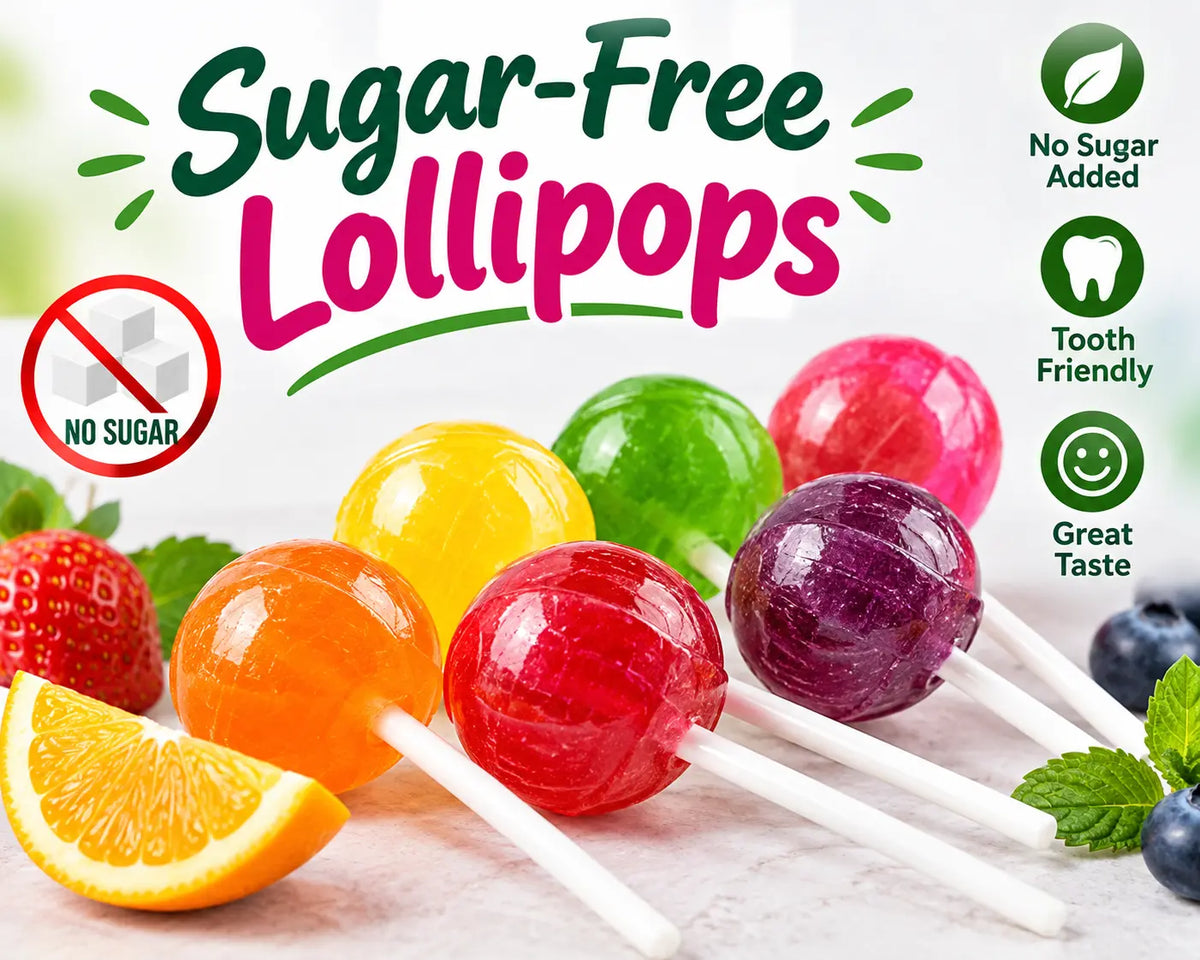
Sugar-Free Lollipops Do More Than Satisfy a Craving
A lollipop feels like the simplest candy there is. Stick, wrapper, a burst of flavor that lasts longer than most treats. That simplicity is exactly why sugar-free lollipops have quietly become one of the more useful items parents, dentists, and people managing chronic conditions keep close by across the US and Canada.
They show up in pediatric offices as a small reward. They sit in the bags of people going through cancer treatment. They're one of the few candies a person with diabetes can enjoy without much second guessing. And plenty of everyday shoppers reach for them simply because they want the same slow, sweet moment without the sugar that usually comes with it.
This guide walks through what sugar-free lollipops are made of, why so many different groups of people search for them, and how to choose a bag that actually holds up to the flavor and comfort a lollipop is supposed to deliver. For a wider look at low-sugar treats beyond this one, our guide to the best sugar-free desserts covers more ground.
What People Are Actually Searching For
A look at common search terms shows this candy answers more than one kind of question. People type in things like:
-
Best sugar-free lollipops for dry mouth
-
Sugar-free lollipops for diabetics
-
Are sugar-free lollipops keto friendly
-
Sugar-free lollipops for kids
-
Xylitol lollipops for oral health
-
Sugar-free candy for chemo patients
Notice how few of these are really about flavor alone. Most point to a specific need someone is trying to meet, which explains why this candy shows up in medical recommendations as often as it shows up in a candy dish.
The Dry Mouth Connection Behind Its Popularity
Here's something a lot of casual candy buyers never think about. Sucking on a lollipop triggers saliva production, and that alone makes it genuinely useful for chronic dry mouth, a condition doctors call xerostomia.
Dry mouth isn't just uncomfortable. It raises the risk of cavities, gum irritation, and trouble speaking or swallowing comfortably. Common causes include:
-
Certain blood pressure and antidepressant medications
-
Chemotherapy and radiation treatment
-
Sjogren's syndrome and other autoimmune conditions
-
Simple dehydration or breathing through the mouth at night
Dentists and oncology nurses often recommend sugar-free lollipops, tart or citrus flavors especially, precisely because they stimulate saliva flow without adding a steady stream of sugar onto teeth that are already more vulnerable. A regular lollipop would do the opposite job, feeding the same bacteria that cause the cavities dry mouth already puts someone at higher risk for.
What's Sweetening a Sugar-Free Lollipop
Nothing about a sugar-free lollipop's sweetness happens by accident. Most brands rely on one of two groups of ingredients.
Sugar alcohols like xylitol, erythritol, sorbitol, and maltitol give the candy both its structure and its sweetness. Xylitol carries a reputation that goes well beyond candy, since dental researchers have studied its ability to reduce the bacteria responsible for tooth decay. That's part of why it shows up so often in lollipops marketed specifically for oral health rather than as a plain sugar substitute.
Intense sweeteners such as stevia and monk fruit extract are far sweeter than table sugar, so only a small amount is needed. Because they contribute little bulk on their own, they're often paired with a sugar alcohol to help the candy hold its shape on a stick.
A quick comparison of what shows up most often on labels:
|
Sweetener |
Common In |
Worth Knowing |
|
Xylitol |
Dry mouth and dental lollipops |
May support oral health, but toxic to dogs |
|
Erythritol |
Fruit-flavored hard lollipops |
Gentler on digestion than most sugar alcohols |
|
Sorbitol |
Older lollipop formulas |
More likely to cause stomach upset in large amounts |
|
Stevia |
Natural-leaning brands |
Zero calorie, plant based, mild aftertaste |
|
Monk fruit |
Premium natural lollipops |
Zero calorie, often blended with a sugar alcohol |

Who Gets the Most Out of Choosing Sugar-Free
People managing diabetes
A lollipop built on low-glycemic sweeteners avoids the fast blood sugar rise that comes from sucrose, giving people managing diabetes one of the easier candies to reach for. Checking total carbs is still worth doing, since a few sugar alcohols carry partial calories.
Anyone dealing with dry mouth
Whether the cause is medication, treatment, or nothing more serious than sleeping with the mouth open, a tart sugar-free lollipop tends to outperform a plain mint here, since sourness itself encourages more saliva.
Kids and parents watching sugar intake
Lollipops last longer than most candy, which makes the sugar-free version appealing to parents who want to hand over a treat without adding much to the day's sugar total. Many pediatric dentists keep a jar of them for exactly this reason.
Keto and low-carb eaters
A small sweet fix without blowing through a daily carb allowance. Xylitol and erythritol-based lollipops tend to be the easiest fit, since a large share of what they contain doesn't register as usable carbohydrate.
Anyone who just wants a treat without the crash
Not every buyer has a medical reason. Some people simply prefer how they feel after a sweet that doesn't send their energy up and then straight back down.
Is It Actually Safe? The Honest Take on Digestive Side Effects
Anyone who has read about sugar-free candy before has probably run into a warning about a laxative effect, and it's worth addressing directly rather than glossing over.
Several sugar alcohols, sorbitol and mannitol especially, aren't fully absorbed in the small intestine. What doesn't get absorbed continues to the large intestine, draws in water, and ferments, which can cause bloating, gas, or loose stools if someone eats a large amount in one sitting. The FDA requires a printed warning on any product containing enough sorbitol or mannitol to trigger this.
A few practical guardrails:
-
Stick close to a reasonable number per day rather than working through a whole bag
-
Favor xylitol or erythritol based lollipops if your stomach tends to be sensitive
-
Keep xylitol candy far away from dogs, since it's highly toxic to them even in small amounts
-
Introduce a new sugar-free candy gradually with kids rather than handing over several at once
None of this makes sugar-free lollipops unsafe for the average person. It just means the same common sense that applies to any candy, eat a reasonable amount rather than the whole bag, applies here too.
Reading a Sugar-Free Lollipop Label
A sugar-free lollipop wrapper packs in more detail than a regular one. A little familiarity with the fine print goes a long way:
-
Check the sugar alcohol line under total carbohydrates. A high number relative to serving size predicts stomach discomfort better than the words "sugar-free" ever could.
-
Look at net carbs carefully if tracking strictly for keto, since the term isn't officially regulated and brands calculate it slightly differently.
-
Scan the first few ingredients, since they're listed by weight. A sweetener you're trying to avoid near the top of the list matters more than one buried near the bottom.
Choosing a Brand Worth Trusting
A few checks tend to separate a sugar-free lollipop worth buying again from one that ends up half finished in a drawer.
-
A short, recognizable ingredient list rather than a long string of unfamiliar additives
-
A sweetener blend rather than a single ingredient, since blending usually improves flavor and reduces digestive complaints
-
Clear labeling of other claims like gluten free, dye free, or vegan, since many buyers are managing more than one dietary need
-
A maker that focuses on sugar-free candy specifically, since that usually means more testing went into the recipe
Andy Anand's own sugar-free lollipops reflect that kind of focus, made with natural fruit flavors and no artificial dyes, individually wrapped for school lunches, office bowls, or a simple treat at home. If lollipops aren't quite the right fit, our broader look at sugar-free candy covers other options worth considering.
Lollipops, Hard Candy, and Mints: How They Compare
Lollipops translate into sugar-free form about as cleanly as any candy category, since they're essentially a cooked sweetener syrup shaped around a stick.
Fruit-flavored lollipops tend to be the most requested type, largely because of the dry mouth crowd. Tartness does double duty here, tasting sharp while actively encouraging saliva.
Mint lollipops and drops remain popular with people managing diabetes who want something small and familiar, though they don't stimulate saliva quite as effectively as a citrus-based option.
Novelty and seasonal flavors, like cinnamon or peppermint around the holidays, have become more common as brands compete on variety rather than just sweetener type.
Shopping for This Candy in the US and Canada
Availability looks fairly similar across both countries, though a few small differences are worth knowing. In the US, sugar-free lollipops are widely stocked in pharmacy chains, often near the dental care aisle rather than the regular candy section. Canadian shoppers can usually find comparable options, though certain smaller US brands sell online only, with shipping into Canada rather than shelf placement in Canadian stores.
Pricing also tends to run a bit higher for sugar-free candy than for regular candy in both markets, largely because sugar alcohols and natural sweeteners cost more to produce than plain sugar. Buying in bulk, which many brands offer, usually brings the per-piece cost down closer to what a regular bag of candy costs.
Why This Small Candy Carries So Much Trust
It's easy to overlook how much responsibility rests on something as small as a lollipop. Dentists hand them out because they trust the ingredients. Parents pack them in lunches because they trust the sugar count. Oncology nurses recommend them because patients trust that a small, familiar treat can make a hard day slightly easier.
That level of trust rarely comes from clever marketing. It comes from ingredient transparency, consistent testing, and a track record of not causing the problems a bad batch of sugar-free candy can create. A brand that keeps its label simple and its sweetener choices consistent tends to earn repeat buyers precisely because there's nothing surprising waiting inside the wrapper.
Picking Flavors People Actually Finish
Flavor still decides whether a sugar-free lollipop becomes a repeat purchase or sits forgotten in a jar. A few patterns show up consistently in customer feedback:
-
-
Citrus and berry flavors tend to rate highest, since the natural tartness pairs well with most sugar alcohols and masks any faint aftertaste.
-
Mint flavors work best for adults, particularly anyone using the candy for oral health rather than a sweet craving.
-
Overly sweet or artificial-tasting flavors get the most complaints, usually tied to a heavier reliance on a single sweetener instead of a blend.
Trying a variety pack before committing to a full case is a simple way to find out which flavors actually get finished rather than left half-eaten.
-
Everyday Moments Where This Candy Shows Up
Sugar-free lollipops have worked their way into more parts of daily life than a candy dish. Common spots include:
-
Pediatric and dental offices, where a sugar-free option lets every child leave with a treat
-
Classrooms and school lunches, since individually wrapped options are easy to manage
-
Care packages for a family member managing diabetes or going through medical treatment
-
Office desks and travel bags, since a lollipop lasts longer than most candy and takes up little space
Frequently Asked Questions
What makes a lollipop sugar-free?
Instead of table sugar, sugar-free lollipops use sugar alcohols like xylitol or erythritol, sometimes paired with stevia or monk fruit, to create sweetness without the same effect on blood sugar.
Do sugar-free lollipops really help with dry mouth?
Yes. Sucking on any lollipop stimulates saliva, and tart or citrus flavors tend to work especially well. This is part of why dentists and oncology teams often recommend sugar-free lollipops for people dealing with chronic dry mouth.
Are sugar-free lollipops safe for people with diabetes?
Generally yes, since they affect blood glucose far less than regular candy. Checking total carbs on the label is still worth doing, since some sugar alcohols aren't entirely calorie free.
Can sugar-free lollipops cause stomach problems?
In large amounts, some sugar alcohols like sorbitol and mannitol aren't fully absorbed and can lead to bloating or a laxative effect. Sticking to a reasonable amount usually avoids this.
Is xylitol in lollipops good for teeth?
Research suggests xylitol may help reduce the bacteria responsible for tooth decay, which is part of why it's used in candies marketed for dental health. Xylitol is toxic to dogs, even in small amounts, so it's worth keeping this candy well out of reach of pets.
Are sugar-free lollipops keto friendly?
Often, yes. Lollipops made with erythritol or xylitol tend to have a low net carb count, since much of what they contain isn't fully absorbed by the body.
Can kids have sugar-free lollipops?
In moderate amounts, most children can. They tend to be more sensitive to sugar alcohols than adults, so smaller portions are a smart starting point, especially the first time.
Where can I buy good sugar-free lollipops in the US and Canada?
They're available at most major grocery and pharmacy chains, but brands and bakeries that focus specifically on diabetic-friendly and keto-friendly candy generally offer a wider, better-tested selection than a single shelf tag at a general store.
Are sugar-free lollipops a good gift for someone with dietary restrictions?
Yes. A bag of individually wrapped, natural-flavor lollipops tends to work well as a small gift for a friend or coworker managing diabetes, since it feels thoughtful without requiring a big purchase.
A lollipop might be one of the simplest treats around, but the sugar-free version quietly earns its place in a lot of different lives, from a dentist's office to a diabetic's pocket to a kid's lunchbox. For more ways to build out a low-sugar treat rotation, the best sugar-free desserts guide and our sugar-free candy roundup are both worth a look.