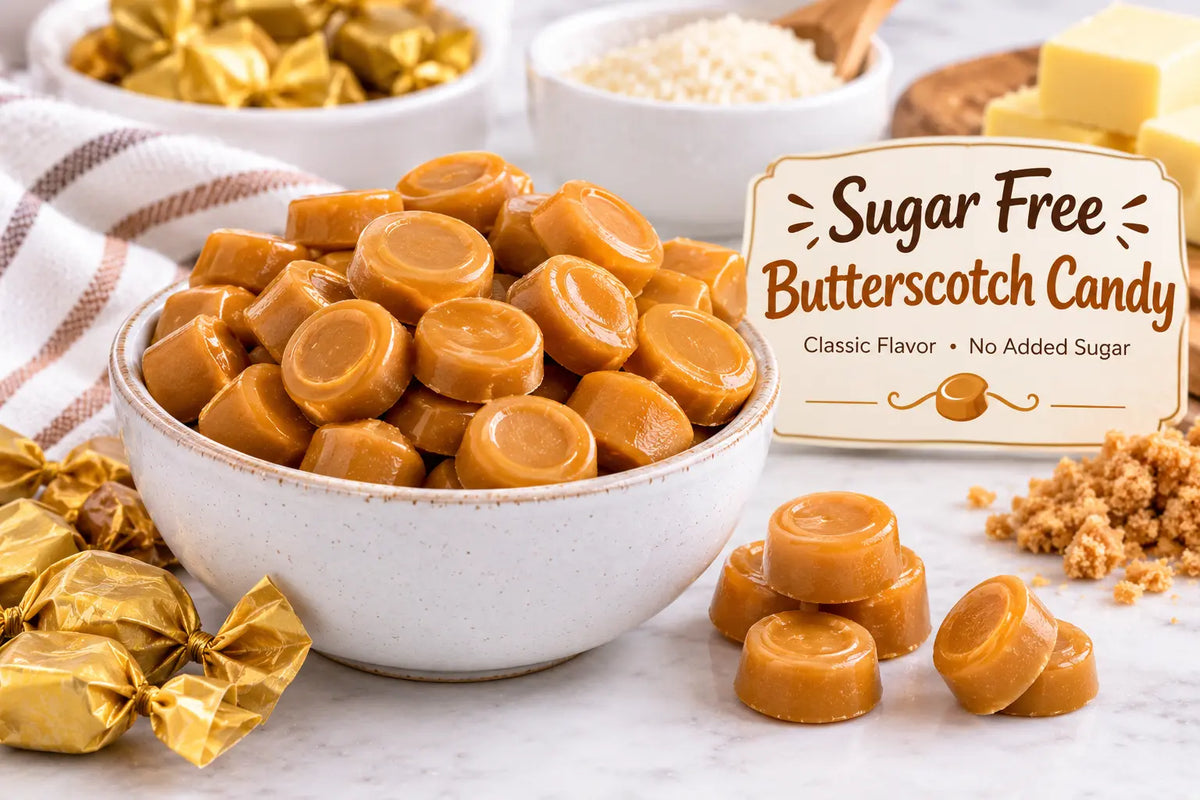
Sugar-Free Butterscotch Candy Keeps That Toasted Brown Sugar Taste
People mix up butterscotch and caramel all the time, and it's an easy mistake to make. Both are amber-colored, buttery, and cooked slowly on the stove. The difference comes down to one ingredient most peoples never think about: butterscotch is built on brown sugar, while caramel typically starts with white sugar. That small swap gives butterscotch its distinct toasted, almost molasses-like depth, and it's exactly what makes a sugar-free version trickier than a simple sugar substitute might suggest.
Peoples across the US and Canada search out sugar-free butterscotch candy for reasons similar to most sugar-free treats. Some are managing diabetes and want that same deep, toasted flavor without the blood sugar spike. Some follow keto and are hunting for a low-carb version of an old-fashioned favorite. Others grew up on butterscotch and simply don't want to give up the flavor just because their diet changed.
This guide looks at what actually goes into sugar-free butterscotch, why brown sugar substitutes behave differently than plain white sugar alternatives, and how to pick a version that tastes like the real thing rather than a flat imitation. For a wider look at low-sugar treats, our guide to best sugar-free desserts covers plenty of ground beyond butterscotch.
What People Search For Around This Candy
A look at search activity tied to sugar-free butterscotch turns up a fairly specific set of questions, more technical than most candy searches.
-
Sugar-free butterscotch candy brands
-
Is there a good brown sugar substitute for butterscotch
-
Sugar-free butterscotch chips for baking
-
Keto butterscotch candy recipe
-
Sugar-free butterscotch pudding
-
Does sugar-free butterscotch taste like the real thing
That last question shows up constantly, and it points to something real about this category. Butterscotch has a very specific flavor profile, and getting it right without brown sugar takes more than a straightforward swap.
Why Brown Sugar Matters So Much Here
White sugar and brown sugar aren't just different colors. Brown sugar carries molasses, either added back in during processing or left over from an earlier refining stage, and that molasses is responsible for a big part of butterscotch's signature flavor. Caramel candy, built on white sugar, gets its flavor almost entirely from the caramelization process itself. Butterscotch gets flavor from both caramelization and molasses working together.
This means a sugar-free butterscotch recipe can't just swap in any white sugar alternative and call it done. It needs something that mimics molasses too, or the final result ends up tasting like a plain caramel with a butterscotch label slapped on it rather than the real thing.
What Replaces Brown Sugar in Sugar-Free Butterscotch
A handful of approaches have emerged to solve this specific problem.
-
Brown-style erythritol or allulose blends: Sold under names like Swerve Brown, these are formulated specifically to mimic brown sugar's flavor and color, often with a small amount of molasses or a molasses-flavored compound blended in.
-
A small amount of real molasses: Added in tiny quantities to an otherwise sugar-free base, since only a little is needed to bring back that distinctive flavor without adding much sugar overall.
-
Yacon syrup: A lower-carb liquid sweetener with a naturally dark, slightly smoky flavor that some recipes use as a molasses stand-in.
-
Butterscotch extract: A concentrated flavoring that some brands and home bakers use to shortcut the whole process, delivering the flavor without needing a true brown sugar substitute at all.
Recipes and products that skip this step entirely, using a plain white sugar substitute and hoping the buttery flavor carries the whole thing, tend to be the ones that taste flat or overly generic.
A Quick Comparison of Approaches
|
Approach |
Flavor Accuracy |
Carb Impact |
Best For |
|
Brown-style erythritol blend |
High |
Very low |
Baking and candy alike |
|
Small amount of real molasses |
High |
Slightly higher |
Home recipes with a light touch |
|
Yacon syrup |
Moderate to high |
Low |
Liquid-based recipes |
|
Butterscotch extract alone |
Moderate |
Very low |
Quick flavor boost, less structure |
This table reflects general tendencies rather than a strict ranking, since a well-balanced recipe often combines more than one of these approaches.
Does Sugar-Free Butterscotch Fit a Keto Plan?
Generally yes. A serving of sugar-free butterscotch candy typically runs between 1 and 3 grams of net carbs, similar to most other sugar-free hard candy. Baking applications like butterscotch chips or cookie inclusions carry a similarly low carb count per serving, provided the recipe uses a genuine brown sugar substitute rather than leaning on actual molasses in any real quantity.
The main keto consideration tends to be less about carbs and more about getting the flavor right, since a flat-tasting butterscotch defeats the purpose even if the macros check out.
Who Reaches for This Candy Most
-
People managing diabetes: Butterscotch built on low-glycemic sweeteners avoids the blood sugar spike a traditional version would cause, letting a distinctive old-fashioned flavor stay on the table.
-
Keto and low-carb bakers: Sugar-free butterscotch chips have become a popular baking ingredient for cookies and bars, giving keto desserts access to a flavor that's otherwise hard to recreate without brown sugar.
-
Anyone with a nostalgic attachment to the flavor: Butterscotch carries a strong association with older generations and classic candy dishes. Losing that flavor to a diet change feels like more than giving up an average sweet.
-
Home bakers chasing a specific flavor: Some recipes, like oatmeal scotchies or butterscotch blondies, depend on this exact flavor in a way chocolate or vanilla simply can't replace.
Making Butterscotch Candy at Home
For anyone determined to make hard butterscotch candy rather than baking chips or a sauce, the process resembles other sugar-free hard candy with one key difference in flavor building.
-
Combine a brown-style erythritol or allulose blend with butter in a heavy-bottomed saucepan.
-
Cook slowly over low heat, stirring frequently, until the mixture turns a deep amber color.
-
Add a small amount of heavy cream, stirring constantly to prevent separation.
-
Stir in a few drops of butterscotch extract or a small amount of molasses for extra depth.
-
Continue cooking until the mixture reaches the hard crack stage on a candy thermometer.
-
Pour onto a lined baking sheet and let it cool completely before breaking into pieces.
-
Wrap individually once fully hardened, since exposed hard candy turns sticky over time.
Watching the color closely matters more here than with plain caramel, since butterscotch needs to develop that deeper amber shade to taste right.
Where Batches Tend to Fall Short
A handful of recurring issues explain most disappointing sugar-free butterscotch.
-
Skipping the molasses-style flavor entirely. Using only a plain sweetener without any brown sugar substitute or extract leaves the candy tasting like flat caramel.
-
Rushing the cooking stage. Butterscotch needs time to develop its color and flavor, and rushing the heat can leave it tasting underdeveloped.
-
Using too much extract. Butterscotch extract is concentrated, and overdoing it can leave an artificial, almost medicinal aftertaste.
-
Letting the butter separate. Adding cream too quickly or at the wrong temperature can cause the mixture to break instead of staying smooth.
-
Storing it somewhere warm. Like other hard candy, butterscotch softens and sticks together if kept somewhere too warm.
Reading a Sugar-Free Butterscotch Label
A little label knowledge helps sort a well-made product from a disappointing one.
-
Check whether the ingredient list includes any molasses, yacon syrup, or a brown-style sweetener, rather than just a plain white sugar substitute.
-
Look at the serving size, since hard candy typically lists one or two pieces rather than a handful.
-
Confirm whether butterscotch or caramel flavoring is used, since some products blur the line between the two.
-
Check for a gluten-free statement if buying for a shared office or classroom setting.
Choosing a Brand Worth Buying Again
A few details tend to separate a genuinely good sugar-free butterscotch product from a forgettable one.
-
A visible brown sugar substitute or molasses note in the ingredient list, not just a generic sweetener
-
Reviews that specifically mention flavor depth, since this is where butterscotch most often falls short
-
Individually wrapped pieces for hard candy specifically, since loose pieces stick together over time
-
A maker that specializes in sugar-free candy, since that usually points to more attention paid to flavor accuracy
Andy Anand's approach to sugar-free candy reflects that same attention to detail, treating classic flavors like butterscotch as their own challenge rather than a simple sweetener swap. For a closer look at the wider sugar-free candy lineup, our guide to sugar-free candy covers more options worth trying alongside butterscotch.
Butterscotch Beyond Hard Candy
While the classic hard candy version gets most of the attention, butterscotch flavor shows up across several other sugar-free formats.
-
Butterscotch chips. Used in cookies and bars much like chocolate chips, these have become widely available in sugar-free versions.
-
Butterscotch pudding. A creamy, spoonable dessert that uses the same brown sugar substitute principles as the candy version.
-
Butterscotch sauce. Poured over ice cream or other desserts, it relies on a similar cooked butter and brown sweetener base.
-
Butterscotch-flavored coffee creamer. A smaller niche but a growing one, bringing the flavor into an everyday drink rather than a dessert.

A Flavor With Roots Older Than Most Realize
Butterscotch's origins trace back to England in the 19th century, with several towns there still claiming to be its birthplace. The name itself likely comes from the process of "scotching," or cutting the candy into pieces before it fully hardened, rather than any connection to Scotland specifically. It made its way to the US and gained particular popularity through the mid-20th century, showing up in candy dishes, puddings, and baked goods across the country.
That long history is part of why butterscotch carries such a specific nostalgic weight for a lot of people, more tied to an older generation's candy dish than to modern candy trends. Sugar-free butterscotch exists to keep that particular memory intact rather than let a diet change erase it entirely.
Butterscotch vs Caramel vs Toffee
These three candies get confused constantly, and understanding the differences helps explain why each one needs a slightly different sugar-free approach.
Butterscotch. Uses brown sugar and butter, cooked to a lower temperature than toffee, resulting in a softer bite when made as a sauce or a hard, glassy texture when made as candy.
Caramel. Uses white sugar, sometimes with added dairy, cooked to develop flavor purely through caramelization rather than any molasses contribution.
Toffee. Also uses butter and sugar, similar to butterscotch, but cooked to a higher temperature, producing a harder, more brittle texture, often studded with nuts and coated in chocolate.
Sugar-free versions of all three rely on similar sweetener technology, but butterscotch is the one most affected by the brown sugar substitute problem specifically, since its flavor depends on that molasses note more than the other two.
Storing Sugar-Free Butterscotch Candy
Good storage keeps both texture and flavor intact.
-
Keep hard candy in a cool, dry spot. Keep it away from direct sunlight, since heat causes softening and sticking.
-
Store butterscotch chips in an airtight container. Ideally, keep them in the pantry unless the climate runs consistently warm.
-
Refrigerate butterscotch pudding or sauce. These have more moisture and spoil faster than hard candy.
-
Wrap individual pieces of hard candy. Do this once the original packaging has been opened.
Where This Candy Shows Up Across the US and Canada
Sugar-free butterscotch has moved beyond a niche nostalgia item into a broader set of everyday uses.
-
Office candy dishes and reception desks, often sitting alongside other classic hard candy
-
Baking supplies for anyone making sugar-free cookies or bars at home
-
Diabetic care packages, paired with other classic candy flavors for a fuller gift
-
Holiday dessert tables, particularly in pudding or sauce form
Ingredient availability looks broadly similar in both countries, though specialty brown sugar substitutes can be a bit harder to find in smaller Canadian grocery stores, with online ordering usually closing that gap.
Pairing Butterscotch With Other Flavors
Butterscotch's toasted, buttery flavor works well alongside a handful of other tastes, whether in a homemade dessert or simply eaten on its own.
-
Sea salt. Sharpens the flavor and cuts through the richness, similar to how it works with caramel.
-
Vanilla. Rounds out butterscotch's deeper notes without competing with them.
-
Apples. Particularly baked or in a crisp, pair naturally with butterscotch's toasted sweetness.
-
Dark chocolate. Offers a contrast in bitterness that many people find works surprisingly well against butterscotch's richness.
-
Toasted pecans or walnuts. Add crunch and a complementary roasted flavor.
None of these pairings require a specific recipe. A drizzle of sugar-free butterscotch sauce over any of these on their own already makes for a satisfying small dessert.
Gifting Sugar-Free Butterscotch
This candy works particularly well as a gift for older relatives who grew up with the original flavor.
-
Choose individually wrapped hard candy for anything traveling by mail.
-
Pair it with a note explaining the sweetener used, especially for a recipient managing diabetes closely.
-
Consider a mixed tin with other classic sugar-free hard candy, like peppermint or butterscotch together, for variety.
-
Avoid storing gifted candy somewhere warm before it's given, since softened pieces lose their appeal quickly.
Frequently Asked Questions
Why does sugar-free butterscotch taste different from sugar-free caramel?
Butterscotch relies on brown sugar's molasses note, while caramel is built purely from white sugar's caramelization. A sugar-free butterscotch needs a brown sugar substitute or a touch of real molasses to capture that specific flavor, which caramel doesn't require.
Is sugar-free butterscotch candy keto friendly?
Yes, typically. A serving usually falls between 1 and 3 grams of net carbs, similar to most sugar-free hard candy.
What is the best brown sugar substitute for butterscotch?
A brown-style erythritol or allulose blend, sold under names like Swerve Brown, tends to work well, since it's formulated specifically to mimic brown sugar's flavor and color.
Can I use a little real molasses in a sugar-free recipe?
Yes, in small amounts. Since only a small quantity is needed to bring back butterscotch's characteristic flavor, the added sugar and carbs stay minimal even in an otherwise sugar-free recipe.
Are sugar-free butterscotch chips available for baking?
Yes, several sugar-free baking chip brands now offer a butterscotch version, which works well in cookies and bars much like chocolate chips would.
What's the difference between butterscotch and toffee?
Toffee is cooked to a higher temperature than butterscotch, giving it a harder, more brittle texture, and is often coated in chocolate, while butterscotch stays softer as a sauce or forms a glassy hard candy on its own.
Can people with diabetes eat sugar-free butterscotch?
Most people managing diabetes can enjoy it in moderation, since low-glycemic sweeteners cause a much smaller blood sugar rise than the traditional sugar and molasses combination.
Why does my homemade sugar-free butterscotch taste flat?
This usually happens when a plain white sugar substitute is used without any brown sugar substitute, molasses, or butterscotch extract to bring in that distinctive deeper flavor.
Is butterscotch pudding available in a sugar-free version?
Yes, several brands and homemade recipes create a sugar-free butterscotch pudding using the same brown sugar substitute principles as the candy version.
Where can I buy good sugar-free butterscotch candy in the US and Canada?
Specialty low-carb candy brands carry it, often online rather than on general grocery shelves, with bakeries that focus specifically on sugar-free treats typically offering better flavor accuracy.
Can sugar-free butterscotch be made dairy free?
Yes, using a dairy-free butter substitute and coconut cream in place of heavy cream, though the flavor may lean slightly less rich than a traditional butter-based version.
Does sugar-free butterscotch contain caffeine or any stimulants?
No, butterscotch itself contains no caffeine. It's simply a butter, sweetener, and cream combination, regardless of whether it's made with sugar or a sugar substitute.
Sugar-free butterscotch asks for a bit more thought than most sugar-free candy, mainly because its flavor depends on more than just sweetness. Get the brown sugar substitute right, whether through a specialized blend, a touch of real molasses, or a well-balanced extract, and this old-fashioned flavor holds up just as well as it always has: toasted, buttery, and unmistakably itself.
For more ways to round out a sugar-free treat rotation, the best sugar-free desserts guide and our sugar-free candy roundup are both worth a look next.