How Close Does Sugar-Free Turtle Cake Get to the Real Thing?
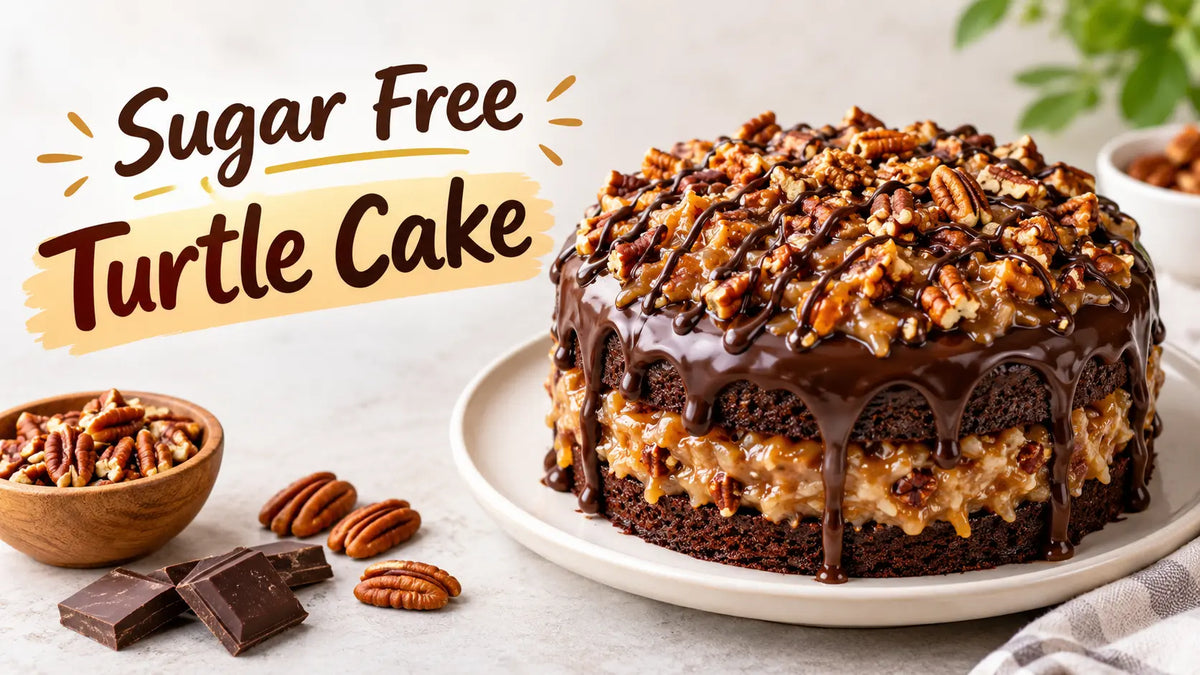
Turtle cake borrows its name from a candy, not an animal, and that candy's combination of caramel, pecans, and chocolate is exactly what this cake tries to recreate. Layers of chocolate cake, a caramel drizzle, toasted pecans, and often a chocolate ganache on top.
That caramel layer is where most of the worry starts once sugar leaves the picture. Caramel is built from sugar melting and browning under heat. Pull sugar out of that process and the whole technique changes, not just the flavor.
A properly made sugar-free turtle cake solves that problem. The caramel still tastes buttery and slightly deep. The pecans still add their familiar crunch. The chocolate still ties everything together the way it should. Nothing about the final bite feels like a stripped-down version of the original.
This guide covers what sugar-free turtle cake actually involves, where the turtle candy concept came from, how bakers manage caramel without sugar, and what to look for before you order one. For more sugar-free dessert ideas, visit our pillar guide to sugar-free desserts.
What This Guide Covers
-
Understanding Sugar-Free Turtle Cake
-
The Candy Behind the Cake's Name
-
The Real Challenge: Sugar-Free Caramel
-
Why Pecans Matter More Than People Realize
-
Balancing Three Flavors Without Overdoing One
-
Sugar-Free Turtle Cake Compared to Traditional
-
Nutrition Facts Worth Checking
-
Occasions That Call for This Cake
-
Questions to Ask Before You Order
-
How to Store This Cake Properly
-
Who This Cake Works Best For
-
Common Mistakes Bakers Make
-
Frequently Asked Questions
Understanding Sugar-Free Turtle Cake
Sugar-free turtle cake rebuilds the classic turtle flavor combination using sugar substitutes across every component. That means the chocolate cake base, the caramel sauce, and often a chocolate drizzle on top all skip granulated sugar in favor of alternatives like erythritol, allulose, or monk fruit blends.
What sets this cake apart from most other sugar-free desserts is the number of distinct elements working together. A chocolate cake alone is relatively simple to adjust. Caramel, pecans, and chocolate all need to hit the right note individually, then come together without one flavor drowning out the others.
A well-executed version tastes layered rather than flat. You should notice the chocolate first, then the caramel's buttery depth, then the nutty crunch of pecans finishing the bite. If one of those three gets lost, the cake stops feeling like a true turtle dessert.
The Candy Behind the Cake's Name
Turtle candy, the inspiration for this cake, was created by the DeMet Candy Company in Chicago back in 1918. The original candy combined pecan halves arranged to resemble legs, topped with caramel and coated in chocolate, which gave the finished piece a shape that resembled a turtle's body and limbs.
The candy became popular enough that "turtle" eventually became a flavor category of its own, applied to anything combining chocolate, caramel, and pecans, regardless of shape. Cakes, cheesecakes, cookies, and brownies all adopted the name once the flavor combination caught on beyond the original candy format.
Turtle cake specifically took shape as bakeries looked for ways to apply that candy flavor to a full dessert rather than a bite-sized treat. Layering cake with caramel and pecans, then finishing with chocolate, became the standard approach that most bakeries still follow today.
The Real Challenge: Sugar-Free Caramel
Caramel is traditionally made by heating sugar until it melts, browns, and develops a deep flavor through a chemical reaction called caramelization. Sugar substitutes do not caramelize the same way, which makes this the single hardest part of building a sugar-free turtle cake.
Bakers typically work around this using one of two approaches. Some use a sugar substitute specifically designed to brown similarly to sugar, often combined with butter and cream to build flavor through the fat rather than relying on true caramelization. Others lean on sugar-free caramel sauces made with alternative sweeteners that have already been engineered to mimic caramel's color and consistency, even without the same chemical browning process.
The result, done well, should taste rich and slightly salty-sweet, with a thick, pourable consistency that coats the cake layers without running off completely. A caramel that tastes thin or overly artificial usually points to a substitute that was pushed too hard to replicate a process it was never built to recreate.

Why Pecans Matter More Than People Realize
Pecans do more work in this cake than most people assume. Beyond adding crunch, their natural buttery, slightly bitter flavor helps balance the sweetness coming from the caramel and chocolate.
Toasting the pecans before adding them to the cake makes a noticeable difference, especially in a sugar-free version where every flavor needs to pull its own weight. Raw pecans taste milder and slightly starchy, while toasted pecans develop a deeper, more aromatic flavor that stands up better against rich caramel and chocolate.
Some bakeries chop the pecans finely and mix them directly into the caramel layer, while others keep larger pieces for texture contrast. Either approach works, though the choice changes how noticeable the crunch feels in each bite.
Balancing Three Flavors Without Overdoing One
The biggest risk in any turtle dessert, sugar-free or not, is letting one flavor take over the other two. Too much caramel and the cake turns one-note sweet. Too much chocolate and the caramel barely registers. Too many pecans and the texture turns distracting rather than complementary.
A well-built sugar-free turtle cake keeps these three in rough balance throughout each slice, not just concentrated in one spot. That usually means layering caramel and pecans between cake layers rather than only on top, so every bite carries a bit of all three flavors instead of front-loading them in one place.
Sugar-Free Turtle Cake Compared to Traditional
|
Feature |
Traditional Turtle Cake |
Sugar-Free Turtle Cake |
|
Sweetener |
Granulated sugar |
Erythritol, allulose, or monk fruit blends |
|
Caramel method |
True caramelization |
Butter and cream based, or engineered sugar-free caramel |
|
Pecans |
Raw or lightly toasted |
Often toasted for added depth |
|
Blood sugar impact |
High |
Minimal |
|
Carbs per slice |
High |
Lower, often by half or more |
|
Flavor balance |
Sweet forward |
Slightly less sweet, nuttier overall |
|
Texture |
Moist, rich |
Moist, rich when caramel is handled correctly |
|
Suitable for diabetics |
No |
Yes, in most cases |
Nutrition Facts Worth Checking
Numbers vary depending on the bakery and recipe, but here is a general range for a standard slice.
|
Nutrient |
Traditional Slice |
Sugar-Free Slice |
|
Calories |
480 to 580 |
320 to 410 |
|
Total Sugar |
34g to 44g |
2g to 5g |
|
Net Carbs |
46g to 58g |
10g to 17g |
|
Fiber |
2g to 3g |
3g to 5g |
|
Protein |
5g to 7g |
6g to 8g |
Pecans add a small boost of fiber and healthy fat compared to simpler sugar-free cakes, which is one reason this dessert tends to feel more satisfying per slice.
Occasions That Call for This Cake
Turtle cake has a nostalgic, homestyle quality that fits a wide range of gatherings.
-
Thanksgiving and fall dinners, since caramel and pecans feel seasonally appropriate
-
Birthdays for guests who prefer caramel and nuts over fruit-based desserts
-
Potlucks and office parties, where a rich, familiar flavor tends to please a crowd
-
Holiday dessert tables alongside pies and other classic bakes
-
Any celebration where a dense, indulgent slice fits better than a light cake
Because the flavor leans rich and a little nostalgic, this cake often works well for gatherings where guests want something that feels familiar rather than experimental.
Questions to Ask Before You Order
A few questions can help you spot a well-made sugar-free turtle cake before committing to an order.
Ask how the caramel is made, since a caramel built mainly from butter and cream often tastes richer than one relying entirely on a sugar-free caramel sauce. Ask whether the pecans are toasted, since this small step changes the flavor more than most customers expect.
Check which sugar substitute is used throughout the cake, since some leave a cooling aftertaste that becomes more noticeable against caramel than against plain chocolate. Finally, if ordering online, ask about packaging, since the caramel layer can shift during shipping if the cake is not supported properly.
How to Store This Cake Properly
Because of the caramel and often cream-based components, this cake should stay refrigerated. Store it in an airtight container for up to five days for the best texture.
Freezing works reasonably well for turtle cake, since the dense layers hold their structure better than lighter, airier cakes. Wrap slices tightly in plastic wrap, then store in a freezer-safe container for up to six weeks. Thaw overnight in the refrigerator rather than at room temperature to keep the caramel layer intact.
Let the cake sit at room temperature for about fifteen minutes before serving. The caramel softens slightly and the flavors come through more clearly once the cake is not cold straight from the fridge.
Who This Cake Works Best For
People managing diabetes who enjoy caramel and nut flavors tend to get the most out of this cake, since it delivers that familiar combination without the sugar spike that normally comes with it.
Pecan lovers also tend to prefer this cake over simpler sugar-free options, since the nuts add texture and flavor complexity that a basic frosted cake does not offer. Anyone hosting a mixed group at a holiday gathering often finds this cake works well across the table, since the flavor reads as a classic dessert rather than specifically a diet-friendly option.

Common Mistakes Bakers Make
A handful of recurring issues separate a carefully made sugar-free turtle cake from a disappointing one.
Using a sugar substitute that does not hold up under heat is one of the most common mistakes, since the caramel layer depends heavily on how that substitute behaves once cooked. Skipping the toasting step for pecans is another frequent shortcut, which leaves the nuts tasting milder than they should against the richer caramel and chocolate.
Overloading the cake with caramel in an attempt to boost sweetness is a mistake that backfires, since it often throws off the balance between all three key flavors. Finally, using a chocolate that is too sweet on its own can clash with a sugar-free caramel, creating an uneven flavor rather than a cohesive one.
Frequently Asked Questions
Does sugar-free turtle cake actually taste like caramel, chocolate, and pecans together?
Yes, when all three components are handled carefully. The caramel should still taste rich, the pecans should add crunch, and the chocolate should tie the flavors together without overpowering either one.
Is this cake safe for people with diabetes?
Generally yes, since the cake, caramel, and any chocolate drizzle rely on sugar substitutes instead of granulated sugar. Checking the nutrition label for exact carb counts is still a good idea, since recipes vary between bakeries.
Why is sugar-free caramel harder to make than regular caramel?
Sugar caramelizes through a specific heat reaction that most sugar substitutes cannot replicate exactly. Bakers often build flavor through butter and cream instead, or use a sugar-free caramel sauce engineered to mimic that texture.
Do the pecans need to be toasted?
Toasting is not required, but it adds a deeper, more aromatic flavor that holds up better against the caramel and chocolate. Raw pecans tend to taste milder by comparison.
How long does sugar-free turtle cake last in the fridge?
About five days in an airtight container, due to the caramel and cream-based layers. It also freezes well for up to six weeks if wrapped tightly.
Can this cake be frozen without ruining the caramel layer?
Yes, as long as it is wrapped tightly and thawed slowly in the refrigerator rather than at room temperature. This helps the caramel hold its texture once thawed.
Where does the name turtle cake come from?
It comes from turtle candy, created by the DeMet Candy Company in 1918, where pecans arranged like legs were topped with caramel and coated in chocolate to resemble a turtle.
Is sugar-free turtle cake very sweet?
It tends to be slightly less sweet than the traditional version, since the pecans add a natural bitterness that balances the caramel and chocolate more than sugar alone would.
Can other nuts replace pecans in this cake?
Pecans are traditional and give the most authentic flavor, but walnuts can work as a substitute if needed. The flavor shifts slightly, since walnuts carry a more bitter edge than pecans.
Turtle cake earns its place among classic desserts by combining three distinct flavors into one bite, caramel, chocolate, and pecans, each pulling their weight. A sugar-free version, built with careful technique, keeps that combination intact without the sugar that usually comes with it. For more desserts made the same way, browse our sugar-free cake collection for additional options built around real ingredients and no added sugar.