What Makes Sugar-Free Chocolate Truffle Cake Taste So Dense and Rich?
Chocolate truffle cake is not a light dessert. It is dense. It is intensely chocolatey. It feels closer to eating a giant truffle than a typical slice of cake. That heaviness is exactly why people reach for it instead of a lighter option.
Removing sugar from something this rich sounds risky. Chocolate at this concentration depends on sweetness to keep it from tasting bitter or flat. Cut the sugar carelessly and the whole cake can swing too far toward harshness, especially in the ganache layers that give this cake its name.
A properly made sugar-free chocolate truffle cake avoids that problem entirely. The chocolate still tastes deep and slightly bittersweet in the right way. The ganache still feels silky rather than grainy. The texture stays dense without turning heavy or dry.
This guide covers what sugar-free chocolate truffle cake really is, where chocolate truffles originally came from, how bakers handle ganache without sugar, and what separates a well-made version from a flat-tasting one. For more sugar-free dessert options, check out our pillar guide to sugar-free desserts.
Quick Navigation
-
Defining Sugar-Free Chocolate Truffle Cake
-
The French Origins of the Chocolate Truffle
-
Why Ganache Is the Hardest Part to Get Right
-
Picking the Chocolate That Carries This Cake
-
How the Texture Should Actually Feel
-
Comparing Sugar-Free to Traditional
-
Nutrition Numbers Worth Knowing
-
Best Occasions for This Cake
-
What to Check Before Ordering
-
Keeping This Cake Fresh
-
Who Enjoys This Cake the Most
-
Where Sugar-Free Versions Typically Go Wrong
-
Frequently Asked Questions
Defining Sugar-Free Chocolate Truffle Cake
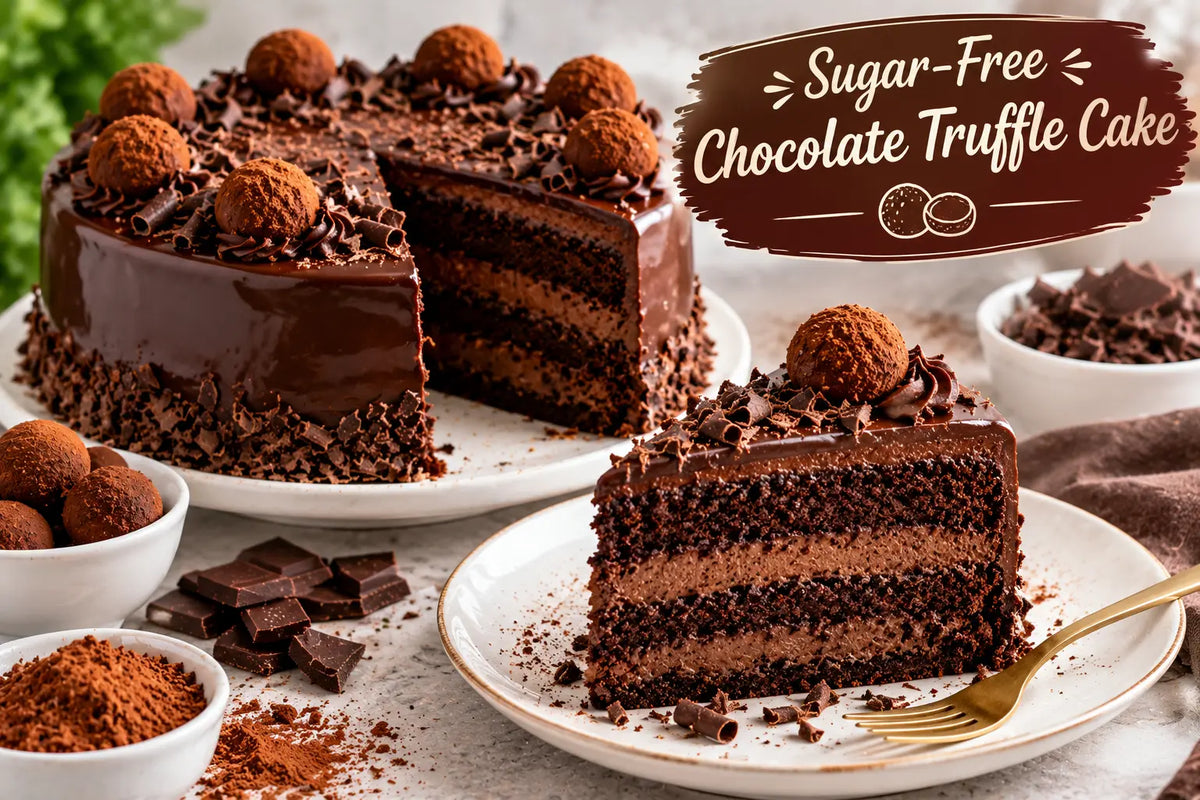
Sugar-free chocolate truffle cake takes the dense, rich qualities of a chocolate truffle and builds them into cake form. That usually means multiple layers of dark chocolate sponge or flourless cake, separated and coated with a thick chocolate ganache, all sweetened with a sugar substitute instead of granulated sugar.
Unlike lighter cakes, this one does not rely on frosting or filling to carry the flavor. Chocolate carries this dessert entirely, so the cocoa quality matters more here than in nearly any other sugar-free cake. A weak or overly bitter chocolate has nowhere to hide once sugar is removed.
Done correctly, this cake should taste intensely chocolatey without feeling artificial. The ganache should coat smoothly. The sponge underneath should stay moist enough to cut cleanly, not crumble apart under a knife.
Where the Chocolate Truffle First Came From
Chocolate truffles, the confection this cake borrows its name and flavor from, are generally credited to a French pastry chef in Chambéry during the late 1800s, created almost by accident when he mixed cream into melted chocolate while trying to stretch a short supply of ingredients.
The name "truffle" came from the confection's rough, round shape, which resembled the fungus of the same name found in French forests. That rustic look became part of the appeal, since truffles were never meant to look polished or perfect.
Bakeries eventually took that same cream-and-chocolate concept, known as ganache, and built it into a layered cake format. The goal was to recreate the truffle's dense, melt-in-your-mouth texture on a larger scale, which is why this cake feels noticeably heavier than a standard chocolate cake.
Why Ganache Is the Hardest Part to Get Right
Ganache is deceptively simple on paper. It is just chocolate and cream, heated together until smooth. But getting that texture right without sugar takes more care than it sounds.
Traditional ganache relies on the sugar already present in the chocolate itself, along with any added sugar in the recipe, to balance the bitterness of dark chocolate. In a sugar-free version, bakers typically choose a sugar-free dark chocolate specifically formulated to melt and set properly, since regular unsweetened baking chocolate can turn out too harsh without any sweetness to round it out.
Temperature control matters more here than people expect. Overheating the cream or chocolate can cause the ganache to separate, leaving a greasy texture instead of a silky one. Many bakers warm the cream just below boiling, then pour it over chopped chocolate and let it sit briefly before stirring, which helps the mixture come together smoothly.
Choosing the Right Chocolate for This Cake
Since chocolate flavor drives this cake almost entirely, the type and grade chosen shapes the outcome a great deal.
Dark chocolate with a cocoa percentage between sixty and seventy percent tends to work best, since it carries enough natural bitterness to stay balanced once sugar substitutes are added, without becoming overwhelming. Chocolate much higher than that can taste harsh even with sweetener added back in, while chocolate much lower in cocoa content can end up too mild to deliver the deep flavor this cake is known for.
Many bakeries specifically seek out sugar-free chocolate bars or chips designed for baking, rather than simply using unsweetened cocoa powder and adding sweetener separately. These purpose-made chocolates tend to melt more smoothly and behave more predictably in ganache than a homemade substitute blend.
How the Texture Should Actually Feel
A proper slice of sugar-free chocolate truffle cake should feel dense but not dry, and rich but not greasy.
The sponge layers, often made without flour or with very little, should hold together without crumbling, giving a texture closer to a flourless chocolate cake than a fluffy layer cake. The ganache between and around the layers should feel smooth against the tongue, never gritty or separated. A light dusting of cocoa powder or a few chocolate shavings on top often finishes the cake, adding a slightly bitter contrast to the sweeter filling underneath.
If a slice feels dry or the ganache looks dull rather than glossy, that usually signals either overbaking or a ganache that was not mixed at the right temperature.
Comparing Sugar-Free to Traditional
|
Feature |
Traditional Chocolate Truffle Cake |
Sugar-Free Chocolate Truffle Cake |
|
Sweetener |
Granulated sugar |
Erythritol, monk fruit, or allulose blends |
|
Chocolate used |
Standard dark chocolate |
Sugar-free dark chocolate, sixty to seventy percent cocoa |
|
Ganache texture |
Smooth, glossy |
Smooth when temperature controlled carefully |
|
Blood sugar impact |
High |
Minimal |
|
Carbs per slice |
High |
Lower, often by half or more |
|
Richness level |
Very rich |
Very rich, closer to the original than most sugar-free cakes |
|
Flour content |
Standard or flourless |
Often flourless or very low flour |
|
Suitable for diabetics |
No |
Yes, in most cases |
Nutrition Numbers Worth Knowing
Figures vary by bakery and recipe, but here is a general range for one slice.
|
Nutrient |
Traditional Slice |
Sugar-Free Slice |
|
Calories |
460 to 560 |
310 to 400 |
|
Total Sugar |
32g to 42g |
2g to 5g |
|
Net Carbs |
44g to 56g |
9g to 16g |
|
Fiber |
2g to 4g |
4g to 6g |
|
Protein |
6g to 8g |
7g to 9g |
Because this cake often skips flour entirely, fiber tends to run slightly higher in the sugar-free version, since almond flour or ground nuts are sometimes used in place of wheat flour.
Best Occasions for This Cake
Chocolate truffle cake carries a certain formality that makes it suited to specific moments rather than casual everyday snacking.
-
Anniversary dinners, given its rich and slightly indulgent reputation
-
Birthdays for serious chocolate lovers who want something more intense than standard cake
-
Valentine's Day celebrations, since the dense chocolate flavor fits the occasion well
-
Dinner parties where a small, rich slice works better than a large piece of lighter cake
-
Holiday gatherings where guests expect a more decadent dessert option
Because the cake is so rich, smaller slices tend to go further here than with lighter desserts, which actually works in favor of anyone watching portion sizes closely.
What to Check Before Ordering
A few questions can help separate a well-made sugar-free chocolate truffle cake from a disappointing one.
Ask what cocoa percentage the chocolate used falls into, since anything far outside the sixty to seventy percent range can throw off the balance significantly. Ask whether the ganache is made fresh or shipped separately, since freshly made ganache tends to hold its smooth texture better than one prepared well in advance.
Check which sugar substitute sweetens the cake, since some leave a noticeable aftertaste that becomes more obvious in a dessert this concentrated in chocolate flavor. Finally, if ordering for shipping, ask about packaging, since dense cakes like this one can shift or settle during transit if not supported properly.
Keeping This Cake Fresh
Because of the ganache and often flourless base, this cake needs refrigeration to hold its texture properly. Store it in an airtight container for up to five days for the best results.
Freezing works reasonably well for this cake, since its dense structure holds up better than lighter, airier cakes after thawing. Wrap slices tightly in plastic wrap, then store in a freezer-safe container for up to six weeks. Thaw overnight in the refrigerator rather than at room temperature.
Let the cake sit at room temperature for about fifteen minutes before serving. The ganache softens slightly and the chocolate flavor comes through more clearly once the cake is not ice cold.
Who Enjoys This Cake the Most
Serious chocolate lovers get the most out of this cake, since it delivers a more intense chocolate experience than most other sugar-free desserts on the market.
People managing diabetes who want an indulgent, special-occasion dessert also tend to appreciate this cake, since its rich flavor makes a smaller slice feel satisfying rather than restrictive. Anyone hosting guests with mixed dietary needs often finds this cake works well across the table, since its flavor reads as a premium chocolate dessert first, with the sugar-free label as a secondary detail rather than the main selling point.
Where Sugar-Free Versions Typically Go Wrong
A handful of recurring issues separate a carefully made sugar-free chocolate truffle cake from a disappointing one.
Using regular unsweetened baking chocolate instead of a sugar-free chocolate designed for this purpose is a common mistake, since it often results in a harsher, more bitter flavor than intended. Overheating the cream when making ganache is another frequent issue, since it can cause the mixture to separate into a greasy, uneven texture rather than staying smooth.
Skipping proper chilling time between layers is a mistake that shows up more in this cake than lighter ones, since the ganache needs time to firm up before slicing cleanly. Finally, choosing a cocoa percentage that is too high can leave the cake tasting harsh even after a sugar substitute is added, since very dark chocolate carries a bitterness that sweetness alone cannot fully soften.
Frequently Asked Questions
Does sugar-free chocolate truffle cake taste as rich as the original?
Yes, when made with the right chocolate and properly tempered ganache. The dense, intense chocolate flavor comes through clearly, since this cake relies on chocolate quality more than sugar for its overall richness.
Is this cake safe for people managing diabetes?
Generally yes, since both the sponge and ganache use sugar substitutes instead of granulated sugar. Checking the nutrition label for exact carb counts is still worthwhile, since recipes vary between bakeries.
What cocoa percentage works best for this cake?
Somewhere between sixty and seventy percent tends to give the best balance. Going much higher can taste too bitter, while going much lower can make the cake feel less rich than expected.
Why did my sugar-free ganache turn out grainy or separated?
This usually happens from overheating the cream or chocolate during preparation. Warming the cream gently and letting it sit briefly over the chocolate before stirring typically solves the issue.
Is this cake usually flourless?
Many versions are flourless or use very little flour, often relying on ground nuts or a small amount of almond flour instead. This adds to the dense texture that defines this style of cake.
How long does sugar-free chocolate truffle cake last in the fridge?
About five days in an airtight container, due to the ganache and often flourless base. It also freezes well for up to six weeks if wrapped tightly.
Can this cake be frozen without losing quality?
Yes, its dense structure holds up well during freezing compared to lighter cakes. Thawing slowly in the refrigerator overnight gives the best texture once ready to serve.
Is sugar-free chocolate truffle cake very sweet?
No, it tends to be less sweet than many other sugar-free cakes, since the flavor leans more toward rich, slightly bitter chocolate than straightforward sweetness.
Where does the chocolate truffle name come from?
It comes from the confection's rough, rounded shape, which resembled the truffle fungus found in French forests. The dessert itself is credited to a French pastry chef in the late 1800s.
Chocolate truffle cake earns its reputation through intensity, dense layers, silky ganache, and deep cocoa flavor with very little getting in the way. A sugar-free version, made with the right chocolate and careful technique, keeps that intensity fully intact. For more desserts built around real ingredients and no added sugar, browse our sugar-free cake collection.