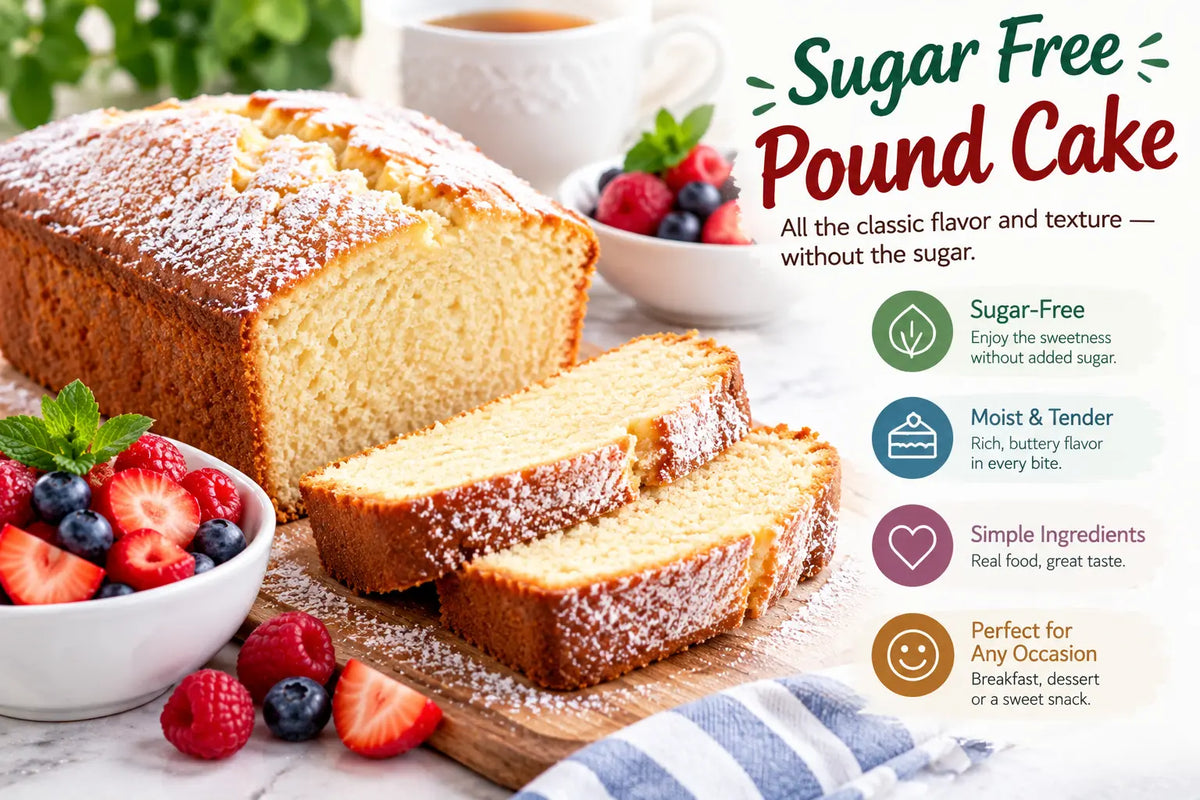
Sugar-Free Pound Cake Keeps That Dense, Buttery Bite
Pound cake earned its name honestly. The original recipe called for a pound each of butter, flour, eggs, and sugar, simple math that produced one of the densest, richest cakes in American baking. That equal-parts ratio is exactly why pound cake feels so different from a light, airy layer cake, and it's also why removing sugar from the equation takes more care than most other cake conversions.
Households across the US and Canada still reach for sugar-free pound cake regularly, whether for a diabetic family member, a keto meal plan, or just a personal choice to eat less added sugar. This guide covers what changes once sugar comes out of a traditional pound cake recipe, why the texture depends on more than just the sweetener, and how to end up with a slice that still tastes rich rather than dry or crumbly.
Anyone exploring more low-sugar cake options should also look at our guide to sugar-free cake, and our broader roundup of the best sugar-free desserts covers even more ground.
What People Look Up Before Baking This Cake
A scan of search activity around sugar-free pound cake reveals a pretty consistent set of concerns, most of them tied to texture rather than flavor.
-
Sugar-free pound cake recipe keto
-
Why is my sugar-free pound cake dry
-
Almond flour vs coconut flour for pound cake
-
Sugar-free lemon pound cake
-
Sugar-free pound cake for diabetics
-
How to store keto pound cake
That focus on texture makes sense once you understand what sugar actually does in this specific recipe, beyond just sweetening it.
Why Sugar Plays a Bigger Role Here Than in Most Cakes
In a lot of baking, sugar's main job is sweetness, with texture handled mostly by flour, fat, and leavening agents. Pound cake works differently. The classic method calls for creaming butter and sugar together, beating them until the mixture turns pale and fluffy. That process traps tiny air pockets in the fat, which is a big part of what gives pound cake its structure, even though the final result still reads as dense compared to other cakes.
Granulated sugar has sharp edges at a microscopic level, and those edges cut into the butter during creaming, creating the air pockets that matter so much here. Most sugar substitutes don't replicate that same cutting action as effectively, which is why simply swapping in a liquid or overly fine sweetener can leave a pound cake flatter and denser than intended, in a bad way rather than the good, classic pound cake way.
The Flours Doing the Heavy Lifting
Since wheat flour is off the table in most sugar-free versions, a blend of alternative flours usually steps in to fill that structural role.
-
Almond flour provides the bulk of most recipes, offering a slightly nutty flavor and a texture that holds moisture well.
-
Coconut flour often gets added in smaller amounts, since it absorbs liquid aggressively and helps prevent the cake from turning too oily or dense.
-
A touch of protein powder, whey or egg white based, shows up in some recipes to add structure that gluten would normally provide.
Almond and coconut flour aren't interchangeable at a one-to-one ratio, which trips up a lot of first-time bakers who assume any low-carb flour will work the same way in a recipe.
Choosing the Right Sweetener for This Specific Cake
Because the creaming method depends so heavily on sweetener texture, granulated substitutes tend to perform better here than liquid or powdered ones.
-
Allulose has become a favorite for this recipe specifically, since it creams into butter more like real sugar than most alternatives and helps the cake brown slightly during baking.
-
Erythritol-based blends, often labeled as a 1:1 sugar replacement, work reasonably well, though they can leave a faint cooling aftertaste in larger amounts.
-
Monk fruit sweeteners, frequently blended with erythritol, help round out flavor without adding much bulk of their own.
-
Stevia rarely works alone in this recipe, since it lacks the granular texture needed for proper creaming, though it sometimes appears blended with one of the above.
A Quick Comparison of Common Sweeteners for This Cake
|
Sweetener |
Creams Well |
Aftertaste |
Best Use |
|
Allulose |
Yes |
Minimal |
Best overall for pound cake |
|
Erythritol blend |
Mostly |
Mild cooling |
Good backup option |
|
Monk fruit blend |
Mostly |
Minimal |
Pairs well with erythritol |
|
Stevia alone |
No |
Noticeable |
Rarely used by itself |
This table reflects general patterns rather than a strict rule, since brand-specific blends can behave a bit differently from pure versions of each sweetener.
Is Sugar-Free Pound Cake Keto Friendly?
Yes, and it's one of the more forgiving cakes for a keto plan, largely because it doesn't rely on the higher flour volume that lighter cakes need. A typical slice made with almond and coconut flour, sweetened with allulose or an erythritol blend, usually falls between 3 and 6 grams of net carbs.
The dense, rich nature of pound cake also means a single slice tends to feel more satisfying than a lighter cake, which can help with portion control on a strict plan.
Who Reaches for This Cake Most
People managing diabetes
A cake built on low-glycemic sweeteners avoids the sharp blood sugar rise a traditional pound cake would cause, keeping this classic dessert within reach.
Keto and low-carb bakers
The naturally dense structure and low flour volume make pound cake an easier fit for keto baking than many lighter cake styles.
Anyone craving a simple, less decorated dessert
Pound cake doesn't need frosting or layers to feel complete, which makes it a popular choice for anyone who wants something straightforward rather than an elaborate cake project.
Brunch and tea-time hosts
Its firm slices hold up well on a dessert table or alongside coffee, without the mess a softer, frosted cake might create.
Building the Batter Step by Step
This cake rewards a bit of patience more than most sugar-free desserts, since the technique matters as much as the ingredients.
-
Bring butter, eggs, and any dairy like sour cream or cream cheese to room temperature before starting.
-
Cream the butter and granulated sweetener together until the mixture turns noticeably lighter in color and fluffier in texture.
-
Add eggs one at a time, beating well after each addition rather than dumping them in all at once.
-
Whisk together your almond flour, coconut flour, baking powder, and salt separately.
-
Fold the dry ingredients into the butter mixture gradually, alternating with any sour cream or cream cheese called for.
-
Pour the batter into a well-greased loaf or bundt pan.
-
Bake at a moderate temperature, checking with a toothpick well before the estimated time is up, since alternative flours can brown faster than wheat flour.
Skipping the room-temperature step for butter and eggs is one of the most common reasons this cake doesn't rise or blend as expected.
Where This Cake Tends to Go Wrong
A handful of recurring issues separate a rich, moist slice from a dry, crumbly one.
-
Cold ingredients. Butter and eggs straight from the fridge don't cream or blend as smoothly, leaving a denser, less even texture.
-
Too much coconut flour. Since it absorbs liquid aggressively, even a small excess can leave the cake dry.
-
Skipping the sour cream or cream cheese. These ingredients add moisture that alternative flours need more than wheat flour does.
-
Overbaking. Alternative flour cakes can look underdone even when they're finished, leading to overbaking if judged only by appearance.
-
Cutting into it too soon. Like many sugar-free cakes, pound cake benefits from cooling fully before slicing, since it continues to set as it cools.
Flavor Variations Worth Trying
Classic pound cake is already satisfying on its own, but a few additions can shift the flavor without changing the base method.
-
Lemon zest and juice brighten the cake and pair naturally with its dense, buttery base.
-
Vanilla bean, rather than extract alone, adds visible flecks and a deeper aroma.
-
Cocoa powder, swapped in for a portion of the flour, turns this into a chocolate version.
-
Almond extract adds a subtle depth that pairs well with the almond flour already in the batter.
-
Cinnamon and nutmeg give the cake a warmer, spice-forward character.
None of these changes require altering the core method. They simply layer new flavor onto a cake that already has a strong, buttery base to build on.
Glazing and Topping Ideas
A simple glaze or topping can dress up an otherwise plain slice without much extra effort.
-
A basic glaze made from powdered erythritol, a splash of milk, and vanilla extract.
-
A drizzle of melted sugar-free chocolate for a richer finish.
-
Fresh berries served alongside. These pair especially well with the cake's dense texture.
-
A dollop of sugar-free whipped cream for a lighter contrast.
Storing Sugar-Free Pound Cake
This cake holds up differently than most sugar-free desserts, mainly due to its high moisture content from butter, eggs, and any added dairy.
-
Keep it tightly covered at room temperature. Store for up to four days.
-
Refrigerate for a slightly longer shelf life. Keep in mind that the texture can become denser once chilled.
-
Freeze individual slices, wrapped well. They can be stored for several months without much loss in quality.
-
Thaw frozen slices at room temperature. Avoid using the microwave, which can dry them out quickly.

A Cake With Old Roots and a Modern Update
Pound cake's origins trace back centuries, with the equal-parts recipe designed as an easy way for cooks to remember proportions without needing a written recipe at all. That simplicity carried the cake through generations largely unchanged until the low-carb and keto movements pushed bakers to rethink its structure from the ground up.
What's notable about the sugar-free version is how much of the original character survives the conversion. The dense, buttery bite that defines pound cake comes primarily from butter and eggs, both of which stay exactly the same in a sugar-free recipe. Only the flour and sweetener change, which is part of why this particular cake translates into a sugar-free format more successfully than many others.
Comparing Sugar-Free Pound Cake to the Traditional Version
Traditional pound cake relies on granulated sugar not just for sweetness but for the air pockets that form during creaming, alongside a full cup or more of wheat flour for structure. A sugar-free version swaps in a creaming-friendly sweetener like allulose and replaces wheat flour with a blend of almond and coconut flour, which changes the crumb slightly but keeps the same rich, dense character intact.
The most noticeable difference tends to show up in color and browning, since alternative flours and sweeteners don't caramelize on the surface quite the same way traditional ingredients do. The flavor and texture, when the recipe is handled carefully, come remarkably close to the original.
Buying One Instead of Baking It
Not everyone wants to manage a creaming step and a blend of alternative flours from scratch. A ready-made version is a reasonable choice, and a few details are worth checking first.
-
A named sweetener on the label, rather than a vague sugar-free claim
-
A short ingredient list without a long string of stabilizers or gums
-
Clear net carb information, since this can vary more between brands than with simpler desserts
-
A bakery that specializes in sugar-free desserts specifically, since that usually points to more testing behind the recipe
Andy Anand's approach to sugar-free cake follows that same idea, with treats made in small batches around diabetic-friendly sweeteners rather than a shortcut recipe scaled up for mass production.
Where This Cake Shows Up Across the US and Canada
Sugar-free pound cake has found a place well beyond a single dessert category.
-
Breakfast and brunch tables, since its dense texture holds up well alongside coffee
-
Diabetic-friendly birthday celebrations, often served plain or with a simple glaze instead of frosting
-
Holiday gatherings, particularly in lemon or spiced variations that suit fall and winter menus
-
Everyday desserts for anyone simply reducing added sugar year round
Ingredient availability looks broadly similar in both countries, though allulose specifically can be a little harder to find on Canadian grocery shelves, with online ordering usually closing that gap.
Choosing the Right Pan
Pan choice affects both the bake time and the final texture more than most bakers expect with this cake.
-
A standard loaf pan works well for smaller batches and gives clean, even slices.
-
A bundt pan creates a more decorative presentation, though it may need a slightly longer bake time given its shape.
-
Mini loaf pans are useful for gifting, since they portion the cake into smaller, shareable pieces.
-
Greasing thoroughly matters more here than with wheat-based cakes, since almond and coconut flour batters can stick more easily without enough fat coating the pan.
Whichever pan gets used, checking for doneness a few minutes before the recipe's stated time helps avoid overbaking, since alternative flours can brown and set faster than traditional ones.
Gifting a Loaf
Pound cake travels well, which makes it a popular homemade gift, especially around the holidays.
-
Wrap a cooled, unsliced loaf tightly in plastic wrap before adding a decorative layer on top.
-
Include a small card noting the sweetener used, especially for a recipient managing diabetes.
-
Avoid glazing it until shortly before gifting, since a glaze can become sticky or slide during transport.
-
Pair it with a jar of sugar-free jam or a small box of berries for a fuller gift.
Frequently Asked Questions
Is sugar-free pound cake keto friendly?
Yes, typically. A slice made with almond and coconut flour, sweetened with allulose or an erythritol blend, usually falls between 3 and 6 grams of net carbs.
Why is my sugar-free pound cake dry?
This is usually caused by too much coconut flour, overbaking, or skipping ingredients like sour cream or cream cheese that add moisture. Alternative flours need more attention to moisture than wheat flour does.
Can people with diabetes eat sugar-free pound cake?
Most people managing diabetes can enjoy a slice in moderation, since it causes a much smaller blood sugar rise than a traditional pound cake.
What is the best sweetener for pound cake specifically?
Allulose tends to work best, since it creams into butter more like real sugar than most other substitutes, which matters a lot for this cake's texture.
Can I use only almond flour instead of a blend?
You can, though the texture may turn out denser and slightly oilier without coconut flour helping to absorb excess moisture.
How long does sugar-free pound cake last?
About four days at room temperature when covered tightly, or several months in the freezer if wrapped well.
Why do room temperature ingredients matter so much for this recipe?
Cold butter and eggs don't blend or cream as smoothly, which affects the air pockets that give pound cake its characteristic texture.
Can sugar-free pound cake be made dairy free?
Yes, using coconut oil or a dairy-free butter substitute in place of regular butter, along with coconut cream instead of sour cream.
Is sugar-free pound cake gluten free?
Most versions are, since they rely on almond and coconut flour rather than wheat. Checking any add-in ingredients for cross-contamination is still worth doing for anyone with celiac disease.
Can I buy sugar-free pound cake instead of baking it?
Yes, several bakeries offer a ready-made version. Checking the sweetener used and the ingredient list is worth doing before ordering.
Why does my pound cake sink in the middle?
This usually happens when the batter is underbaked, or when too much leavening causes it to rise quickly and then collapse. Alternative flours also react a bit differently than wheat flour, so slightly reducing baking powder compared to a traditional recipe can help.
Can sugar-free pound cake be made in a mini loaf or muffin format?
Yes, and it often works well this way for portion control or gifting. Baking time typically needs to be shortened compared to a full-sized loaf, so checking for doneness earlier is important.