Sugar-Free Chocolate Bars Worth Buying Twice
Walk down the sugar-free section of any grocery store and you'll find a wall of chocolate bars making similar promises. Some deliver. A lot of them don't. Customers who have tried more than one brand often describe the experience in blunt terms, somewhere between genuinely good and barely edible, with surprisingly little middle ground.
That inconsistency is exactly why "sugar-free chocolate bars" stays such a heavily searched phrase across the US and Canada. People aren't just looking for a product category. They're looking for a specific bar that won't waste their money or leave a bad taste behind, in every sense of the phrase. This piece works through what actually separates a good sugar-free bar from a forgettable one, why milk chocolate specifically struggles more than dark or white, and how to shop this category with a bit more confidence. For a broader look at the sugar-free dessert world, our guide to the best sugar-free desserts covers plenty of territory beyond chocolate bars.
What Customers Are Actually Asking
A look at search and review activity around this category reveals a fairly consistent set of frustrations and questions.
- Best sugar-free chocolate bar brands
- Why does sugar-free chocolate taste bad
- Sugar-free milk chocolate vs dark chocolate
- Sugar-free chocolate bars without maltitol
- Sugar-free chocolate bar net carbs
- Do sugar-free chocolate bars upset your stomach
Notice how many of these questions come from people who've already been burned once. This category has a track record, deserved or not, of overpromising and underdelivering, which shapes how carefully people shop for it now.
Why Reviews for This Category Run So Hot and Cold
Read through customer reviews of sugar-free chocolate bars and you'll notice something unusual compared to most food categories. Opinions swing hard in both directions, often for the same brand. One reviewer calls a bar the best they've tried. Another calls the same bar the worst chocolate they've ever eaten.
Part of this comes down to genuinely inconsistent quality across brands and even across different flavors from the same brand. Part of it comes down to personal sensitivity to certain sweeteners, since some people taste a strong aftertaste from maltitol or erythritol that others barely notice at all. And part of it comes down to expectations. Someone expecting a bar identical to a regular candy aisle favorite is set up for disappointment in a way someone going in with realistic expectations isn't.
Milk Chocolate's Specific Problem
Dark chocolate sugar-free bars tend to earn the most consistent praise in this category, and white chocolate, while trickier to make, has improved significantly in recent years. Milk chocolate sits in an awkward middle ground that makes it the hardest of the three to get genuinely right.
Dark chocolate can lean on cocoa's natural intensity to cover for an imperfect sweetener. White chocolate leans on fat content and milk solids for its appeal. Milk chocolate needs both working together: enough cocoa presence to taste like chocolate, enough milk creaminess to taste like milk chocolate specifically, and a sweetener doing almost all the work neither of the other two ingredients can cover for. This is a genuinely harder balancing act, and it shows up in review after review describing sugar-free milk chocolate bars as tasting flat, waxy, or oddly close to carob rather than real chocolate.
A Buying Comparison Across Bar Types
| Bar Type | Typical Review Consistency | Common Complaint | Common Praise |
|---|---|---|---|
| Dark chocolate | High | Slight bitterness at high cocoa percentages | Rich, convincing flavor |
| Milk chocolate | Low | Flat or waxy taste | Nostalgic flavor when done well |
| White chocolate | Moderate | Gritty or chalky texture | Creamy sweetness when balanced |
This pattern holds up across a wide range of brands, which is part of why milk chocolate deserves extra scrutiny before buying a full box sight unseen.
What Actually Sweetens These Bars
A handful of ingredients show up repeatedly across the category, regardless of bar type.
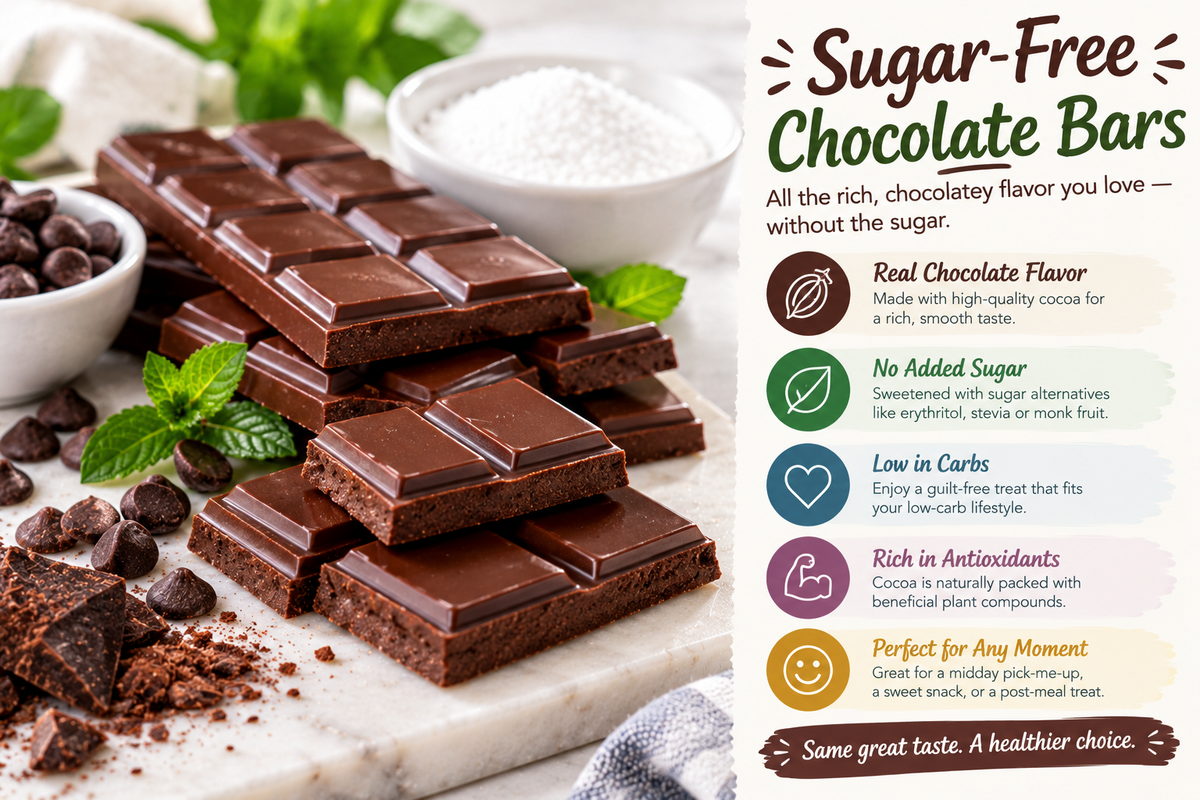
- Maltitol, an older standby, delivers a sugar-like texture but carries the highest risk of digestive discomfort and a noticeable aftertaste some people pick up on immediately.
- Erythritol, often blended with another sweetener, tends to taste cleaner but can leave a cooling sensation in larger amounts.
- Stevia shows up in smaller amounts, usually blended rather than used alone, since its aftertaste can clash more in milder chocolate styles.
- Monk fruit extract appears more in premium or newer brands, generally praised for a cleaner finish than maltitol specifically.
- Chicory root fiber or inulin, used by a few brands as a bulk sweetener alternative, tends to earn mixed reviews depending on the brand's overall recipe balance.
Checking which of these sits at the top of the ingredient list is one of the fastest ways to predict how a bar will actually taste before buying it.
Net Carbs Across This Category
Most sugar-free chocolate bars run fairly close to one another in net carbs, typically between 1 and 4 grams per serving, though serving size itself varies more than people often expect. Some brands count a whole bar as one serving. Others count a fraction of the bar, which can make a side-by-side nutrition label comparison misleading unless the serving size gets checked carefully first.
This serving size inconsistency is worth flagging specifically, since a bar that looks lower in carbs on paper sometimes just has a smaller official serving than its competitor, not a genuinely lower carb recipe.
Who Buys This Category Most
People managing diabetes
A reliable sugar-free chocolate bar gives this group one of the easiest ways to keep chocolate in their regular routine without the blood sugar consequences of a traditional bar.
Keto and low-carb buyers
The low net carb count across most brands makes chocolate bars an easy fit for a daily macro count, assuming the flavor actually satisfies the craving.
Anyone burned by a bad bar before
A surprising number of searches in this space come from repeat buyers trying to find something better after a disappointing first purchase, rather than first-time buyers.
Bakers and recipe developers
Some people buy these bars specifically to melt down for baking rather than eating straight, where a slightly different texture matters less than it would eaten on its own.
A Practical Checklist Before Buying
A few habits can save money and disappointment before committing to a full box of any bar.
- Buy a single bar first rather than a multi-pack, if the option exists, especially for a brand you haven't tried before.
- Check the sweetener list against ones you've had good or bad experiences with previously.
- Read reviews specifically mentioning texture and aftertaste rather than just star ratings.
- Compare the actual serving size across brands rather than trusting the front-of-package carb claim at face value.
- Favor brands that specialize specifically in sugar-free chocolate over a single sugar-free item tacked onto a mostly regular product line.
Reading Between the Lines of Online Reviews
Reviews for this category need a slightly different reading approach than most food products, given how polarized opinions tend to run.
- A review mentioning "tastes just like the real thing" from someone who regularly eats sugar-free chocolate carries more weight than the same comment from a first-time buyer with nothing to compare it to.
- Complaints about digestive discomfort are worth taking seriously regardless of how positive the rest of the review sounds, since this points to the sweetener rather than personal taste.
- A cluster of reviews describing a specific flavor as "waxy" or "chalky" usually signals a genuine recipe issue rather than one unlucky batch.
- Reviews mentioning a bar "melting differently" than expected are useful for anyone planning to bake with it rather than eat it plain.
Bar Size and Format Trends
The category has shifted noticeably over the past several years in how bars get packaged and sold.
- Full-size bars sold as a single serving have become more common, a response to buyer frustration with confusing partial-bar serving sizes.
- Individually wrapped mini bars appeal to anyone wanting portion control without needing to break a larger bar themselves.
- Bark-style bars, broken into irregular pieces rather than a uniform rectangle, have grown in popularity, often studded with nuts or dried fruit.
- Multi-flavor variety boxes let buyers sample several options without committing to a full case of a single flavor they might not enjoy.
Choosing a Brand Worth Repeat Business
A handful of signals tend to separate a bar people buy again from one that gets left half-eaten.
Andy Anand's sugar-free dark chocolate almond bark has earned recognition in independent roundups of the best sugar-free chocolate available, reflecting the kind of consistency worth looking for across this category. For a deeper look at the wider sugar-free chocolate landscape, our piece on sugar-free chocolate that nobody will guess is sugar-free covers more ground.
Baking With Sugar-Free Chocolate Bars
Several people buy these bars specifically for cooking and baking rather than snacking, where a few extra considerations matter.
- Dark chocolate bars tend to hold their shape best when melted for dipping or drizzling.
- Milk chocolate bars can behave inconsistently when melted, given the texture issues already discussed, so testing a small amount before committing to a full recipe is worth doing.
- White chocolate bars benefit from gentle, low heat, since they're more prone to seizing than darker styles.
- A bar intended for baking doesn't need to taste perfectly eaten plain, which opens up some budget-friendly options that might disappoint as a standalone snack.

Storing Sugar-Free Chocolate Bars
Storage habits stay fairly consistent across bar types, with a few specific notes.
- Keep bars in a cool, dry spot, ideally below 70 degrees, away from direct sunlight.
- Refrigerate white and milk chocolate bars specifically in warmer climates, since they're more prone to melting or developing bloom than dark chocolate.
- Store opened bars in an airtight container or their original wrapper to prevent them from absorbing odors from other food.
- Check expiration dates more closely on bars made with natural, less processed ingredients, since these tend to have a shorter shelf life than mass-produced versions.
The Price Question
Sugar-free chocolate bars consistently cost more than their regular counterparts, sometimes significantly so. A few factors explain this gap.
- Specialty sweeteners like allulose and monk fruit cost considerably more than plain sugar to produce.
- Smaller production runs, typical of brands focused specifically on sugar-free chocolate, lack the economies of scale larger candy companies benefit from.
- Higher-quality cocoa sourcing, common among brands trying to compensate for a less familiar sweetener, adds to the cost.
- Specialty packaging, often needed to protect more heat-sensitive formulations, adds a smaller but real cost on top of the chocolate itself.
Buying in bulk, once a brand's quality has already been confirmed through a smaller trial purchase, is usually the most effective way to bring the per-bar cost down closer to regular chocolate pricing.
Where This Category Shows Up Across the US and Canada
Sugar-free chocolate bars have moved well beyond a specialty health food shelf.
- Major grocery and pharmacy chains, typically stocked near the diabetic or keto-focused section
- Online specialty retailers, often carrying a wider selection than any single physical store
- Diabetic-friendly gift boxes, frequently paired with other sugar-free treats
- Everyday snacking for anyone managing a low-sugar lifestyle, regardless of a specific medical reason
Ingredient and brand availability looks broadly similar in both countries, though Canadian buyers may find fewer specialty US brands on local shelves, with online ordering closing much of that gap.
Flavor Variety Beyond Plain Bars
Plain milk, dark, and white chocolate get most of the attention, but the category has expanded well beyond those three basics.
- Nut-studded bars, almonds or hazelnuts mixed directly into the chocolate, add texture and a bit of extra protein.
- Fruit and nut combinations, pairing dried cranberries or cherries with nuts, have become popular in bark-style bars specifically.
- Mint and peppermint bars, especially around the holidays, bring a seasonal option into an otherwise year-round category.
- Caramel or butterscotch-filled bars, a newer addition as brown sugar substitutes have improved, add a gooey center to an otherwise solid bar.
- Espresso or coffee-infused bars, aimed at a more adult palate, pair dark chocolate's bitterness with a complementary coffee note.
This variety matters for anyone who finds one specific flavor disappointing, since a brand's milk chocolate bar might fall flat while their dark chocolate or nut-studded option performs noticeably better.
Gifting Sugar-Free Chocolate Bars
Chocolate bars make a simple, low-cost gift, particularly for someone managing diabetes who rarely gets candy they can enjoy without hesitation.
- Choose a brand with consistently positive reviews across multiple flavors, rather than gambling on an untested one for a gift.
- Pair a bar with other sugar-free treats, like caramels or truffles, for a fuller gift box.
- Check shipping conditions during warm weather, since chocolate bars can arrive partially melted without proper packaging.
- Include a short note mentioning the sweetener used, especially for a recipient managing diabetes closely.
Frequently Asked Questions
Why do sugar-free chocolate bars get such mixed reviews?
Quality genuinely varies a lot between brands, and personal sensitivity to certain sweeteners differs from person to person, which together explains why opinions on the same bar can swing so widely.
Which is easier to make well, sugar-free dark or milk chocolate?
Dark chocolate tends to be easier, since its natural cocoa intensity can cover for an imperfect sweetener. Milk chocolate needs both cocoa presence and milk creaminess working together, leaving less room for error.
How many net carbs are in a typical sugar-free chocolate bar?
Usually between 1 and 4 grams per serving, though serving size itself varies between brands, so checking the label carefully matters more than trusting the front-of-package claim.
Do sugar-free chocolate bars cause stomach issues?
They can, particularly bars sweetened with maltitol in larger amounts. Sticking to a reasonable serving size usually avoids this for most people.
Why are sugar-free chocolate bars more expensive than regular chocolate?
Specialty sweeteners cost more to produce, production runs tend to be smaller, and many brands invest in higher-quality cocoa to help compensate for the different sweetener profile.
Can sugar-free chocolate bars be used for baking?
Yes, though milk chocolate bars specifically can behave inconsistently when melted. Testing a small amount before committing to a full recipe is a reasonable precaution.
Is it better to buy a single bar or a multi-pack when trying a new brand?
A single bar first is generally the safer choice, especially for brands or flavors you haven't tried before, given how much quality varies across this category.
Where can I buy good sugar-free chocolate bars in the US and Canada?
Major grocery and pharmacy chains carry a growing selection, though online specialty retailers and brands that focus specifically on sugar-free chocolate tend to offer more consistent quality.
Why does the serving size vary so much between brands?
Some brands count a whole bar as one serving, while others split it into fractions. This inconsistency makes direct carb comparisons misleading unless the actual serving size is checked carefully on each label.
Are sugar-free chocolate bars suitable for people with nut allergies?
It depends entirely on the brand and flavor. Plain dark or milk chocolate bars are often nut-free, but many are produced on shared equipment with nut-containing products, so checking the allergen statement is essential.
Sugar-free chocolate bars reward a bit of shopping caution more than most candy categories, mainly because quality swings so widely from one brand to the next. Dark chocolate remains the safest starting point for anyone new to this space, while milk chocolate deserves a closer look at reviews before committing to a full box. A little research before buying saves both money and the disappointment of a bar that never gets finished.
For more ways to round out a sugar-free treat rotation, the best sugar-free desserts guide and our closer look at sugar-free chocolate that nobody will guess is sugar-free are both worth reading next.