What to Look for Before Buying Sugar Free Ginger Candy
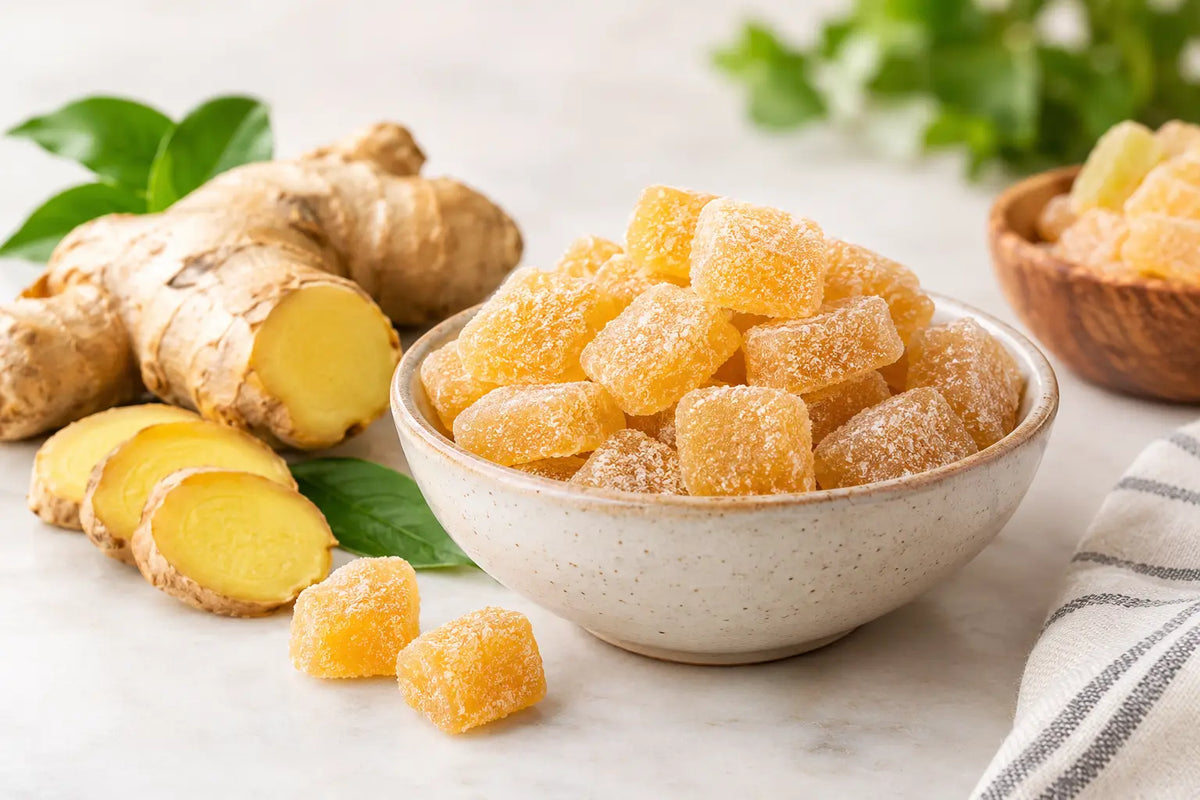
Pop a piece of good ginger candy in your mouth and the first thing you notice is heat, not sweetness. Then comes a slow burn that fades into something almost citrusy. That contrast is what makes ginger candy stand out from everything else sitting in a candy bowl, and it’s exactly what people hope to keep when they switch to a sugar free version.
The catch is that “sugar free” covers a lot of ground. Two bags can wear that same label and still be built from completely different ingredients underneath it.
What That Label Is Really Telling You
U.S. rules let a package carry the words “sugar free” once each serving drops below half a gram of sugar. That’s the whole requirement. It says nothing about what fills the gap where sugar used to be, and most candy makers reach for stevia, monk fruit, or a sugar alcohol like maltitol to get there.
A ginger candy built this way still leans on real ginger, or a ginger extract, to carry its signature flavor. What changes is everything sugar used to handle on the structural side. Hard candy gets its snap and solid bite from sugar, so pulling it out and swapping in something else shifts the texture, not just the taste.
Put plainly: that front-of-bag claim tells you what’s absent. It stays quiet about what replaced it. You only get that second half of the story by flipping the package over.
Three Spots on the Label Worth Your Time
Spending thirty seconds on the ingredient panel beats guessing later. Three things are worth your attention.
Start by spotting the sweetener. Plant-based options such as stevia or monk fruit won’t move your blood sugar much, though a few people notice a faint lingering taste from them. Sugar alcohols including maltitol and sorbitol digest differently than regular sugar, and eating too much of them in one sitting can upset some people’s stomachs.
Then run your eyes down the rest of the list. Manufacturers sometimes lean on extra fillers or flavor boosters to make up for whatever texture sugar used to provide. A shorter, more familiar ingredient list is generally an easier one to size up than a long one packed with names you don’t recognize.
Finally, don’t skip the serving size. Going sugar free doesn’t mean going calorie free, since plenty of sugar alcohols still carry calories even while leaving blood sugar alone. Match that number against how many pieces you’d actually eat, not the number printed for one lonely piece.
The Logic Behind Ginger and Fruit
Ginger doesn’t sit quietly in the background of anything. It brings sharp heat and a slightly bitter edge that keeps sweetness from running the show. That’s precisely why pairing it with fruit, orange, mango, or lemon, works as well as it does.
Fruit smooths out ginger’s rougher edges while contributing its own rounder sweetness. Orange shows up again and again in ginger pairings because the two share a similar aromatic quality that clicks almost automatically. Mango leans tropical and mellow, offering contrast rather than competition against ginger’s bite. Lemon goes the other direction entirely, staying tart and bright for something that reads as refreshing more than sweet.
If straight ginger candy has ever felt like too much on its own, a fruit pairing usually softens that first impression and makes the flavor easier to warm up to.

What Actually Separates One Option From Another
A few practical details matter more than the flavor printed on the bag.
-
The specific sweetener used, and whether your own body handles it comfortably
-
Whether the ginger flavor comes through clearly or gets buried
-
How the candy is packaged, since wrapped pieces hold up better than loose ones over time
-
Where it’s produced, since that can shape how ingredients are sourced
-
How many flavor varieties ship in one bag
None of this ranks one brand above another in any absolute sense. It just narrows things down based on what matters to you personally.
Why Individually Wrapped Pieces Make a Difference
Wrapping each piece on its own fixes two problems loose candy runs into constantly. Each piece stays sealed and fresh until the moment you unwrap it, instead of sitting exposed to air the second the bag gets opened.
It also makes it far easier to keep track of how much you’ve eaten. Grabbing from an open bag again and again blurs the count fast, while unwrapping pieces one at a time builds in a natural pause. That small pause can matter quite a bit if you’re watching your sugar intake closely.
There’s a gifting upside too. A few wrapped pieces tucked into a small bag reads as more deliberate than a loose scoop of candy, and the format means whoever receives them can enjoy the gift slowly instead of finishing it in one sitting.
A Look at Andy Anand’s Version
Andy Anand produces a sugar free, gluten free ginger candy made in Italy, offered in orange, mango, and lemon flavors inside one package. Each bag holds 55 individually wrapped pieces adding up to 7 ounces, with stevia listed among the sweeteners.
Having three fruit pairings bundled into one bag means you get to compare how ginger plays against different fruits without buying three separate products to find out. The wrapped format lines up with everything mentioned above, longer-lasting freshness, easier portion awareness, and a setup that works well as a small gift.
As always with sugar free products, it’s worth pulling up the current nutrition label and ingredient list before buying, since formulations shift over time and sweetener tolerance isn’t the same from person to person. The sugar free ginger candy product page carries the current details.
Looking beyond ginger candy specifically, Andy Anand’s sugar free candy collection has other flavors and formats worth browsing too.
Frequently Asked Questions
Is sugar free ginger candy entirely free of sweeteners?
No. It stays under half a gram of sugar per serving by definition, but nearly every version still relies on something else, stevia, monk fruit, or a sugar alcohol, standing in for the sugar.
Does it taste different from the regular version?
Usually, yes. Whatever sweetener replaces sugar changes both taste and texture, since sugar does structural work in hard candy that substitutes can’t fully replicate. Some sweeteners leave a faint aftertaste some people notice and others don’t.
Can people with diabetes eat it safely?
It generally affects blood sugar less sharply than regular candy, though individual reactions differ, and some sugar alcohols still add calories and carbs. Anyone managing diabetes should check the label closely and talk to a doctor about where it fits their diet.
Does ginger candy ease nausea or help digestion?
That claim isn’t being made here. Any specific health benefit deserves a conversation with a medical professional rather than an assumption drawn from the ingredient list.
Why do some brands choose sugar alcohols over stevia?
It’s a manufacturing decision. Sugar alcohols mimic sugar’s bulk and texture more closely, while stevia is far more concentrated and used in tiny amounts. The choice usually comes down to the texture a brand is aiming for.
Which flavors does Andy Anand’s version come in?
Orange, mango, and lemon, all packed into one 55-piece, 7 ounce bag.
Is it also gluten free?
Yes, it carries both labels. Checking the product page directly still confirms the most current formulation.
One Last Thought
Landing on the right sugar free ginger candy comes down to three things: knowing which sweetener you’re dealing with, how strong the ginger actually tastes, and whether the format fits how you plan to eat it. Reading past the front-of-bag claim puts the decision in your hands instead of the marketing’s.